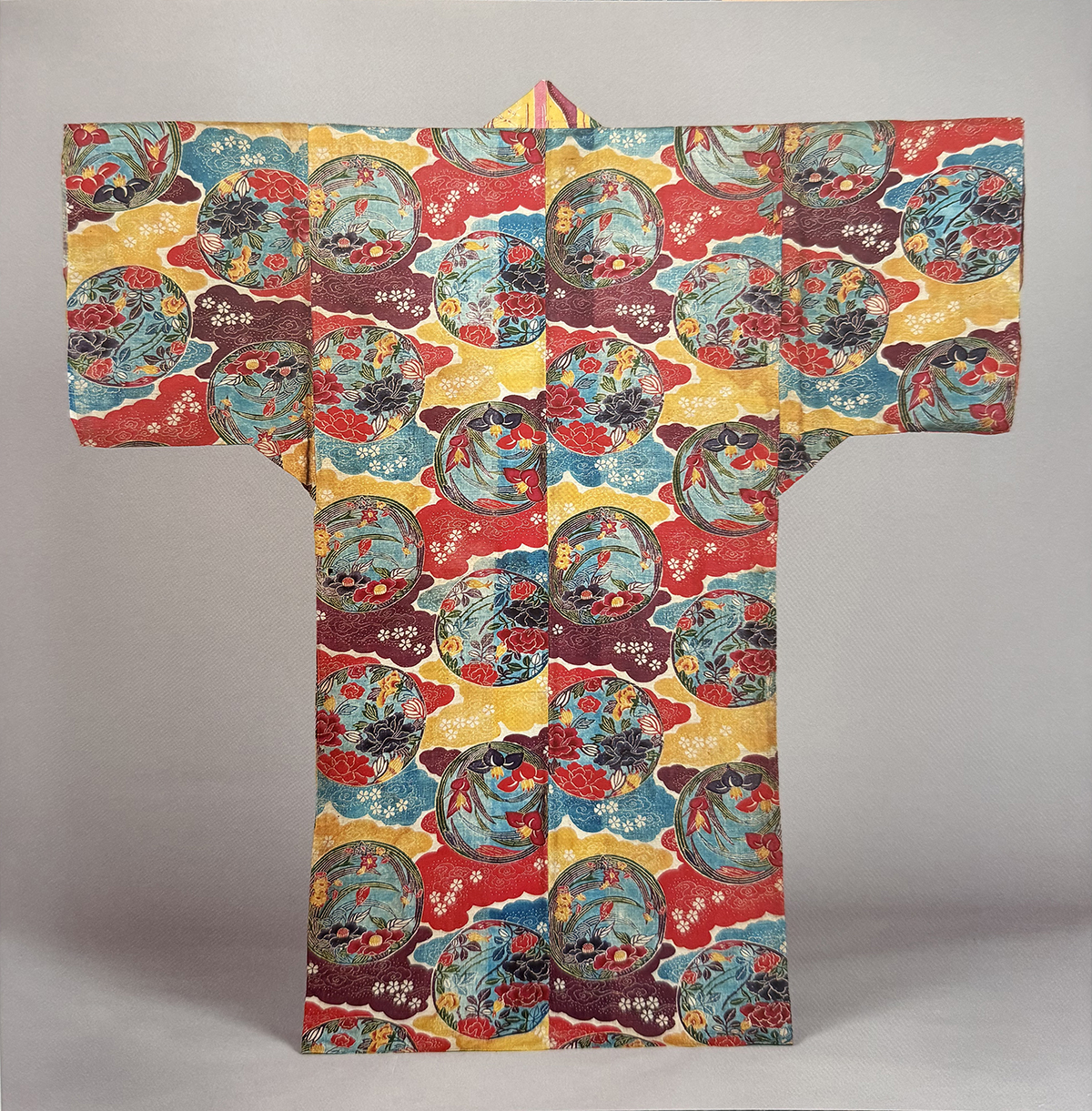
If you’ve ever wondered what delights might burst forth if lush tropical exuberance were crossed with refined Japanese wabi-sabi, look no further than the stunning kimonos of Okinawa Prefecture!
Okinawa (which is a bit like Japan’s Hawaii**) is the biggest and most well-known of the Ryukyu Islands, but I was quite surprised to discover at the “Textiles of the Ryukyu Kingdom” exhibit now on at the Mingeikan (Japan Folk Crafts Museum) that their distinctive bingata cloth is only one of the amazing textiles that come from this lovely island chain. Come with me, and let’s take a deep and enjoyable dive into all the Ryukyu Kingdom variations on weaving and dyeing, each more beautiful than the last!
Let’s start with bingata, the iconic Okinawan kimono textile
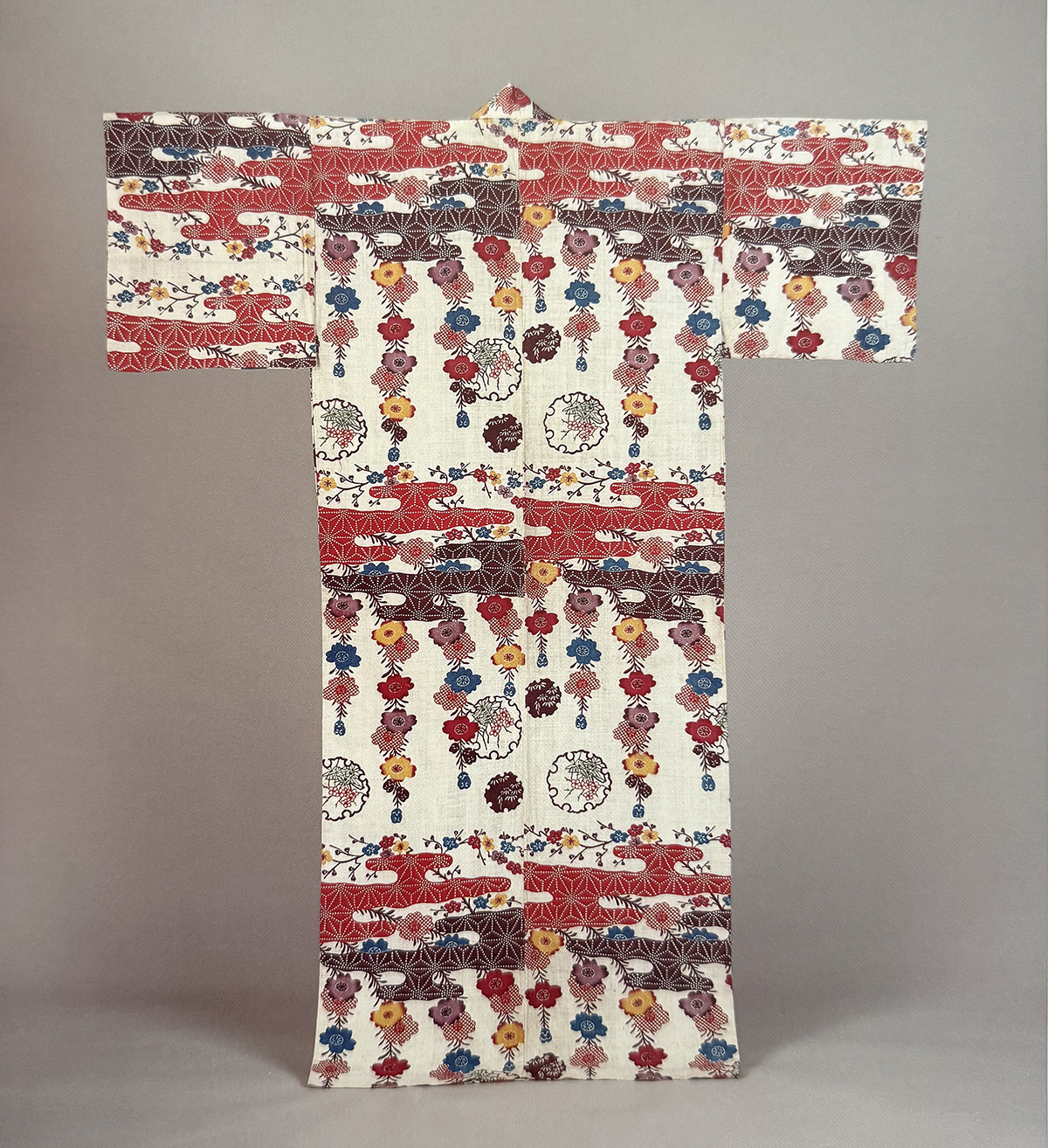
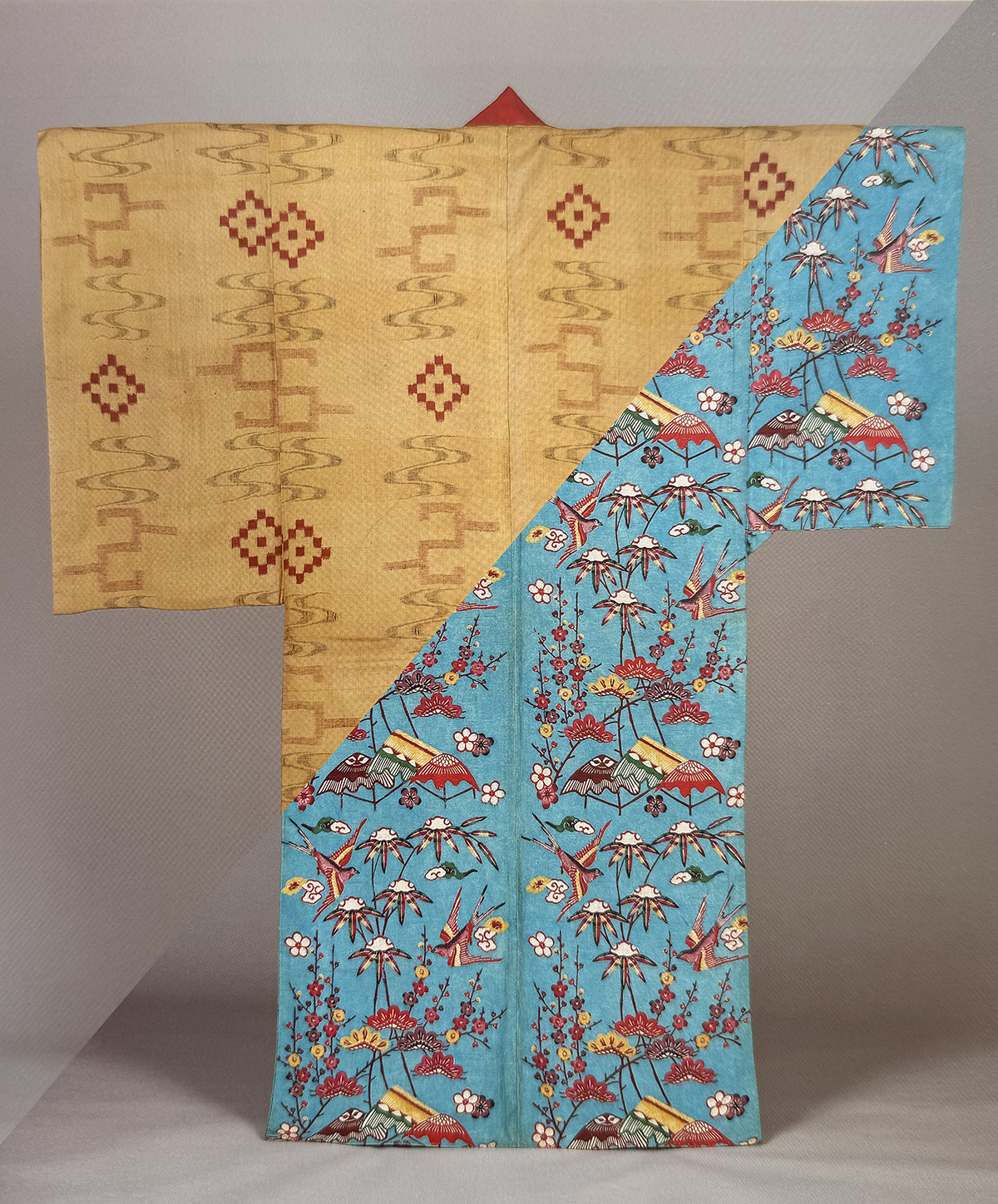
The stylized designs of bingata are as precisely stencilled as one might expect Japanese katazome to be, with the added twist of gradations that are only possible when the exposed design elements are hand-painted onto the fabric, not dyed in a vat.
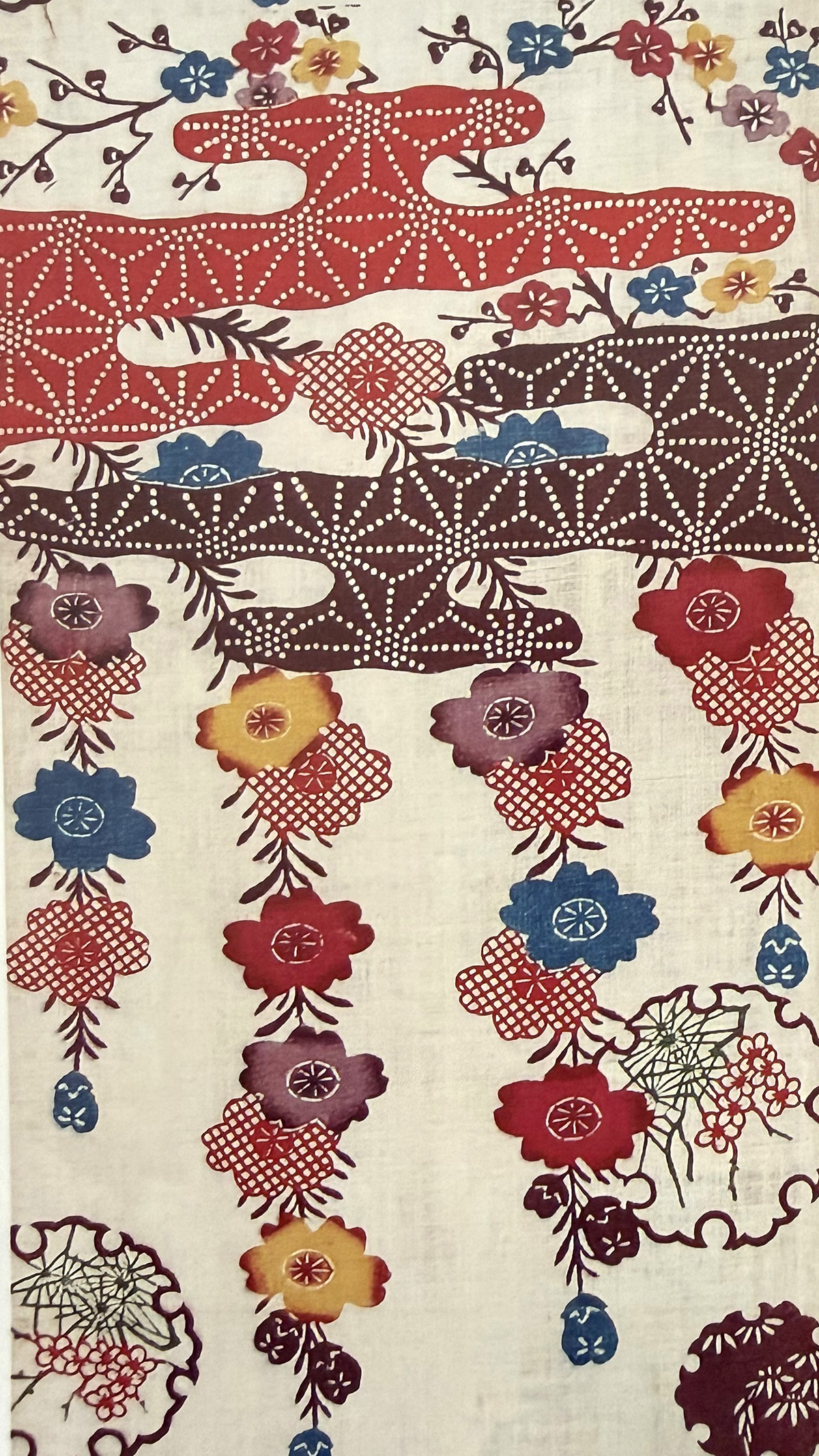
Bingata textiles feature a signature color palette of bright, deep colors…
and motifs that mix traditional Japanese symbols like the pine and plum sprays in this kimono…
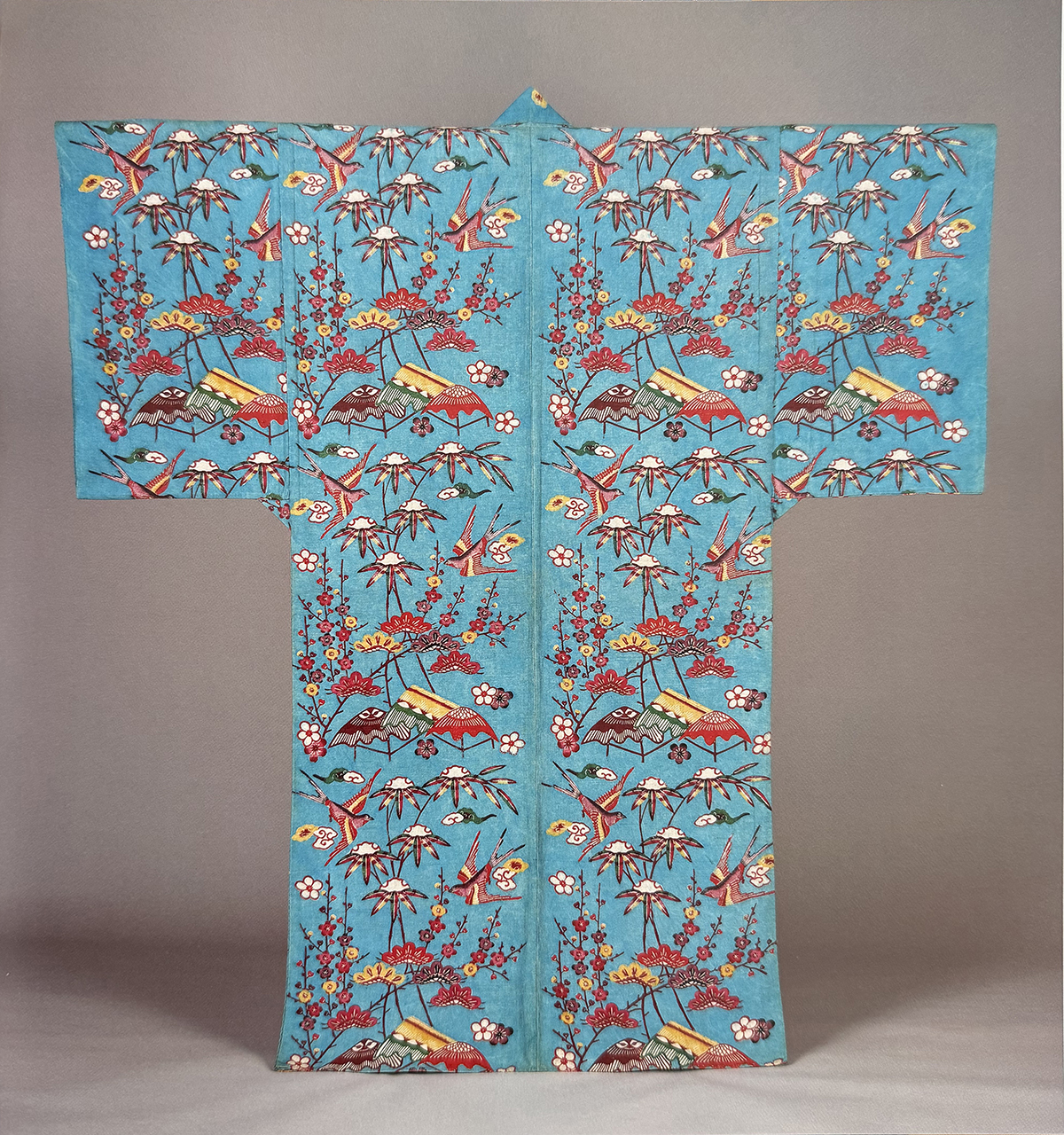
with more local flora and fauna…
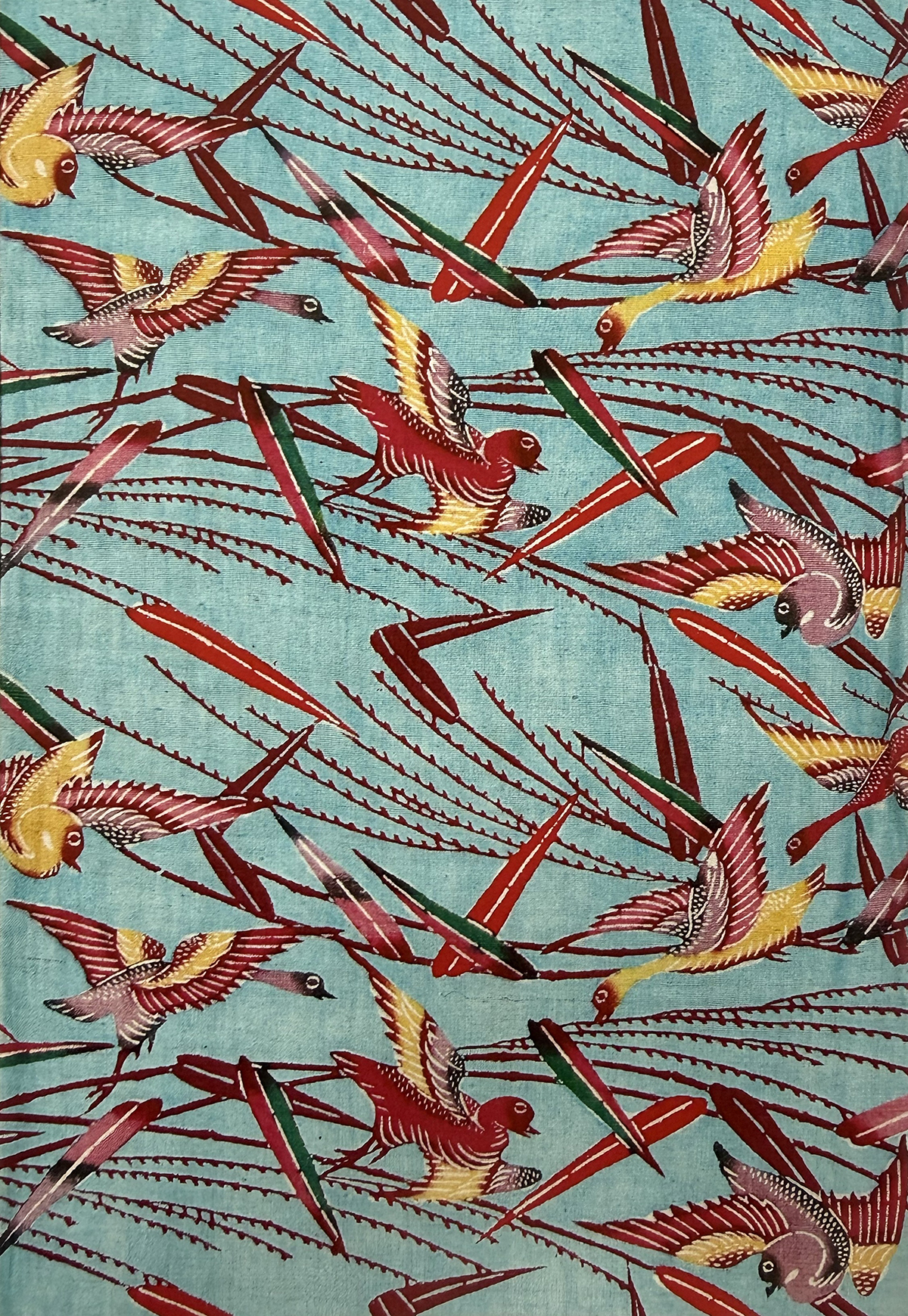
like the birds, bamboo and grasses on this one.
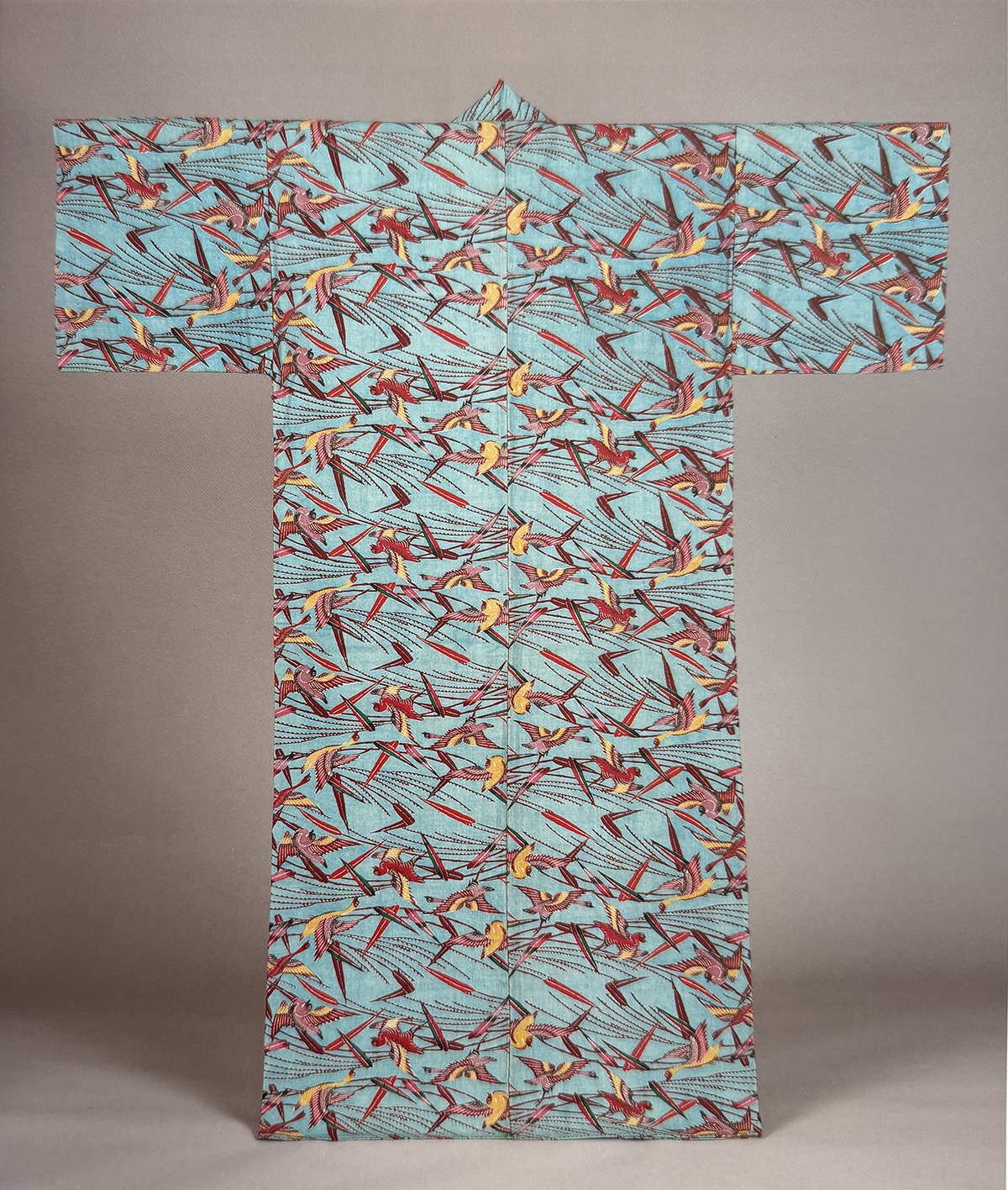
In traditional Ryukyu society, blue kimonos were reserved for the nobility…
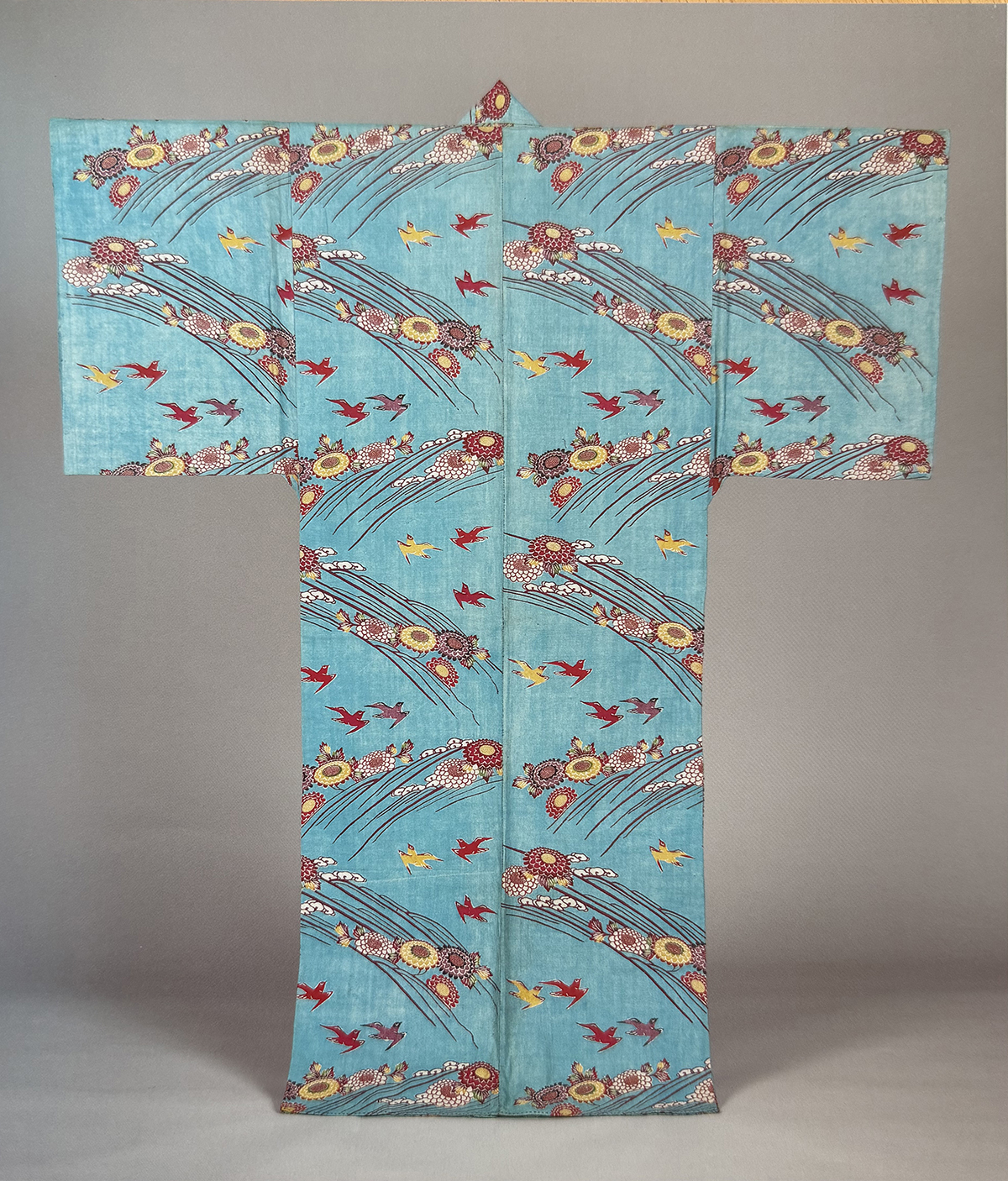
and only the royal family was allowed to wear yellow bingata patterns.
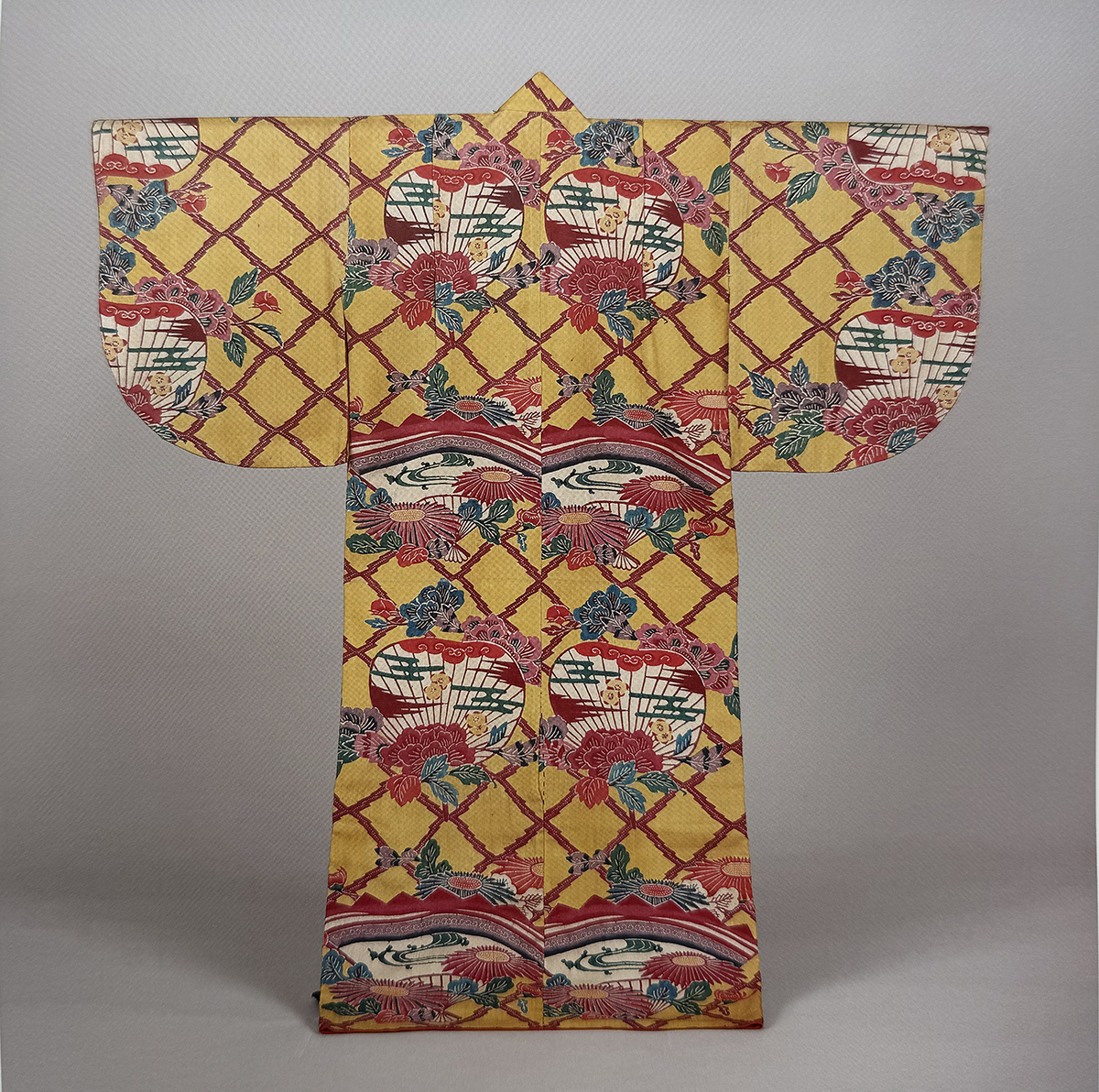
More ordinary folk were confined to less-showy colors, like indigo, but they still exhibit an energetically distinctive island style.
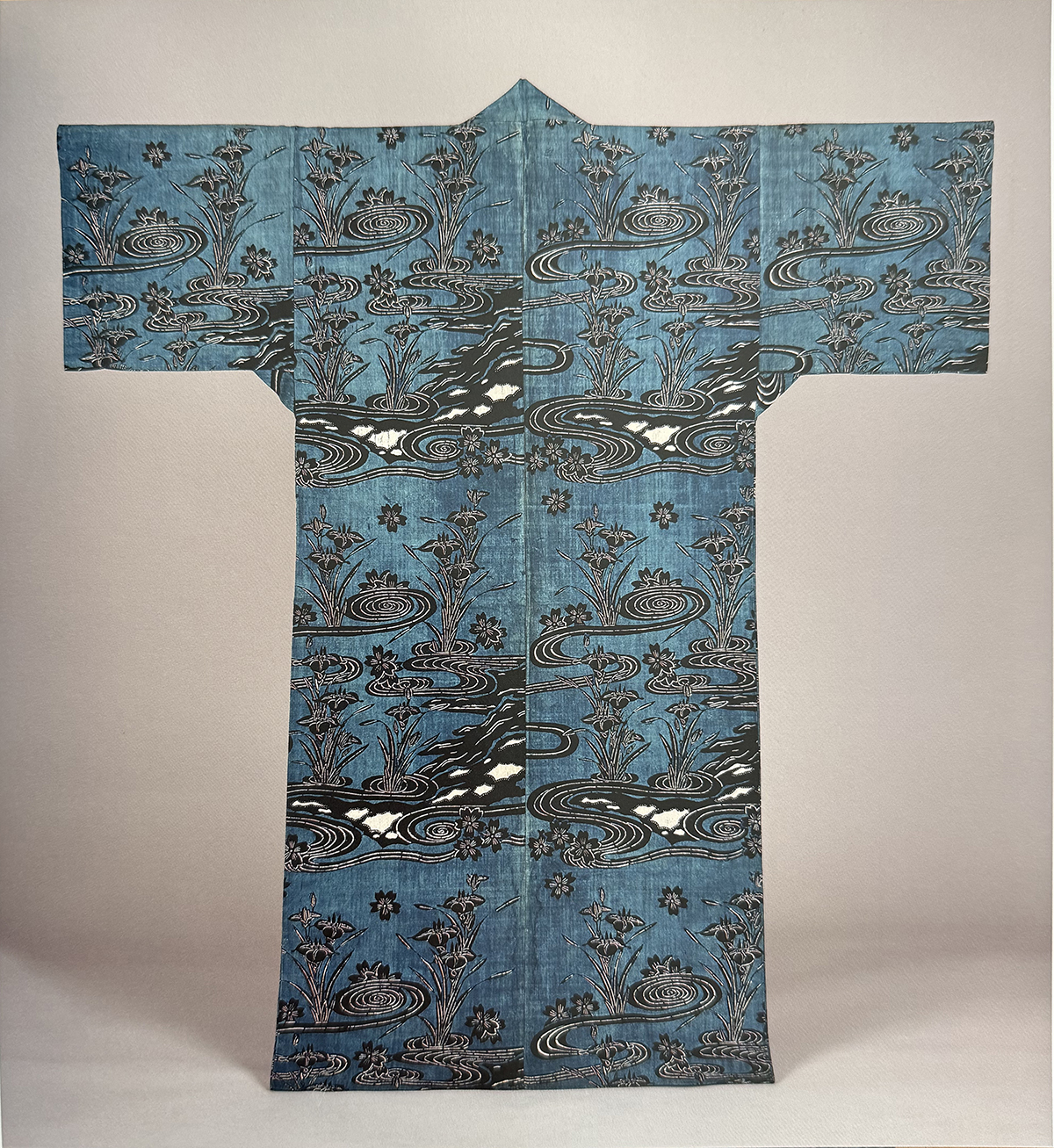
But bingata is just the gateway to what the Ryukyu Islanders did with color and fiber. Weaving also became a high art, harnessing local plants like ramie and banana leaves (in addition to silk and cotton) for a unique linen-like drape and brilliant colors.
From cheery everyday stripes…
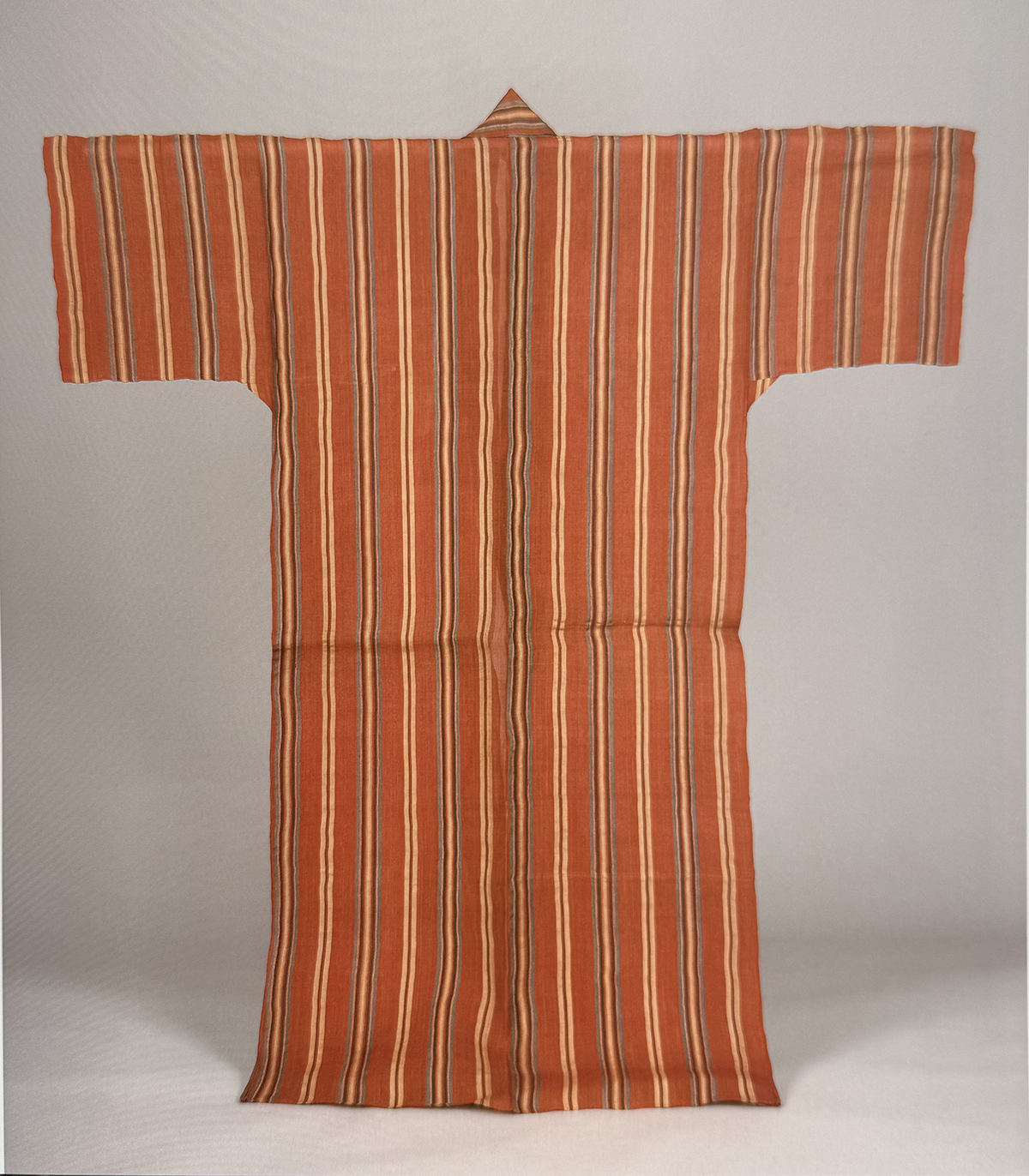
to plaids that appear ordinary until you look closer…
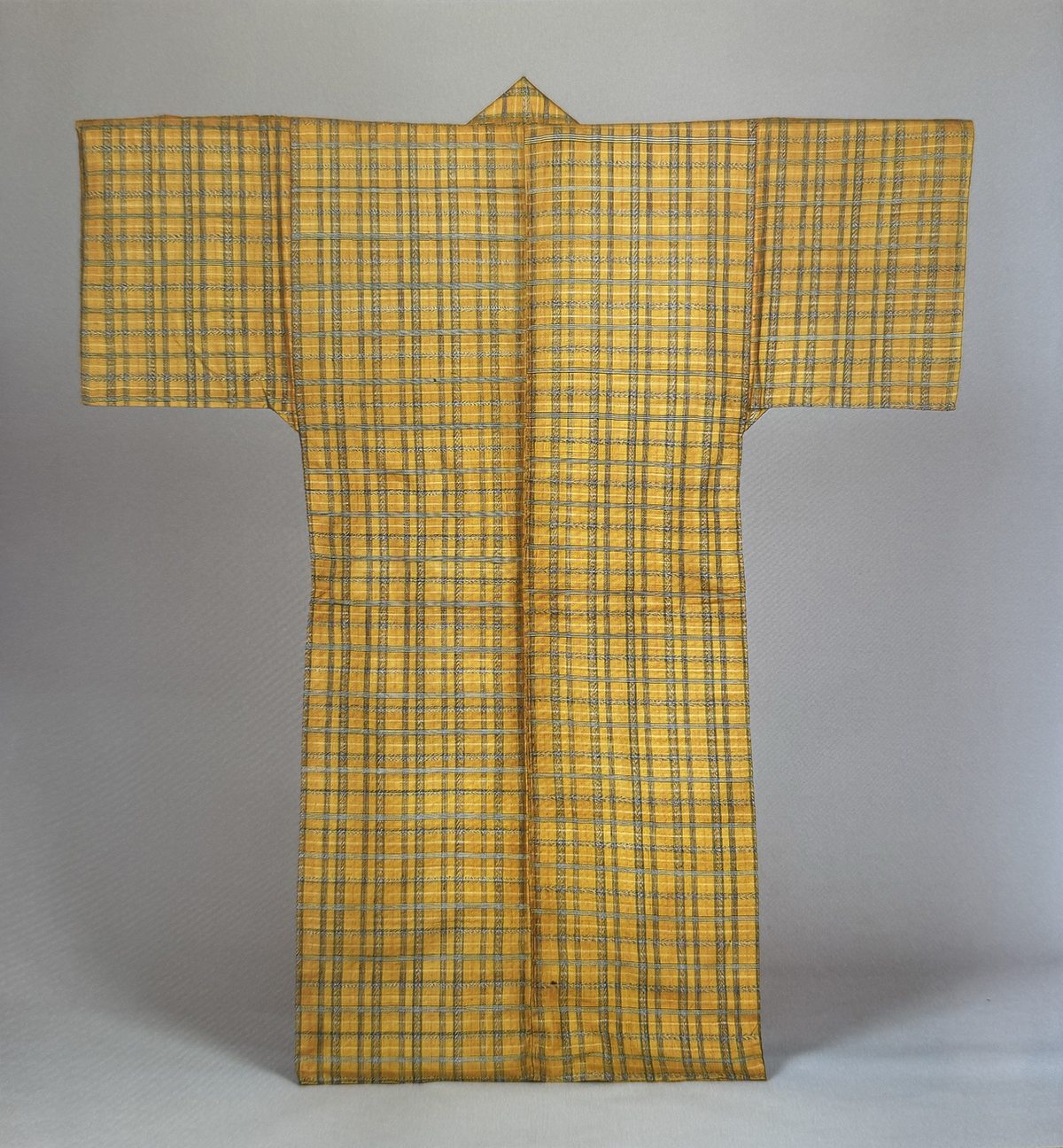
and examine the lines in all their kasuri-dyed complexity!
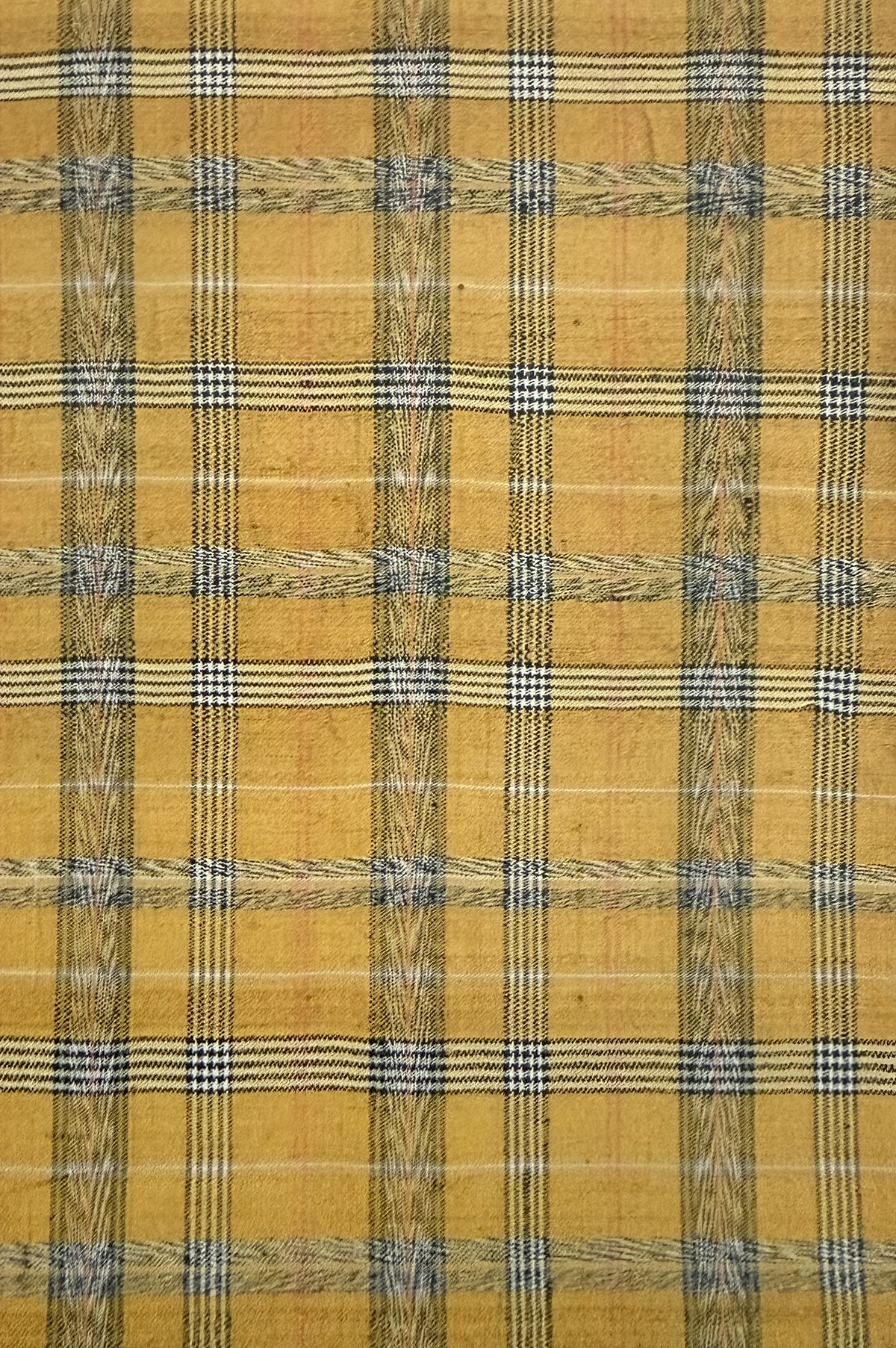
Kasuri is the insanely difficult practice of dyeing a single thread with multiple colors before weaving, so it makes a pattern as the cloth is woven
Think, for a moment how difficult it would be to predict exactly where each inch of thread will land after being woven. Now dye it different colors, so it makes a picture. That’s kasuri (also known as ikat). It’s one of the most difficult and subtle weaving techniques in the world.
This bold Ryukyu Island beauty looks like a straightforward plaid, until you notice those pale, offset rectangles amid the lattice. No plain-weaving technique can produce offset patterns like this unless the thread used in the weft (the right-to-left threads, as opposed to the up-and-down) is dyed to produce those patches before it’s woven.
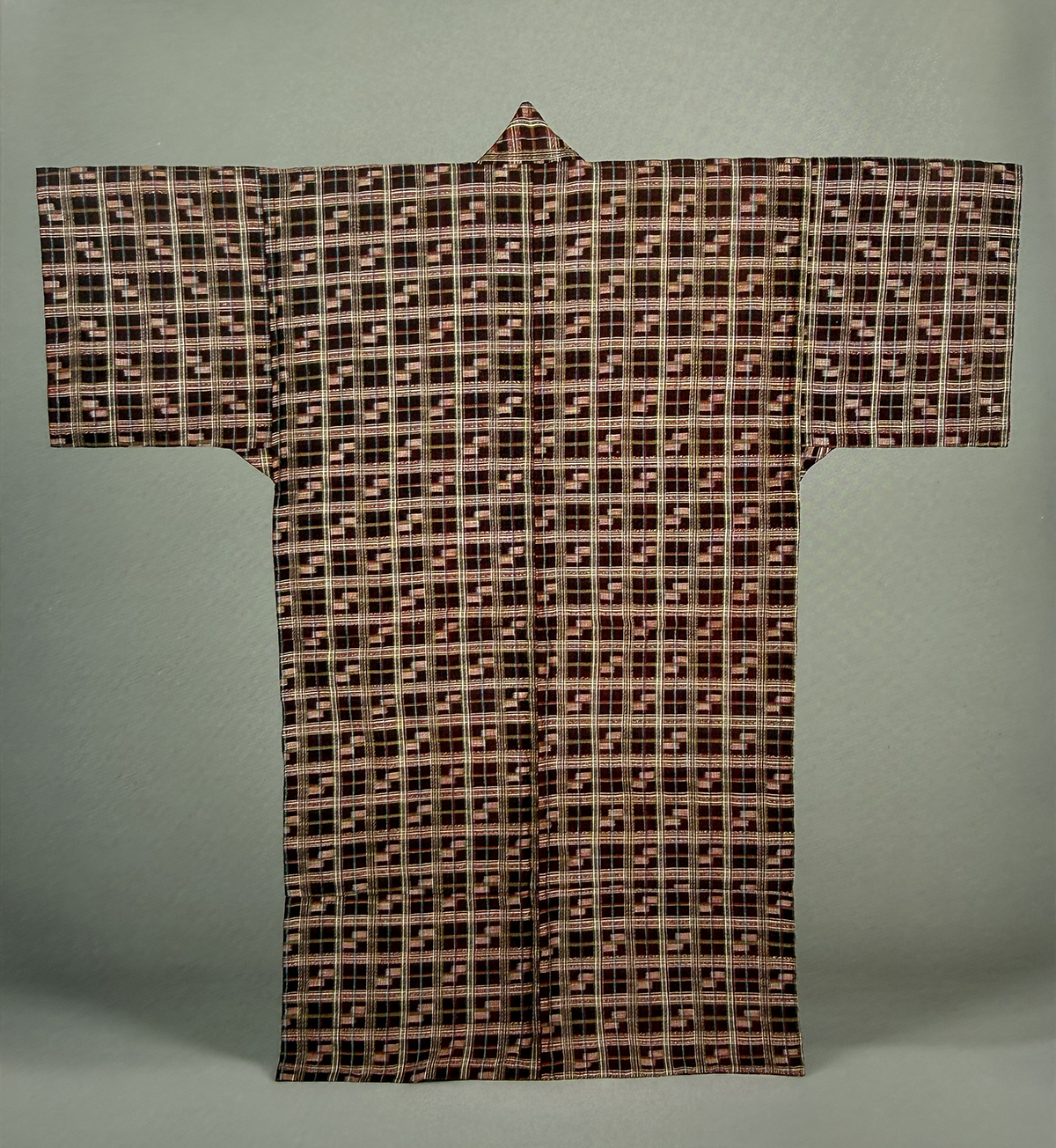
The “fuzzy” right and left edges are a hallmark of the kasuri weaving technique…
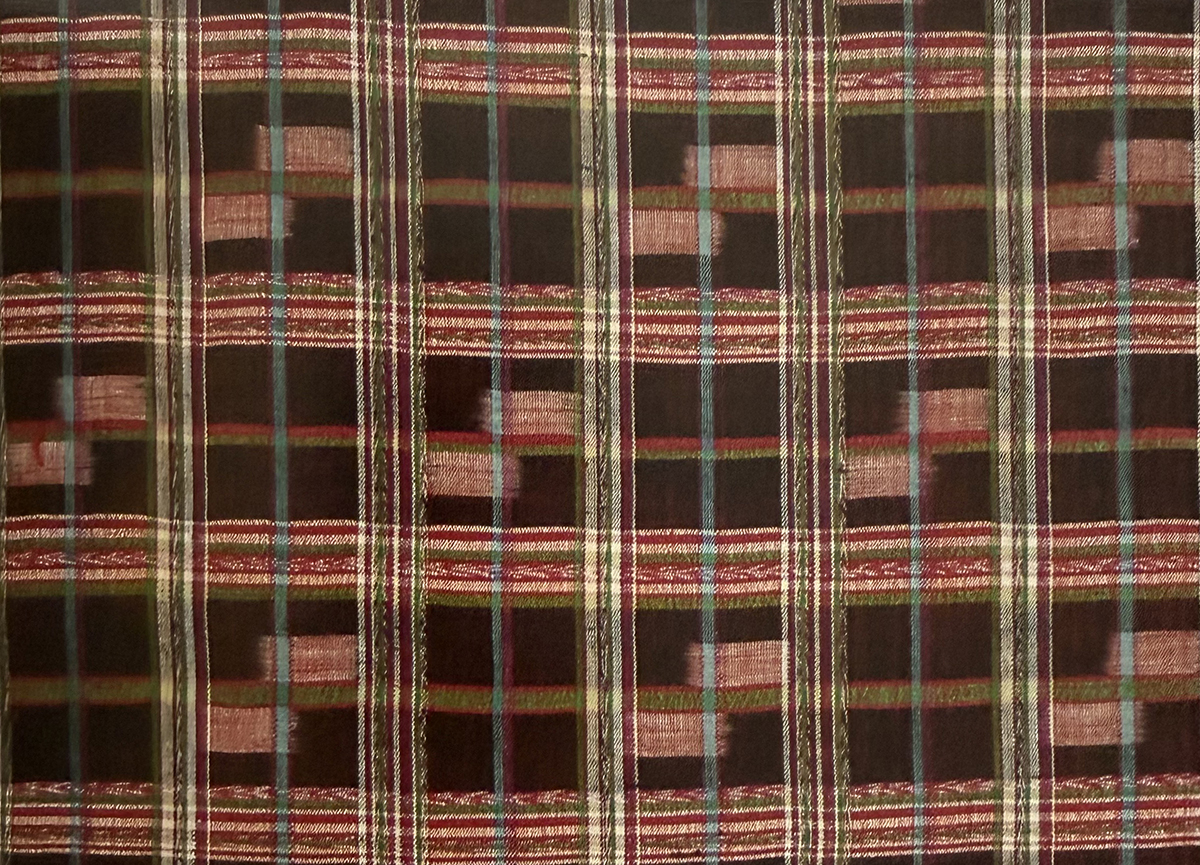
which was reimagined with great success in the Taisho Era to make those absolutely glorious Meisen kimonos.
But rectangles are only the beginning of the patterns that kasuri can conjure, as the fabric takes shape. Forms as organic as flying swallows…
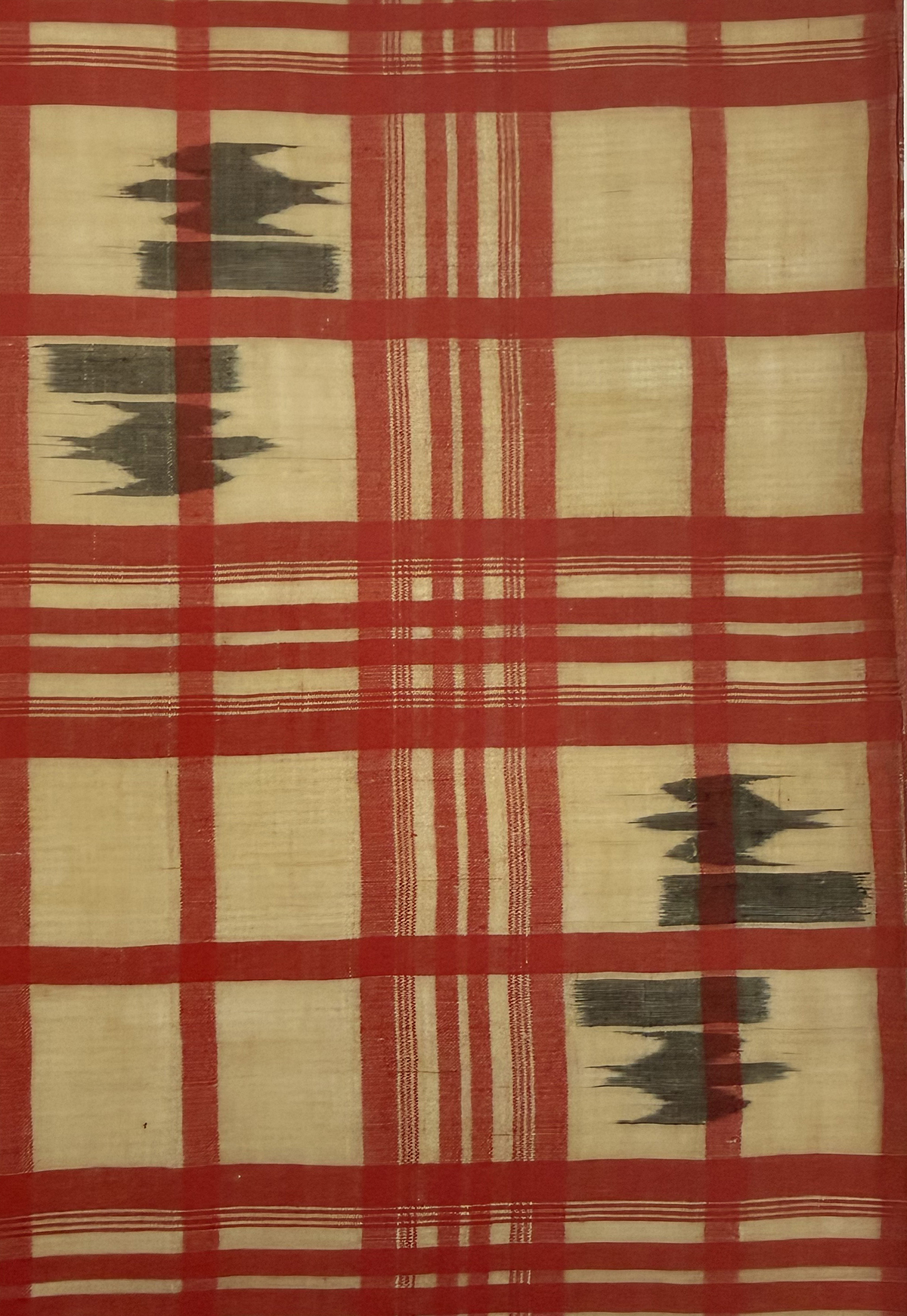
flit in and out of this design, creating lively visual movement within the more structured woven pattern.
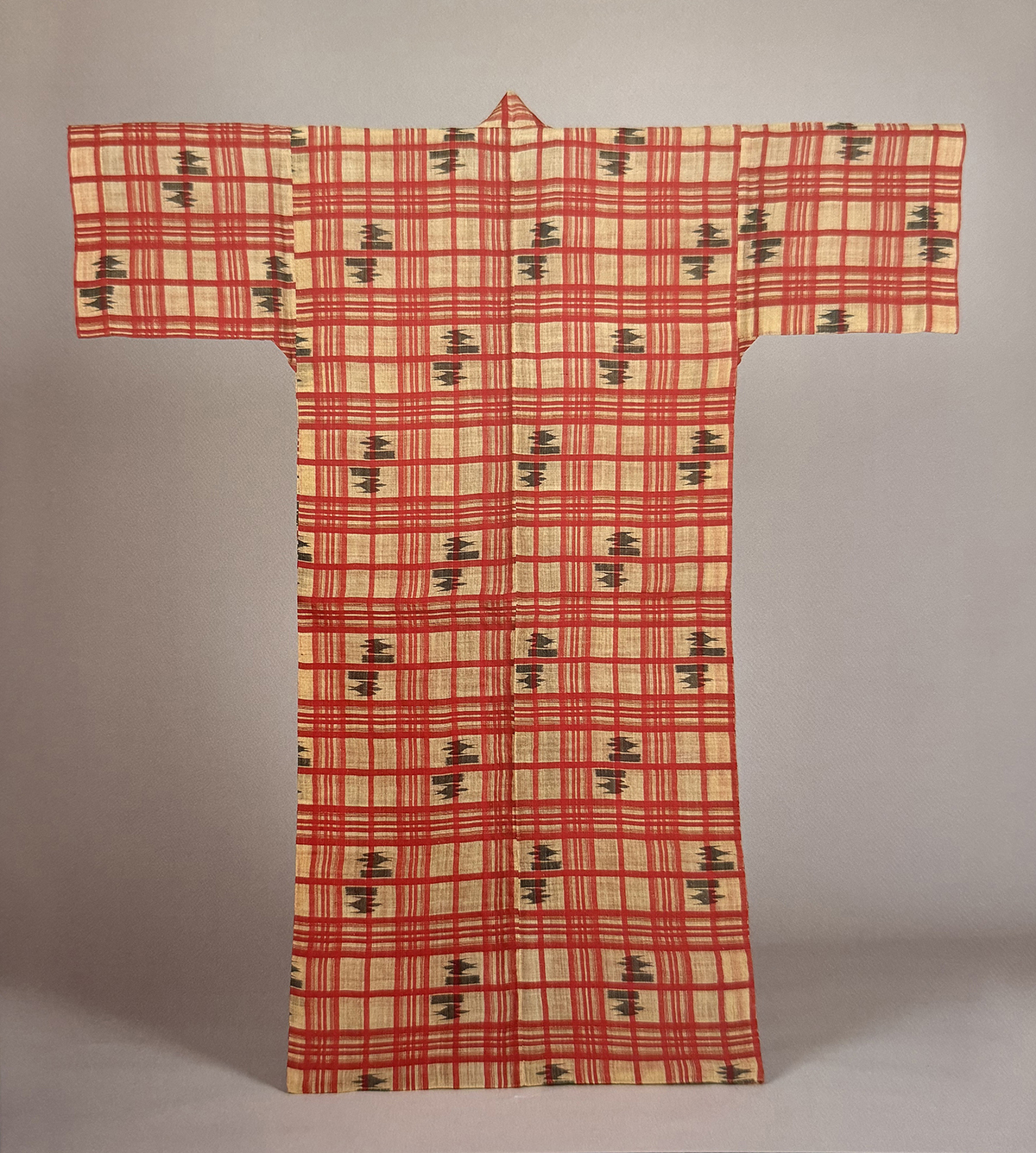
Whether eyecatchingly colorful…
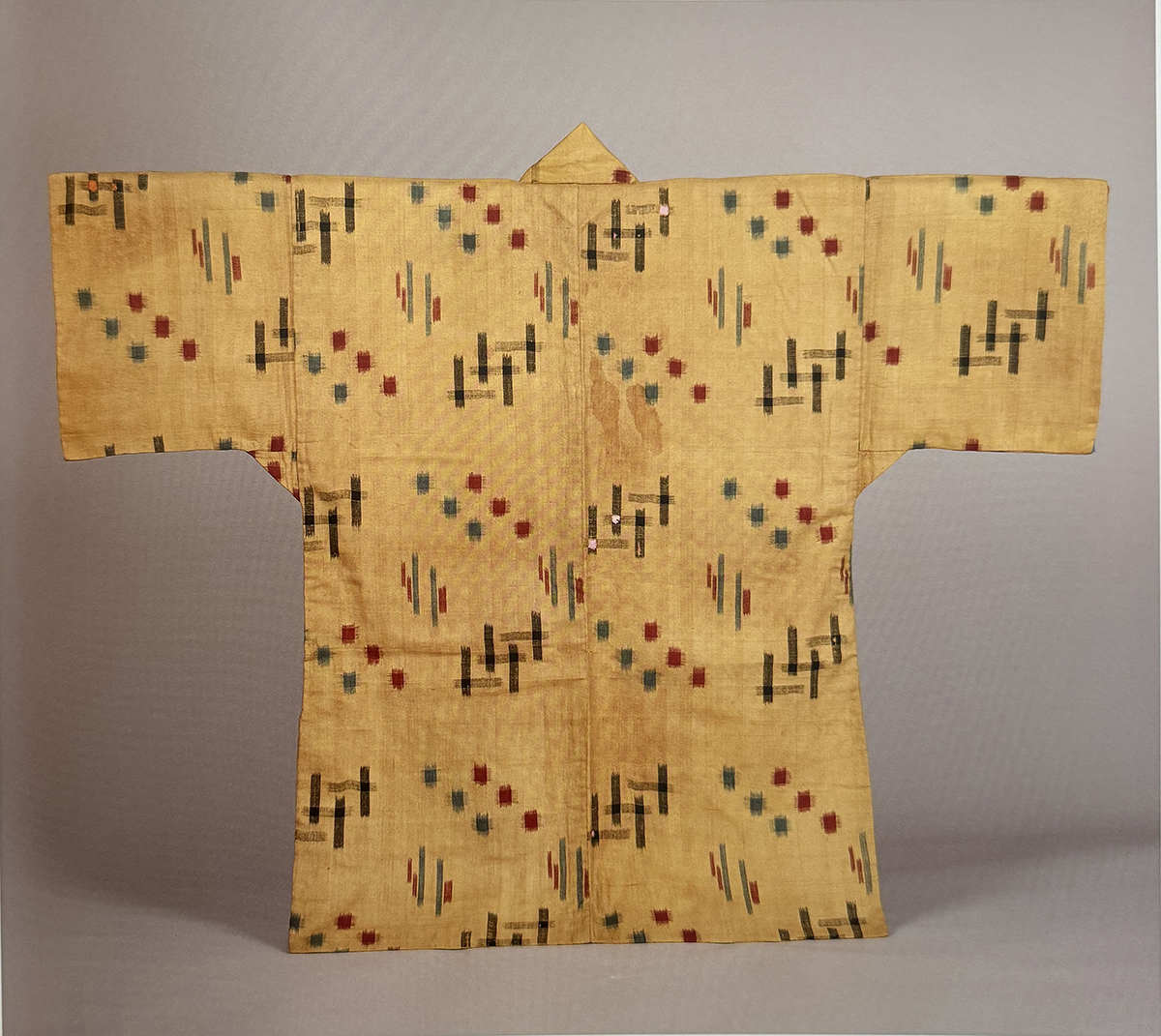
or dark and subdued, the closer you look at each kasuri kimono in the Ryukyu Kingdom textile exhibit, the more there is to marvel at!
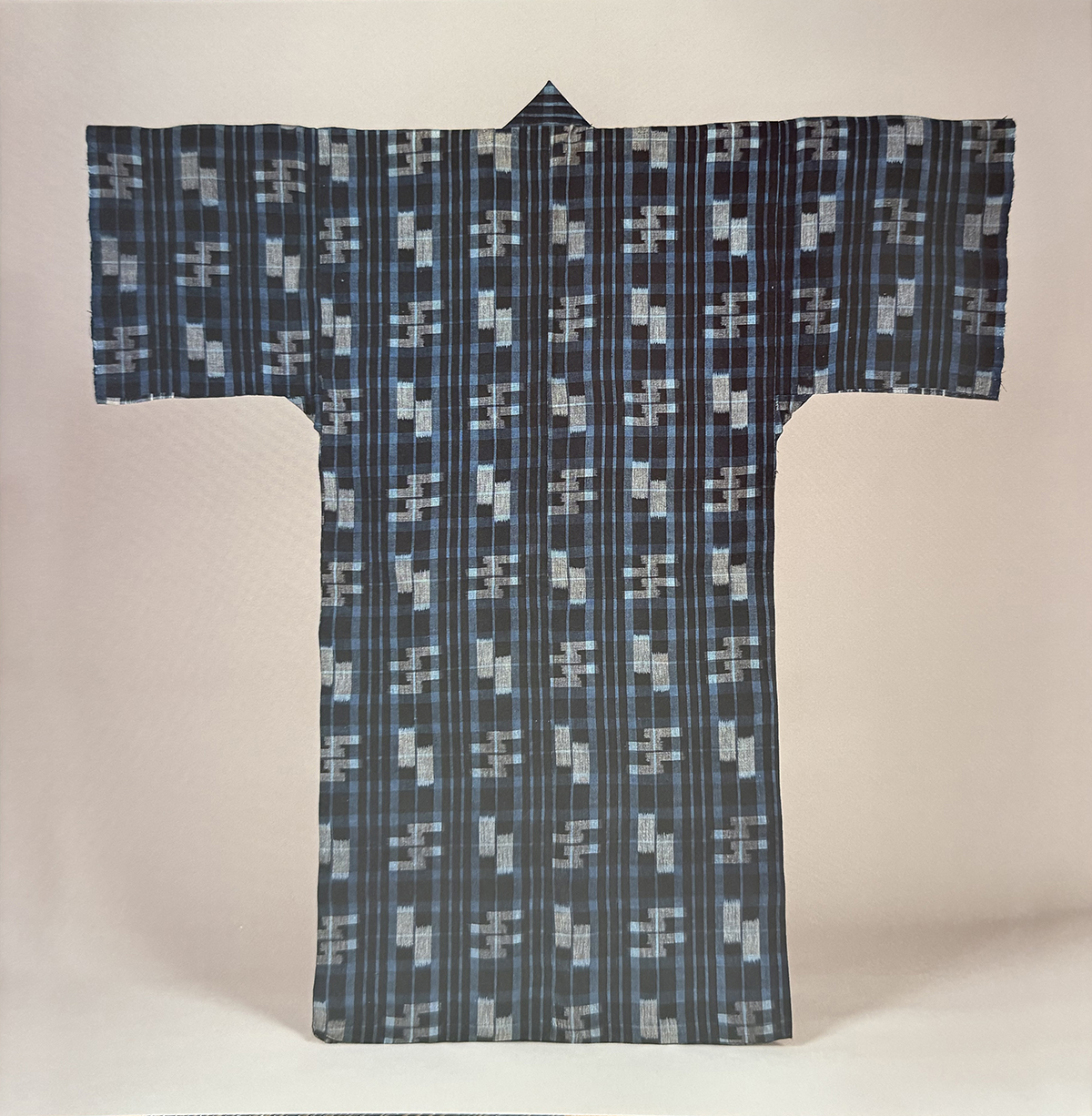
And even the “plain” kimonos are works of weaving art. Ryukyu Islanders also mastered a brocade-like technique called shuri ori to make lovely single-color kimonos…
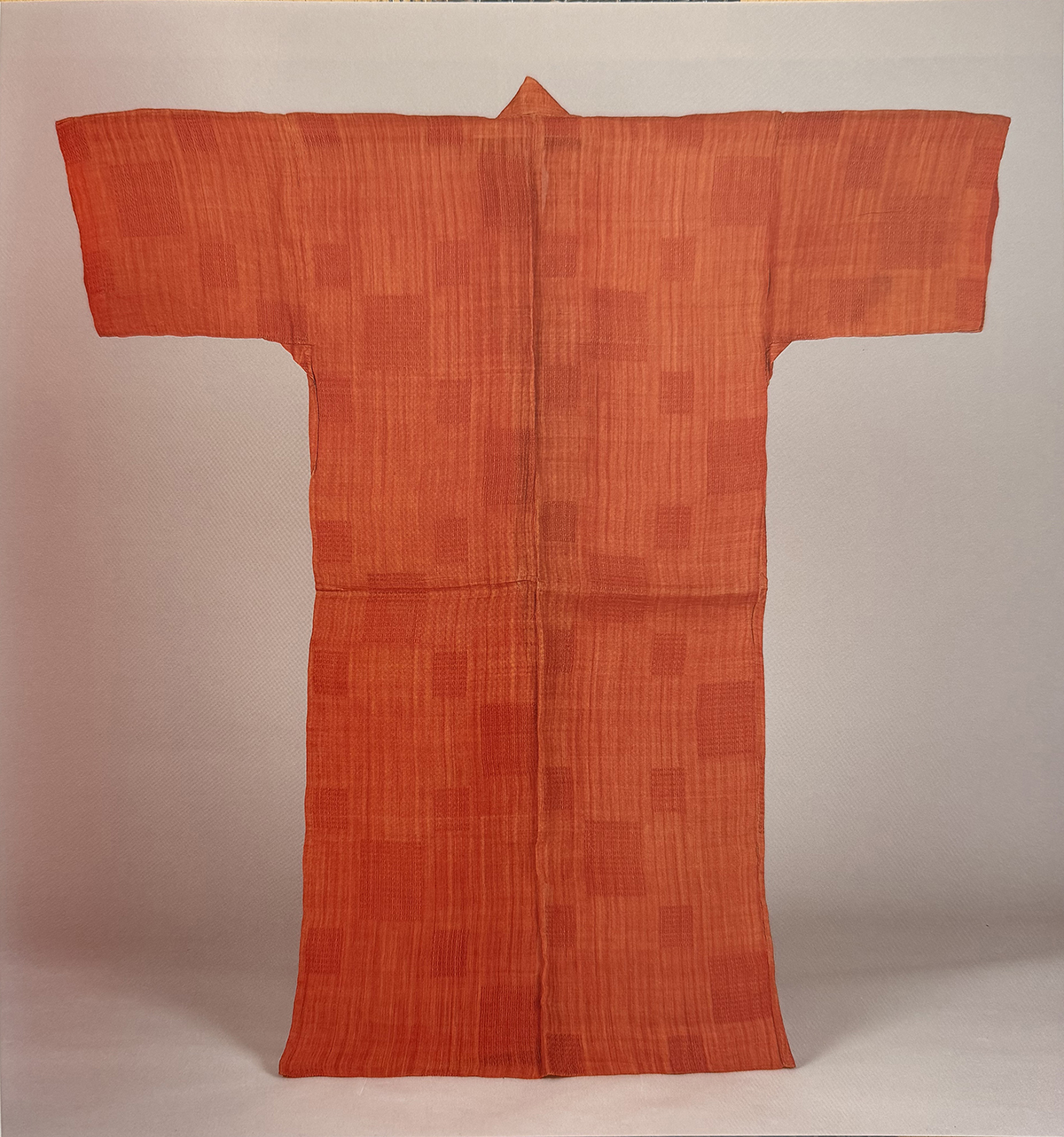
in which the pattern is made by selectively skipping some of the strict under-and-over of weaving to create patches of longer threads showing on the surface.
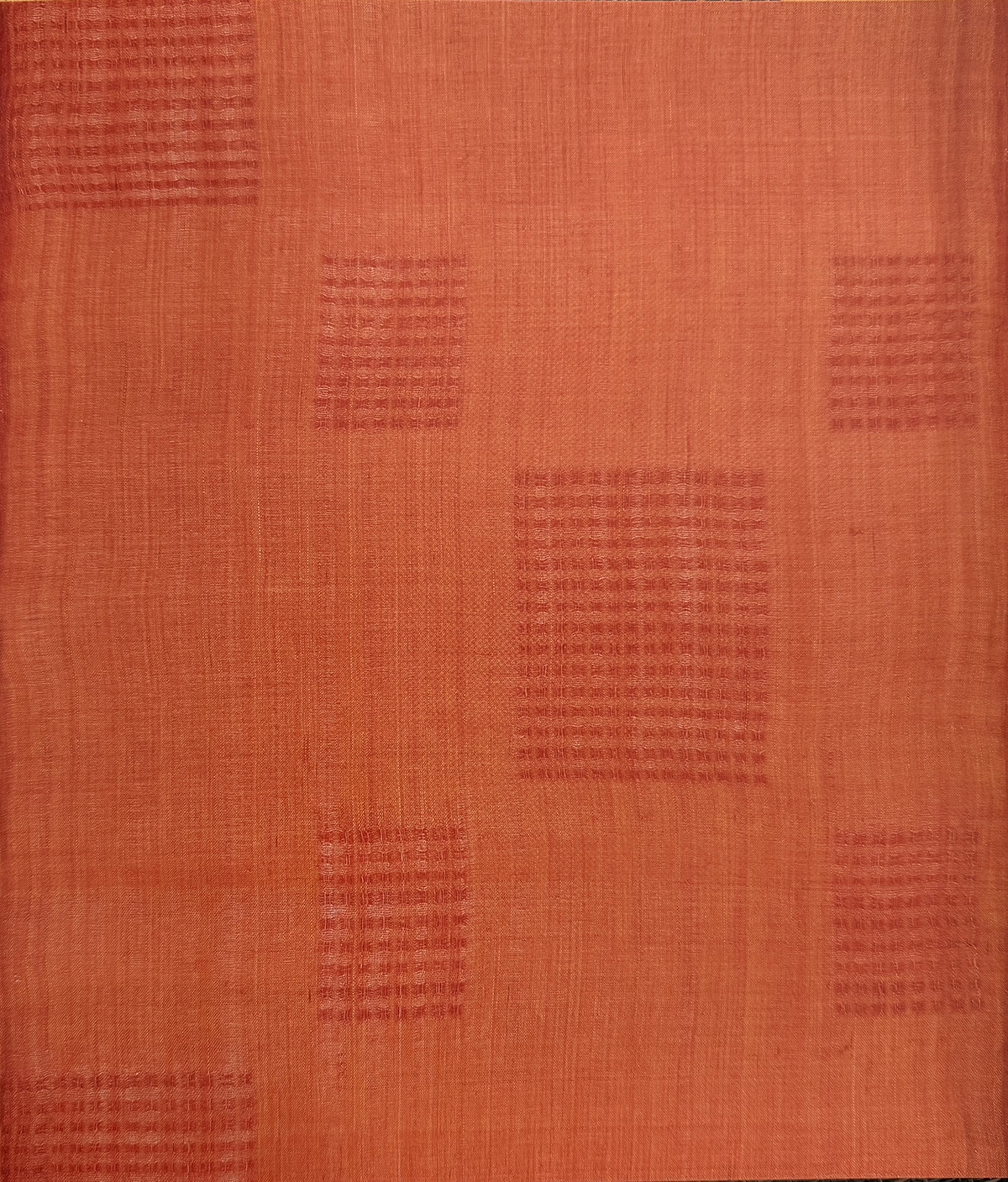
This show is a rare chance to get close to these fantastic kimonos—and there is far, far more eye candy than I’ve shown you here!—so you can enjoy the marvels of their construction and the generally happy-making aura they give off.
If you’re in Tokyo right now, get thee to the Mingeikan before the show closes on November 3rd!
“Textiles of the Ryukyu Kingdom”
at the Mingeikan (Japan Folk Crafts Museum)
August 22 – November 23, 2026
Open: Every day except closed on Mondays
Hours: 10:00 – 17:00
Admission: Adults ¥1500
*Photos are not allowed in this exhibition, so all photos here are from the exhibition catalog (which, if you love Japanese textiles, is a must-buy bargain!)
**The Ryukyu Islands were an independent kingdom until annexed by Japan in 1875, with their own unique culture, arts, and language. While this has produced some lovely melded arts and cuisine, it has also brought division and hardship (especially during WWII) and many islanders (like many Hawaiians) have a firm belief that it’s important to preserve the Ryukyu culture and resist being 100% assimilated into mainland culture.
•
If you enjoyed this, subscribe! It’s free!
Would you like to be whisked away to Japan, wherever you are?

“The Samurai’s Octopus…is a truly remarkable book, one that surprised and charmed me at every turn of the page. It’s one of the most memorable books I’ve read in a long time. You’re in for a treat.”
—James Ziskin, Anthony, Barry, and Macavity Award-winning author of the Ellie Stone mysteries
•
If you enjoyed this, subscribe to Only In Japan! It’s freeヽ(*^ω^*)ノ
If you enjoyed this, subscribe! It’s free!
•

Jonelle Patrick writes novels set in Japan, produces the monthly e-magazine Japanagram, and blogs at Only In Japan and The Tokyo Guide I Wish I’d Had

