
The first time I saw Riusuke Fukahori’s goldfish paintings at a gallery, I couldn’t believe my eyes. They looked so much like real fish, I kept waiting for them to move. And when I tried to figure out how he made them, I guessed wrong, wrong, wrong. These aren’t little models of fish with clear resin poured around them—see that transparency in the fins?—they’re paintings.
How does he do it? Each fish is made up of an untold number of thin paintings, layered like an MRI to build up the 3-D form. Fukahori pours a thin layer of resin, lets it set, paints the bottommost slice of fish. Then he pours another thin layer of resin, lets it set, and paints the next slice. Rinse, repeat X a gazillion. If you don’t believe me, check out this piece from a previous show. Seen from above, it looks like a plastic bag of goldfish. From the side, you can’t see the paint on the layers, so the fish disappear and the bag looks empty, as if by magic. But this isn’t magic. It’s genius. And patience.
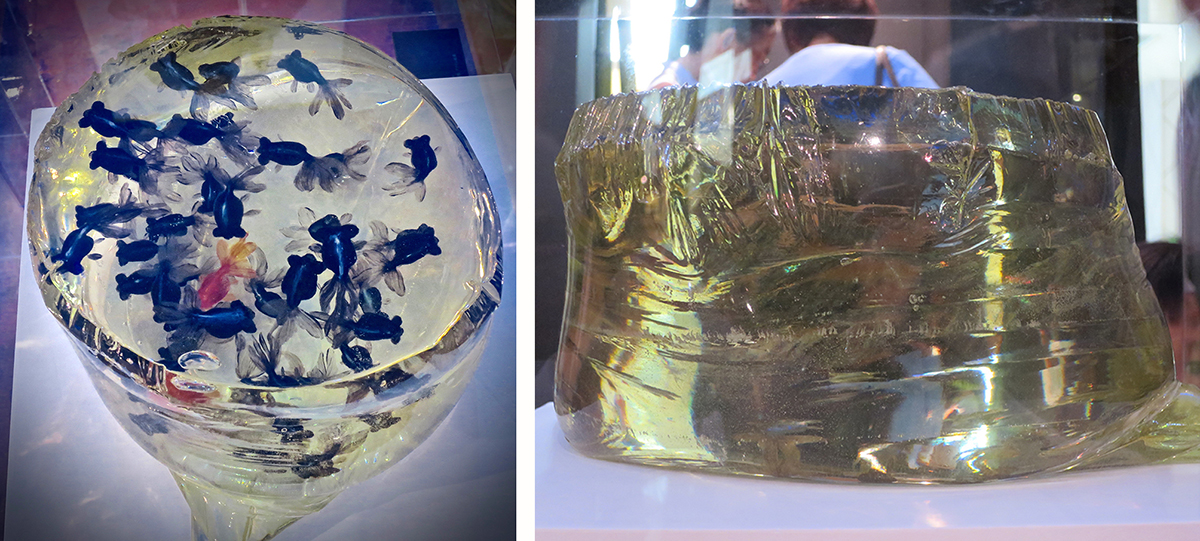
All of which are on display at his latest show in Nagoya, “The Song of the Goldfish.”
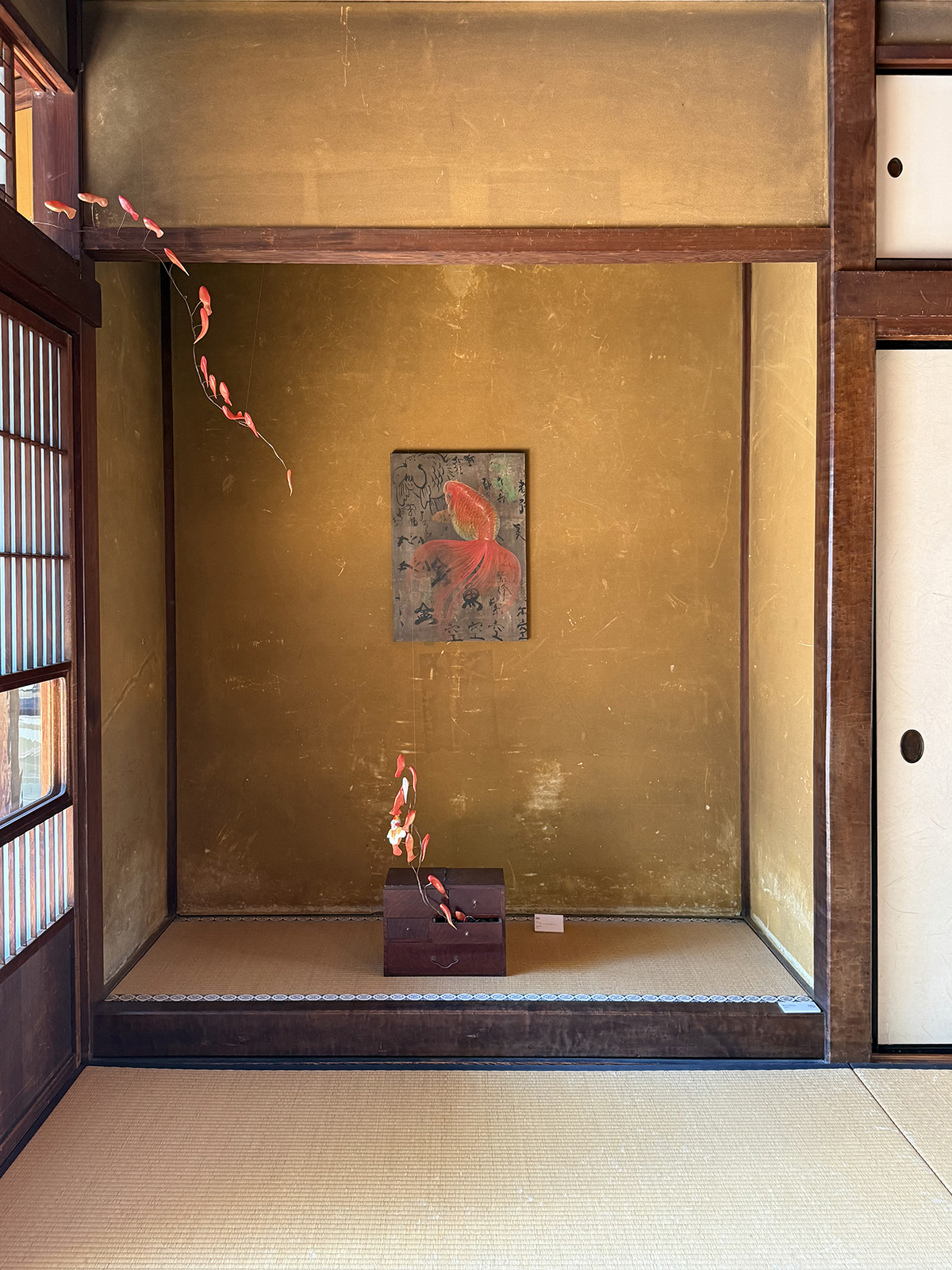
There were several small pieces that hark back to his beginnings, like this charming shrine carnival dipper with a single fish…
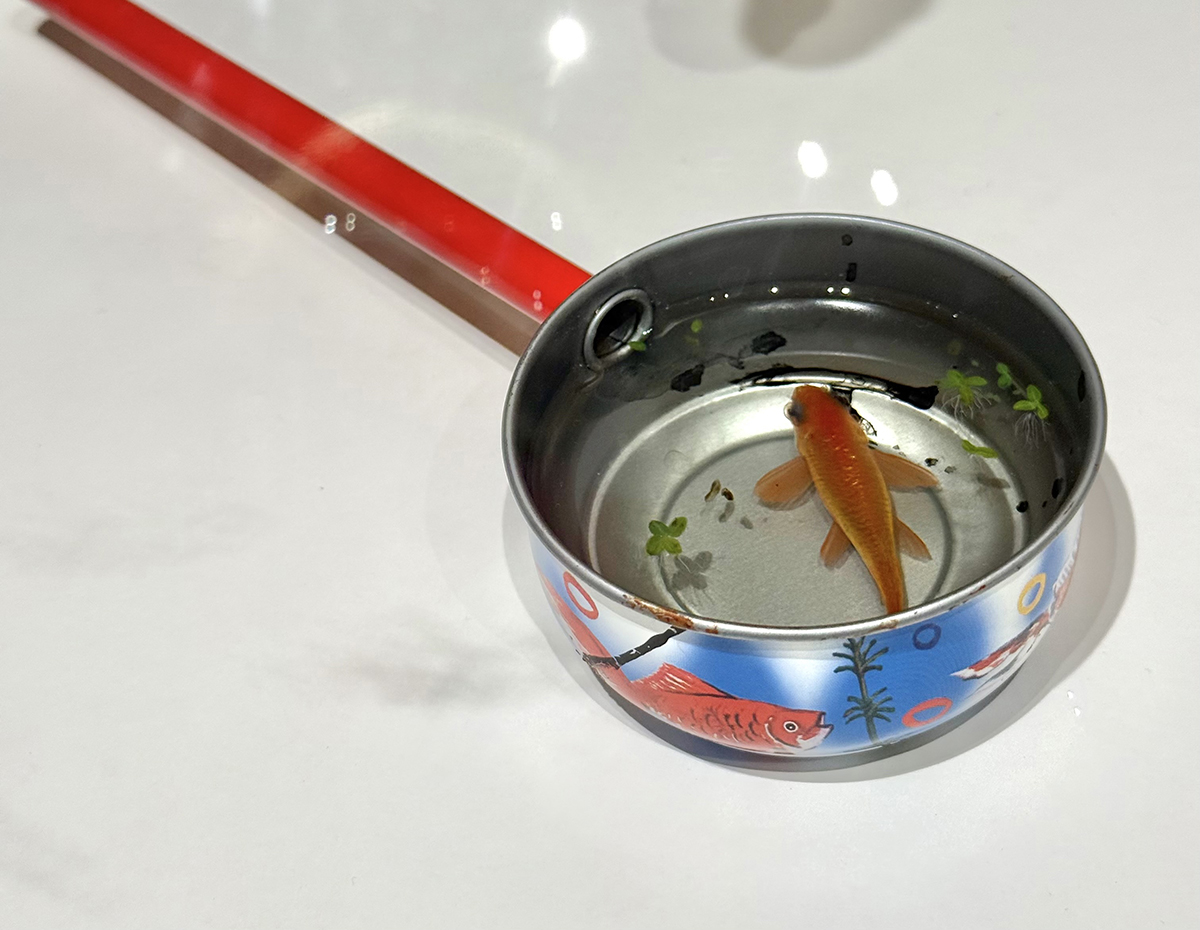
and several large pieces that move the goalposts for his ongoing more-ambitious explorations.
Like this tub of water…without a tub!
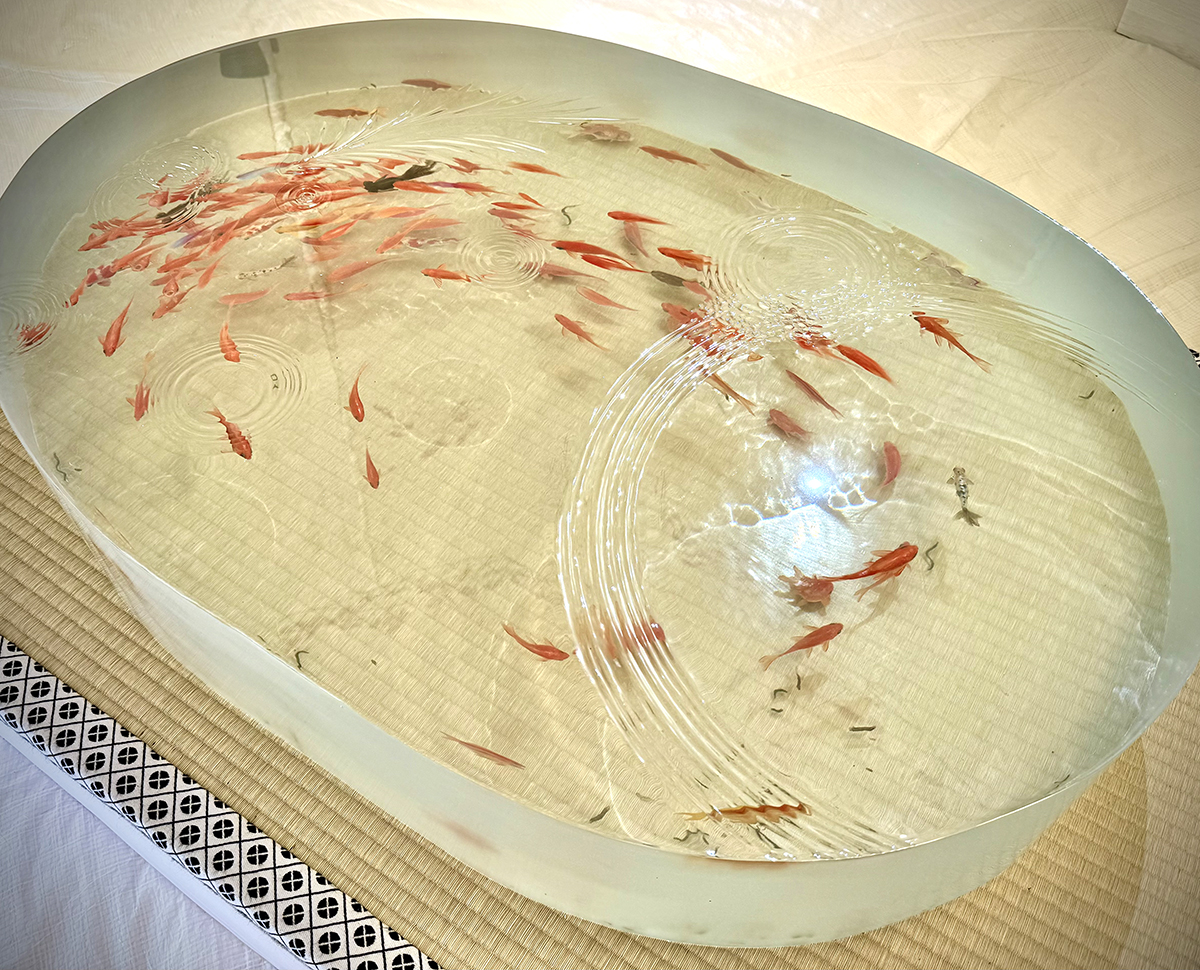
Here you can get a better idea of the depth and dimensionality of the painted fish from the top, while two fish that are invisible from above appear painted on the side.
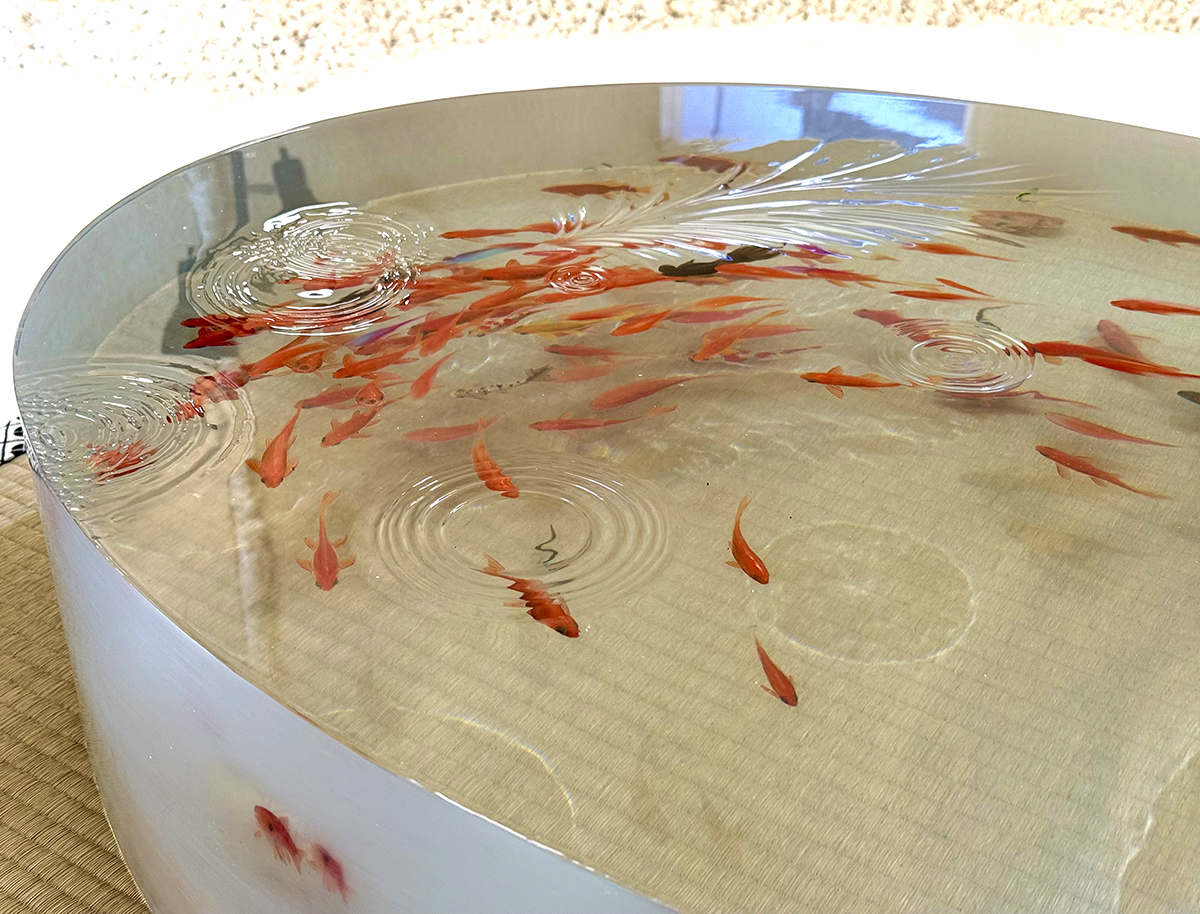
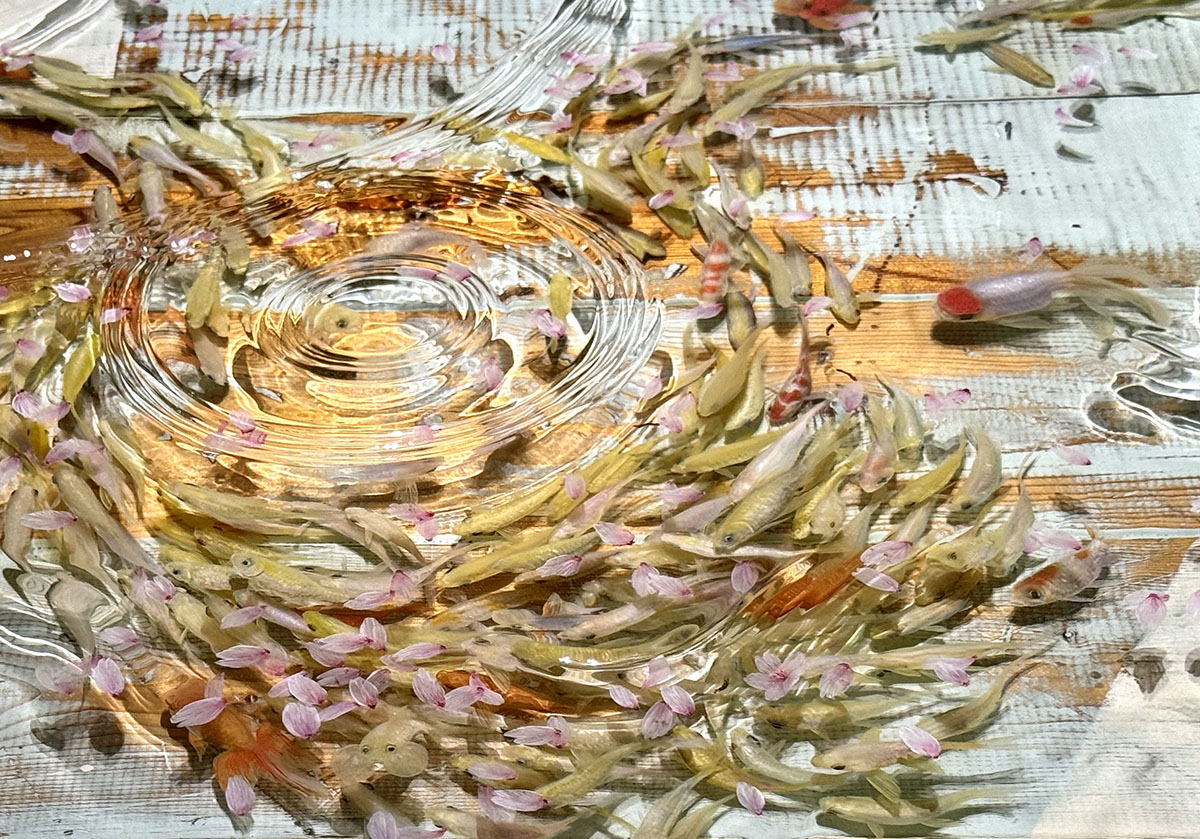
The sheer variety of goldfish he includes in his compositions, along with the occasional petal, leaf and squiggle of goldfish poop just make his art more delightful the closer you look.
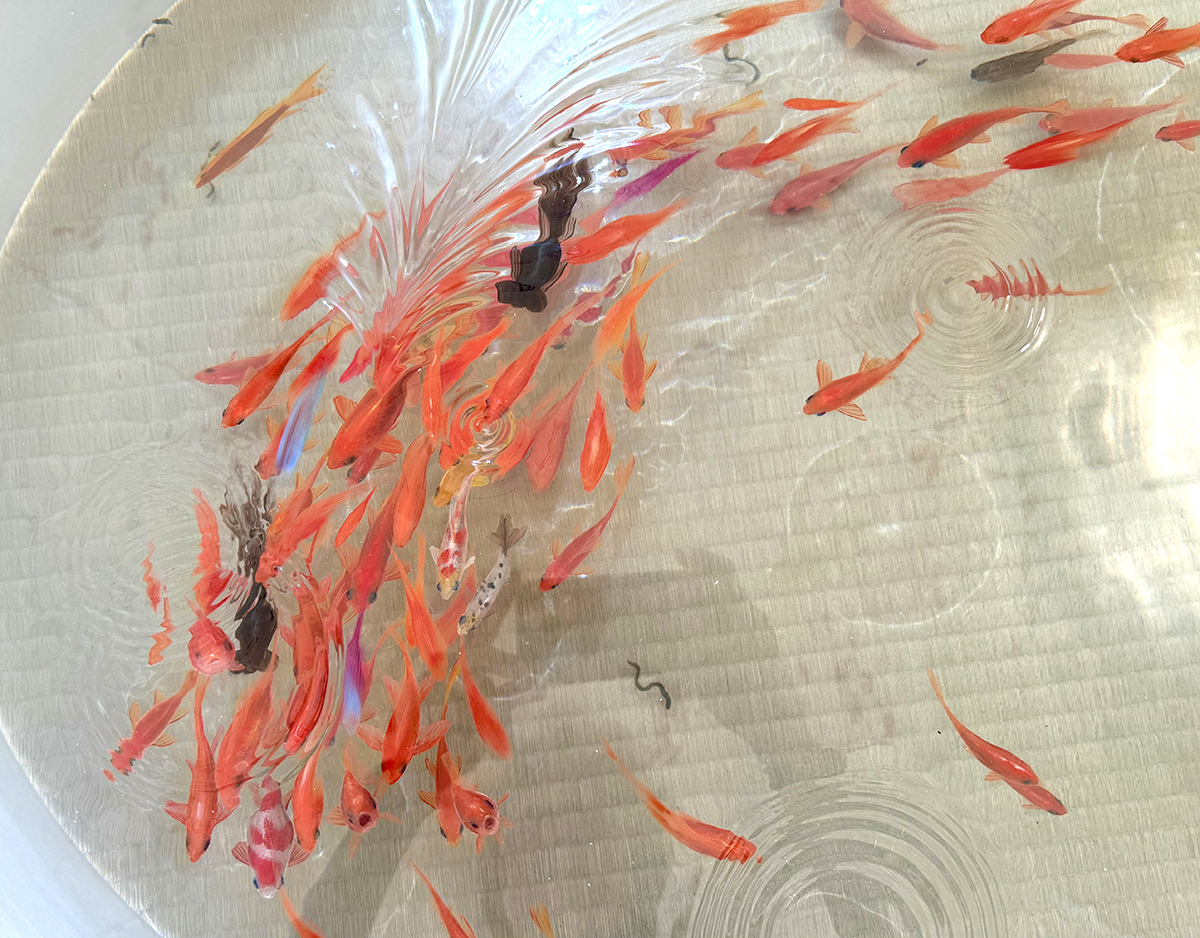
As spectacular that first piece is, his next large-scale work is even better. This tray of schooling fish contrasts the weathered boards of the container…
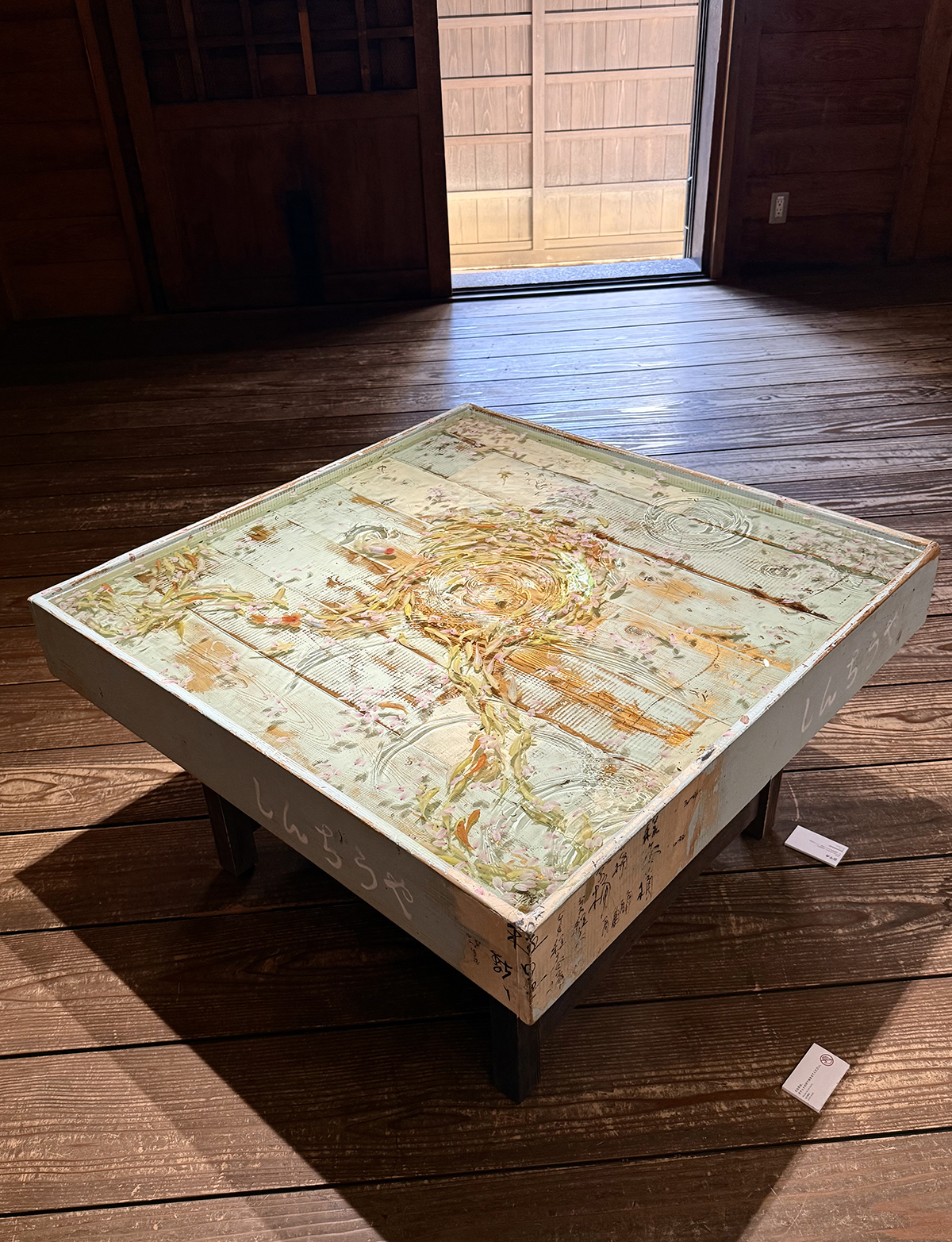
with the extremely precise and lifelike rendering of many, many fish (can you imagine how long it took him to paint this?) as well as the ripples on the water…
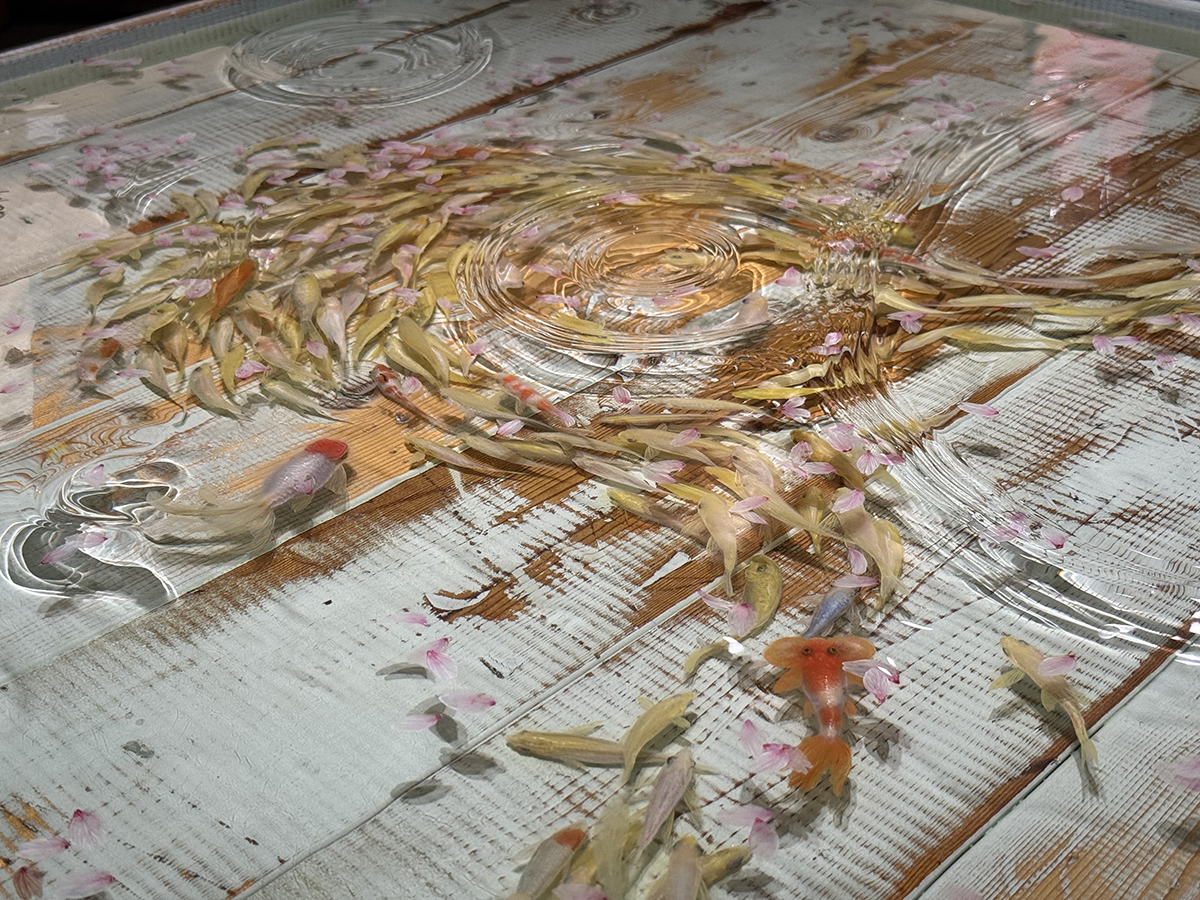
and the cherry blossom petals swirling on the surface.
But Fukahori goes far beyond realistic goldfish to show us the essence of kingyō. In this show, his more calligraphic renderings grace kimonos and obis…
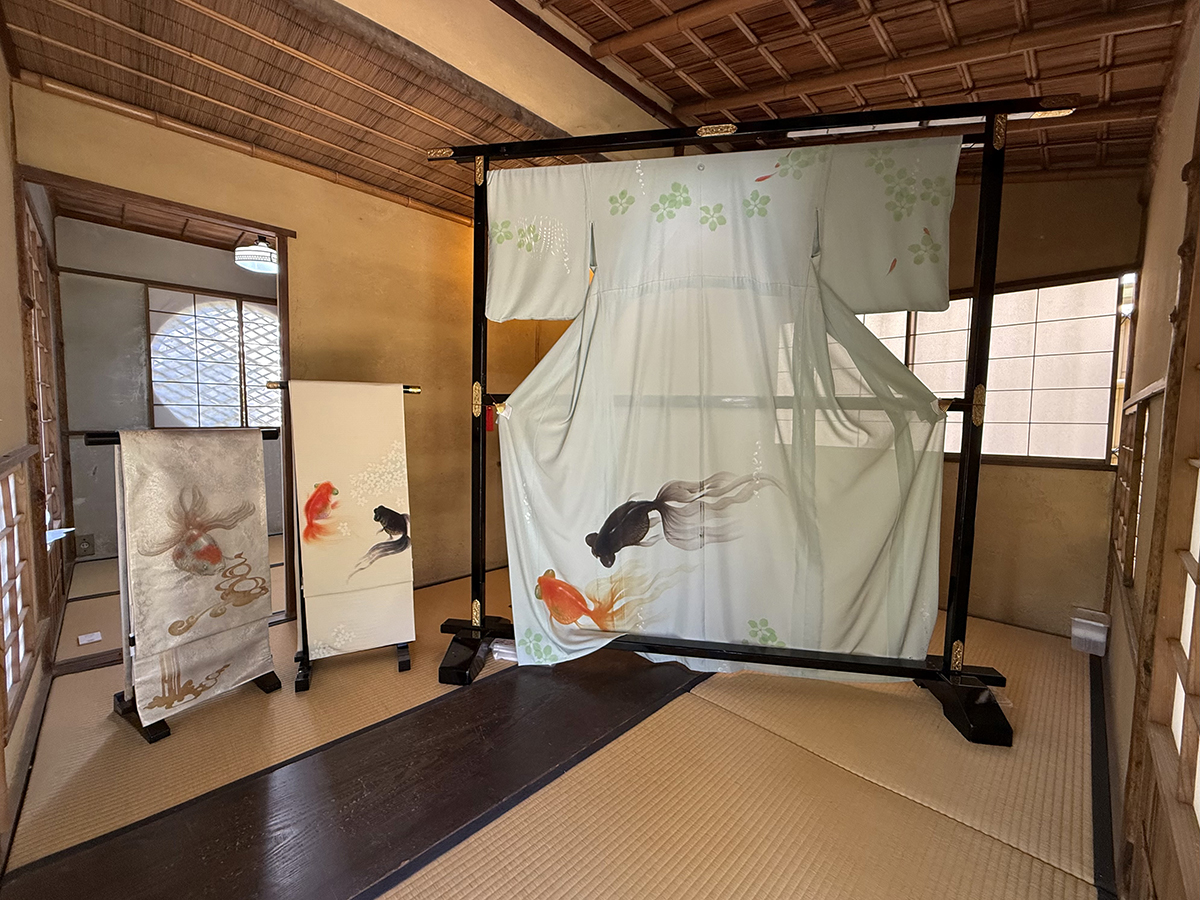
as well as this fabulous screen. A new element is the drips he introduces to his works on paper…
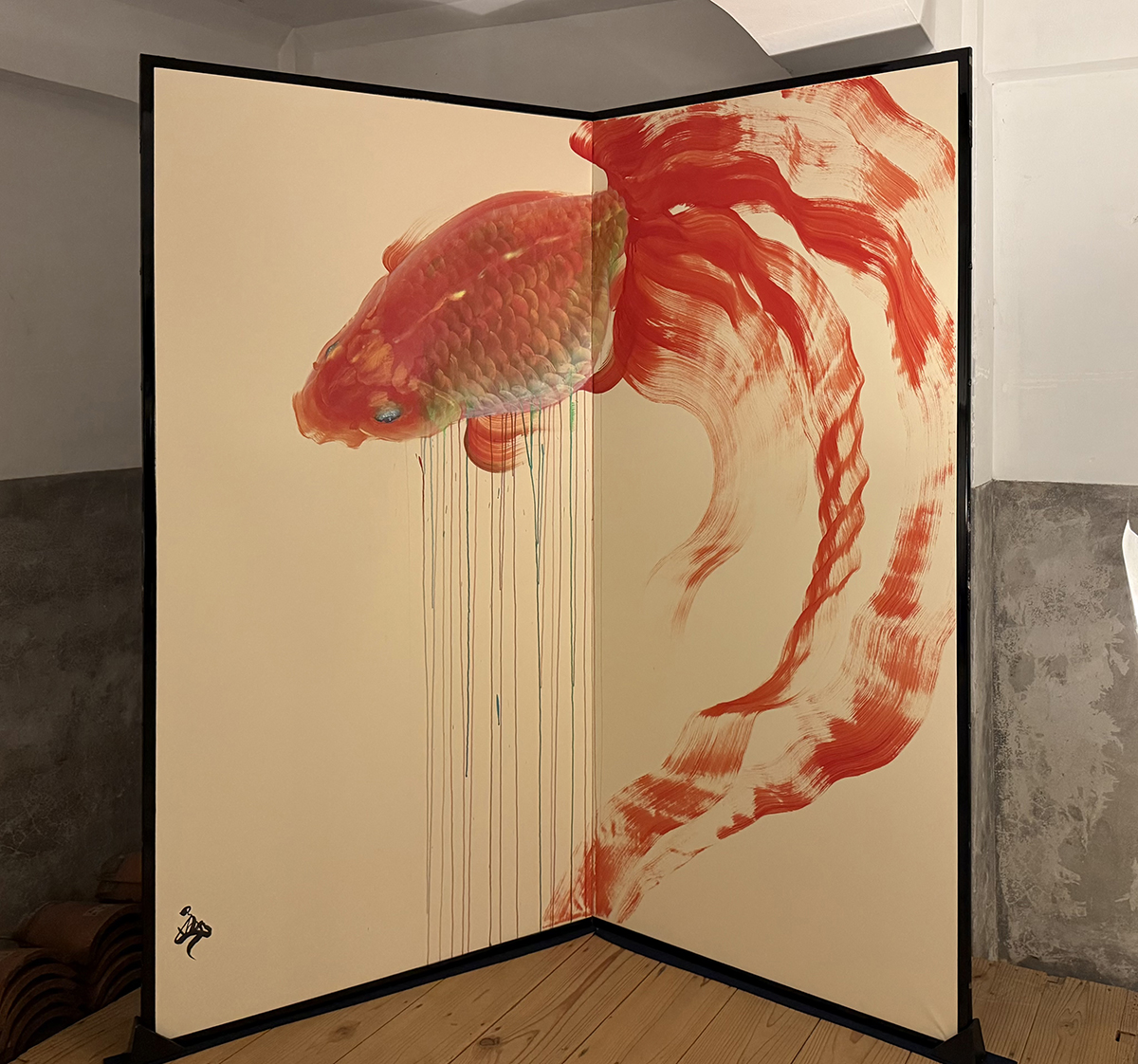
and many of his new works have aged and soiled-looking backgrounds that suggest even the brightest goldfish must coexist with death, decay, and the past.
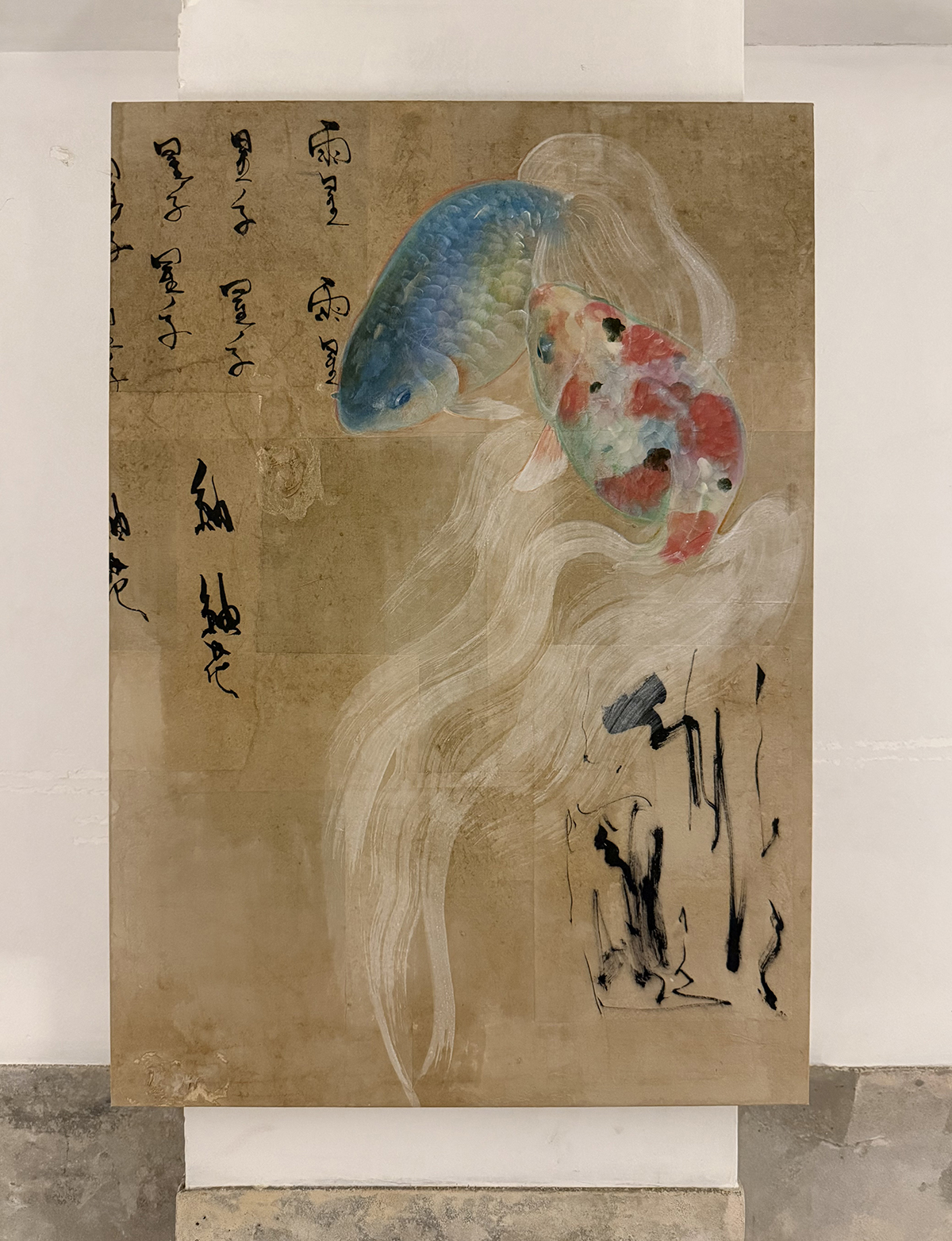
The culmination of this line of exploration is a large-scale sculptural installation consisting of schools of small goldfish-like shapes swimming in mobiles that stir in the breeze, swirling around a large skeletal goldfish that seems to move ponderously through the space.
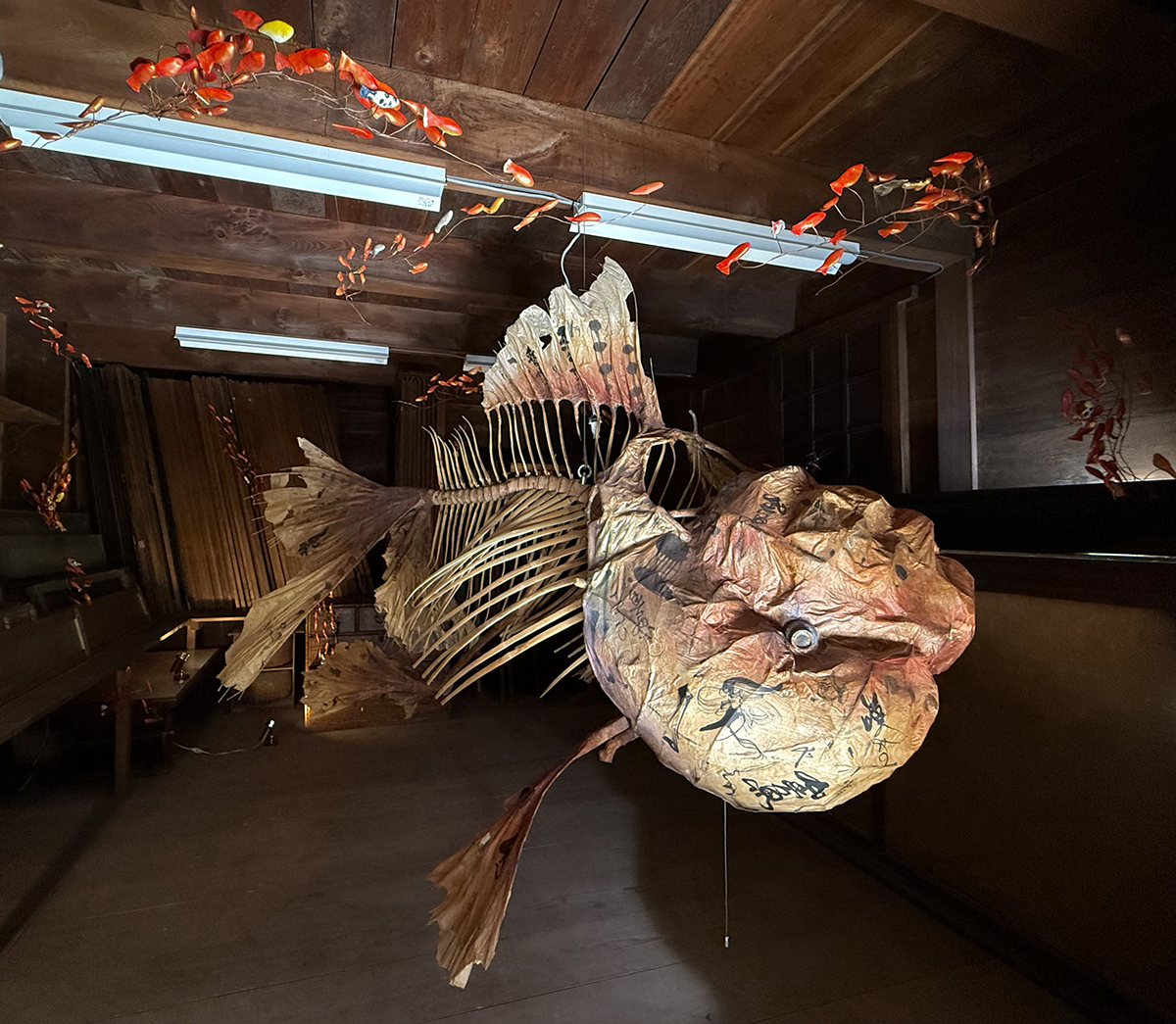
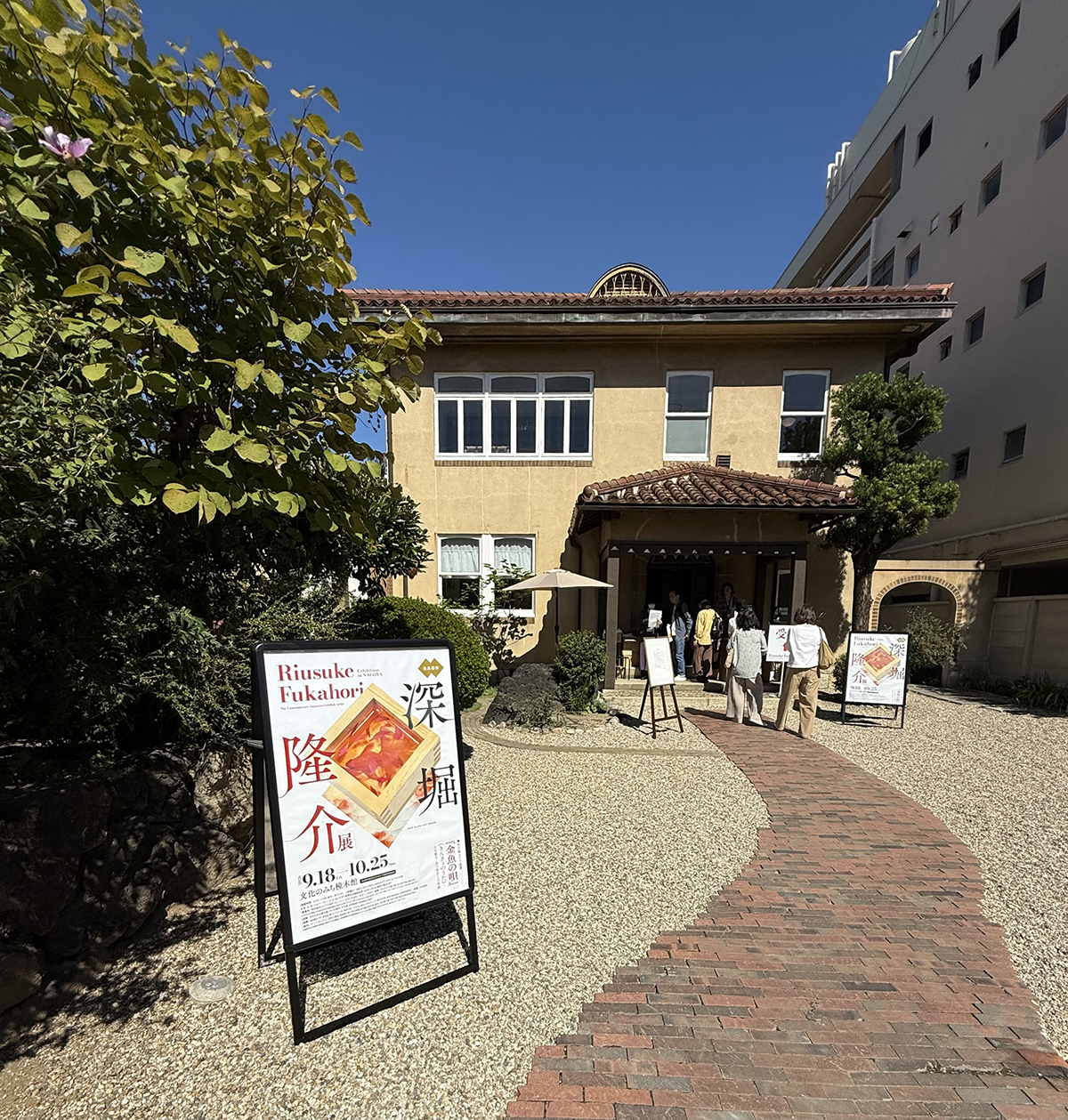
The exhibit curation deserves a shout-out too, because the show is staged in a Taisho Era house that has been converted to a museum.
The aged quality of the walls and beams provided a perfect setting for these works (and there are many more than I’ve been able to show you here!)
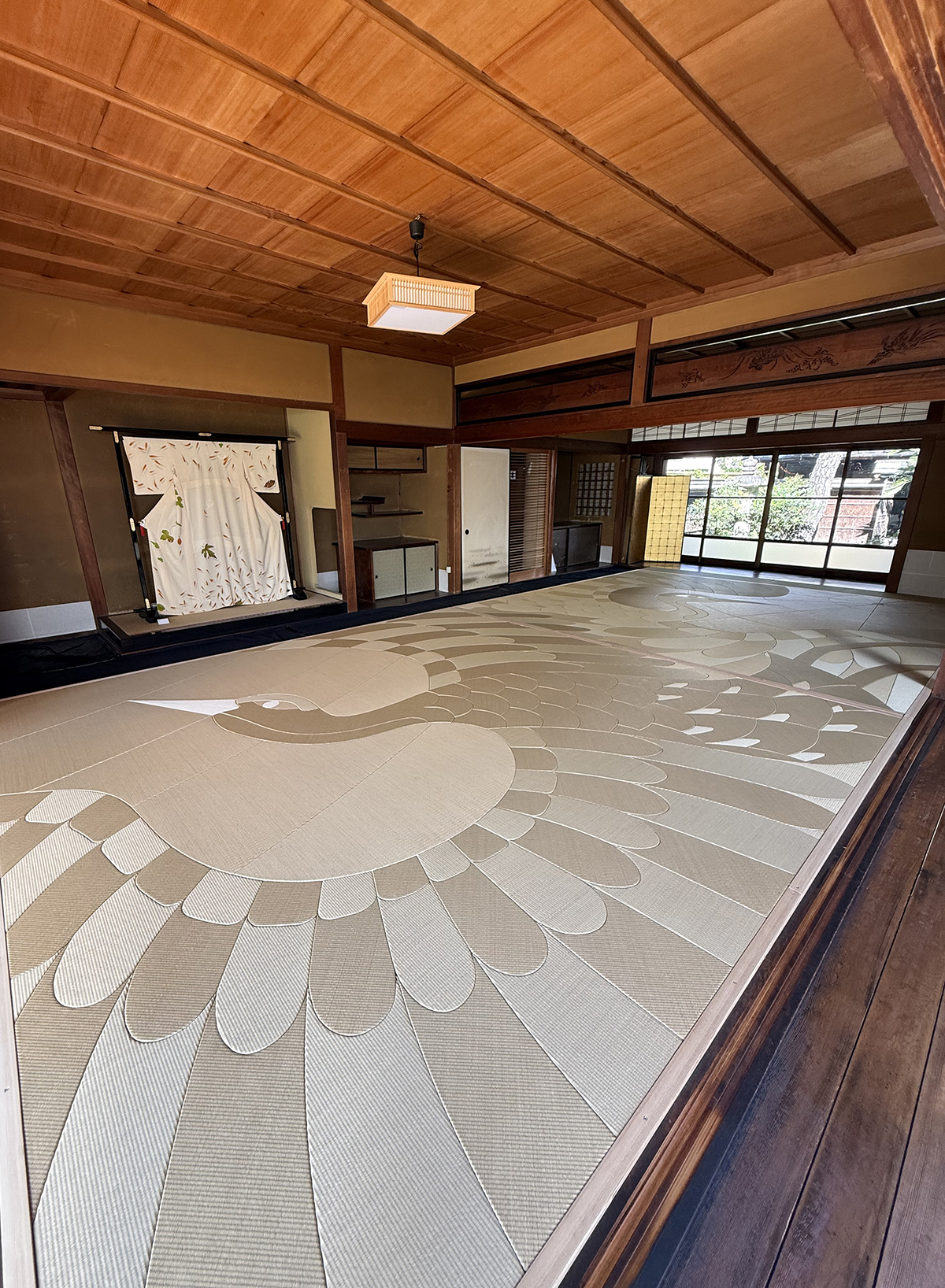
The room where the final kimono is displayed is a masterpiece of Taisho Era splendor. The kimono’s restrained elegance perfectly complements the floor designed by fifth generation tatami artist Kenji Yamada. These woven tatami mats are custom made and pieced so that the light hitting the differently angled weaves depict a pair of cranes that shimmer in the shifting light as you walk around them.
If you’re anywhere near Nagoya right now, I highly recommend this rare chance to see Fukahori’s work. Photos really can’t do it justice—the fish look even MORE real in person!
Riusuke Fukahori “Song of the Goldfish“
September 18 – October 25, 2026
Open: Every day
Hours: 10:00 – 20:30
Admission: Free
•
If you enjoyed this, subscribe! It’s free!
Would you like to be whisked away to Japan, wherever you are?
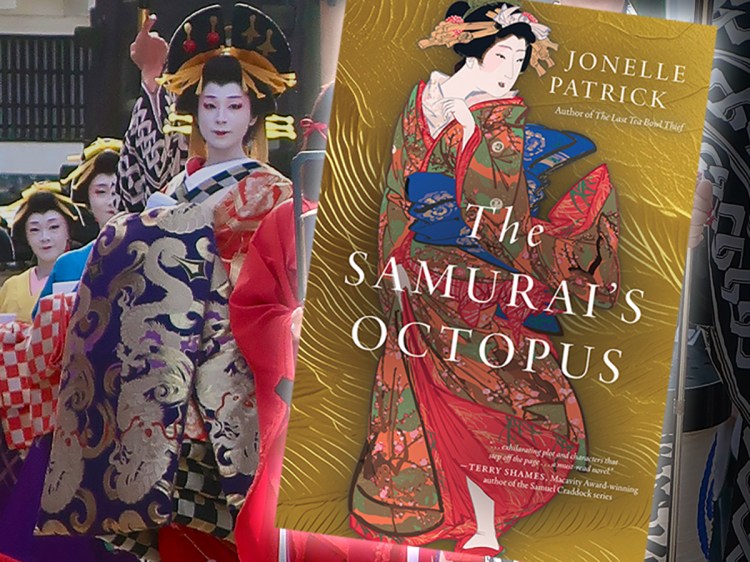

“The Samurai’s Octopus…is a truly remarkable book, one that surprised and charmed me at every turn of the page. It’s one of the most memorable books I’ve read in a long time. You’re in for a treat.”
—James Ziskin, Anthony, Barry, and Macavity Award-winning author of the Ellie Stone mysteries
•
If you enjoyed this, subscribe to Only In Japan! It’s freeヽ(*^ω^*)ノ
If you enjoyed this, subscribe! It’s free!
•

Jonelle Patrick writes novels set in Japan, produces the monthly e-magazine Japanagram, and blogs at Only In Japan and The Tokyo Guide I Wish I’d Had

