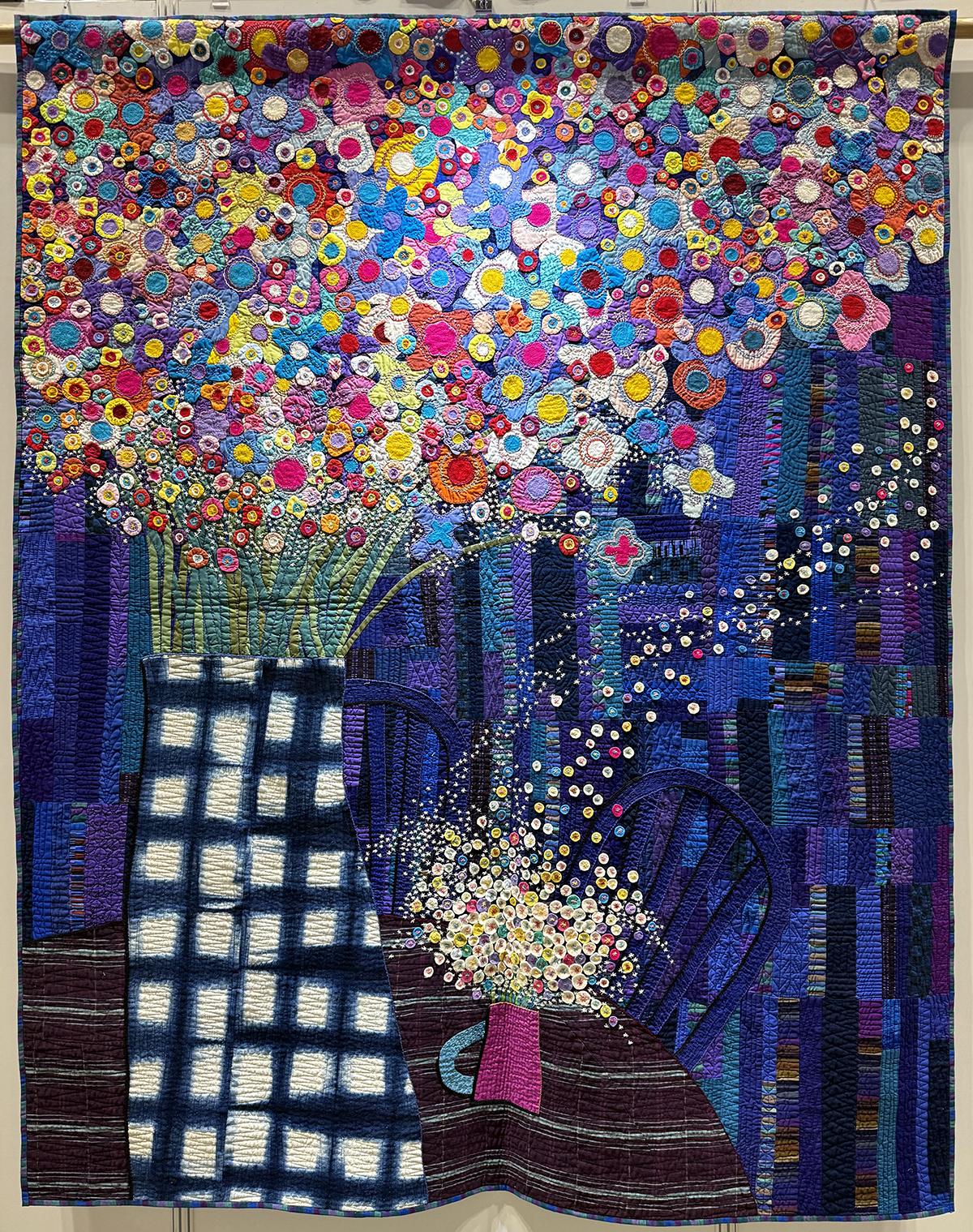
This annual quilt show is such a stunner, I could make you say “wow!” every day for a year if I posted all the quilts that sent me reeling. The sheer artistry and pushing of boundaries when it comes to the textile arts never fais to amaze.
Here at Only In Japan I’m going to focus on the Japanese artists—especially Japanese artists who explore Japanese themes and ideas—but I can’t find anywhere that’s posting pix of the rest of the show, so I’ll upload a couple of carousels on my personal Instagram page @jonellepatrick in the coming week.
Let’s start with the most Japanese of the Japanese artists’ quilts!
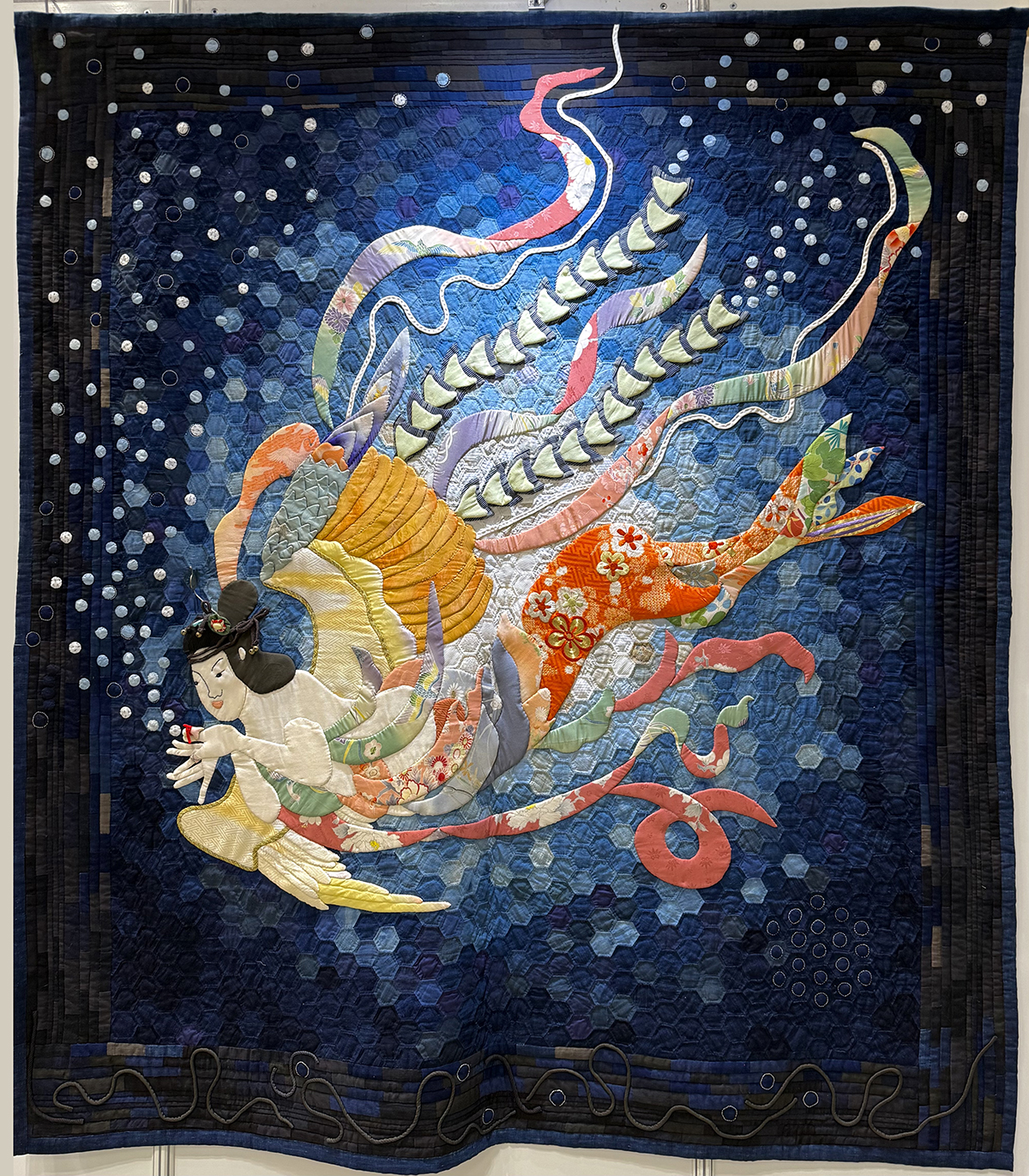
From goddesses pieced of vintage kimono fabric against a sea of aizome blue…
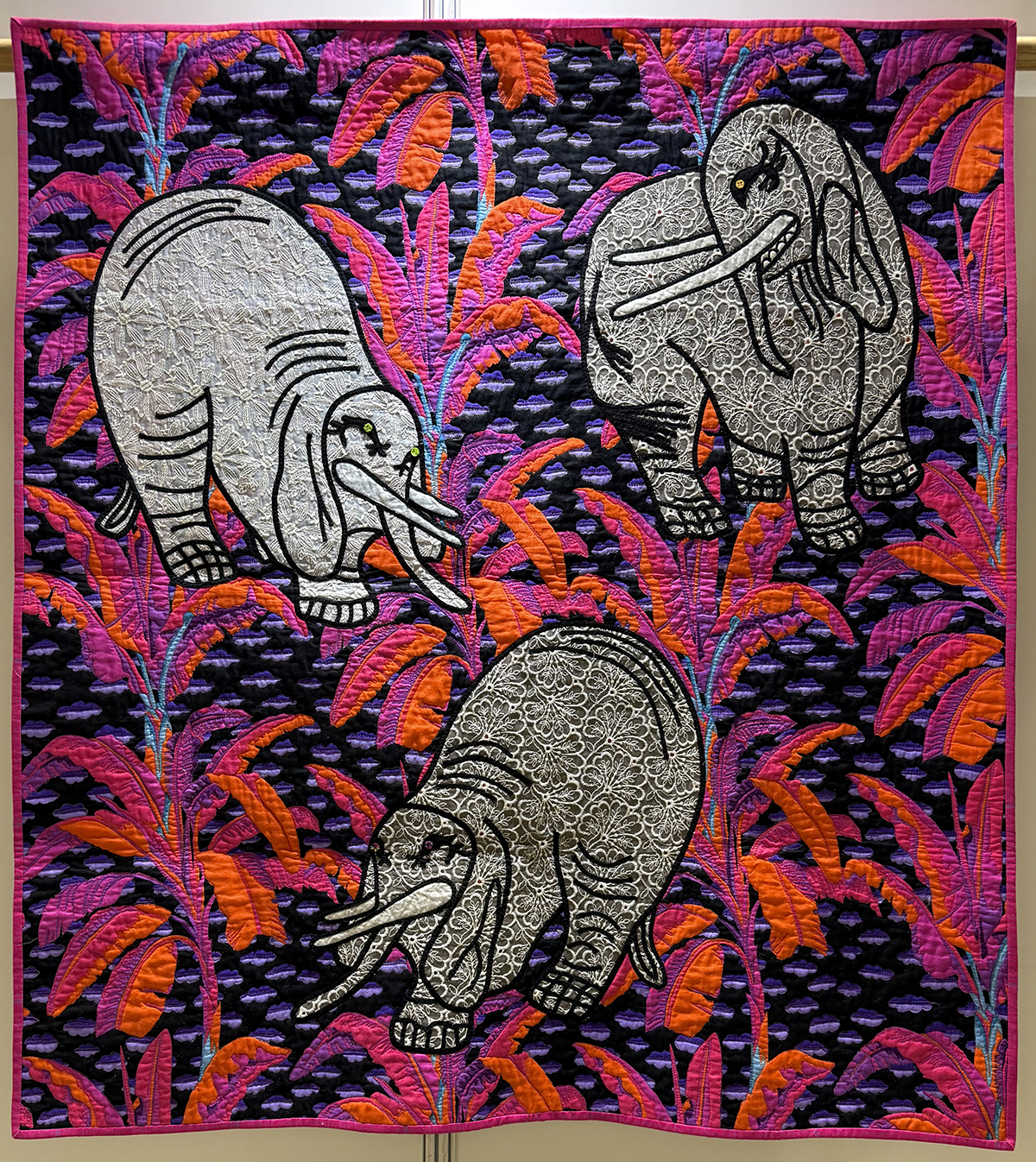
to elephants inspired by a Sotatsu scroll painted in 1621…
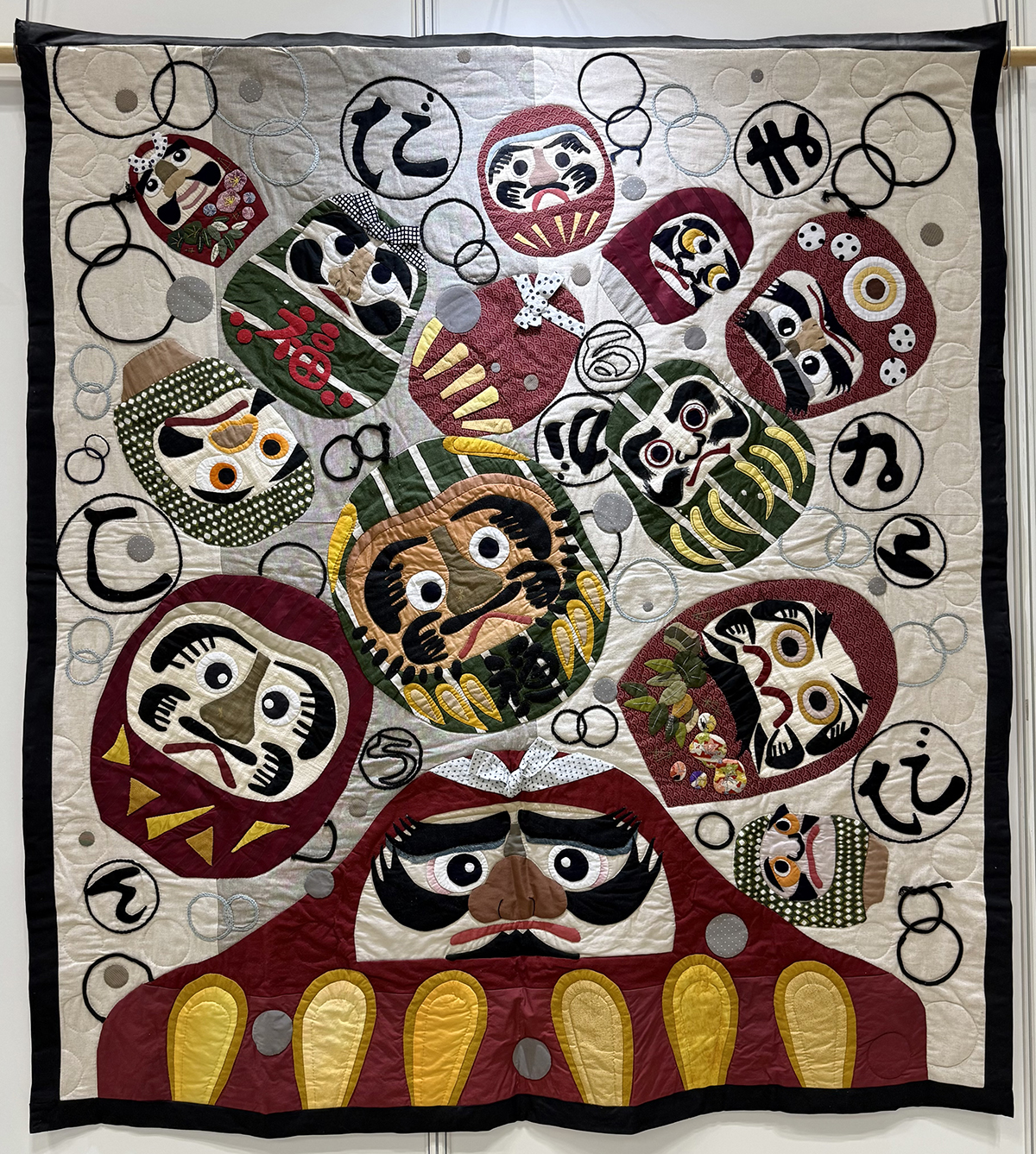
to a lively take on the ever-popular good-luck Daruma figures known to grant wishes…
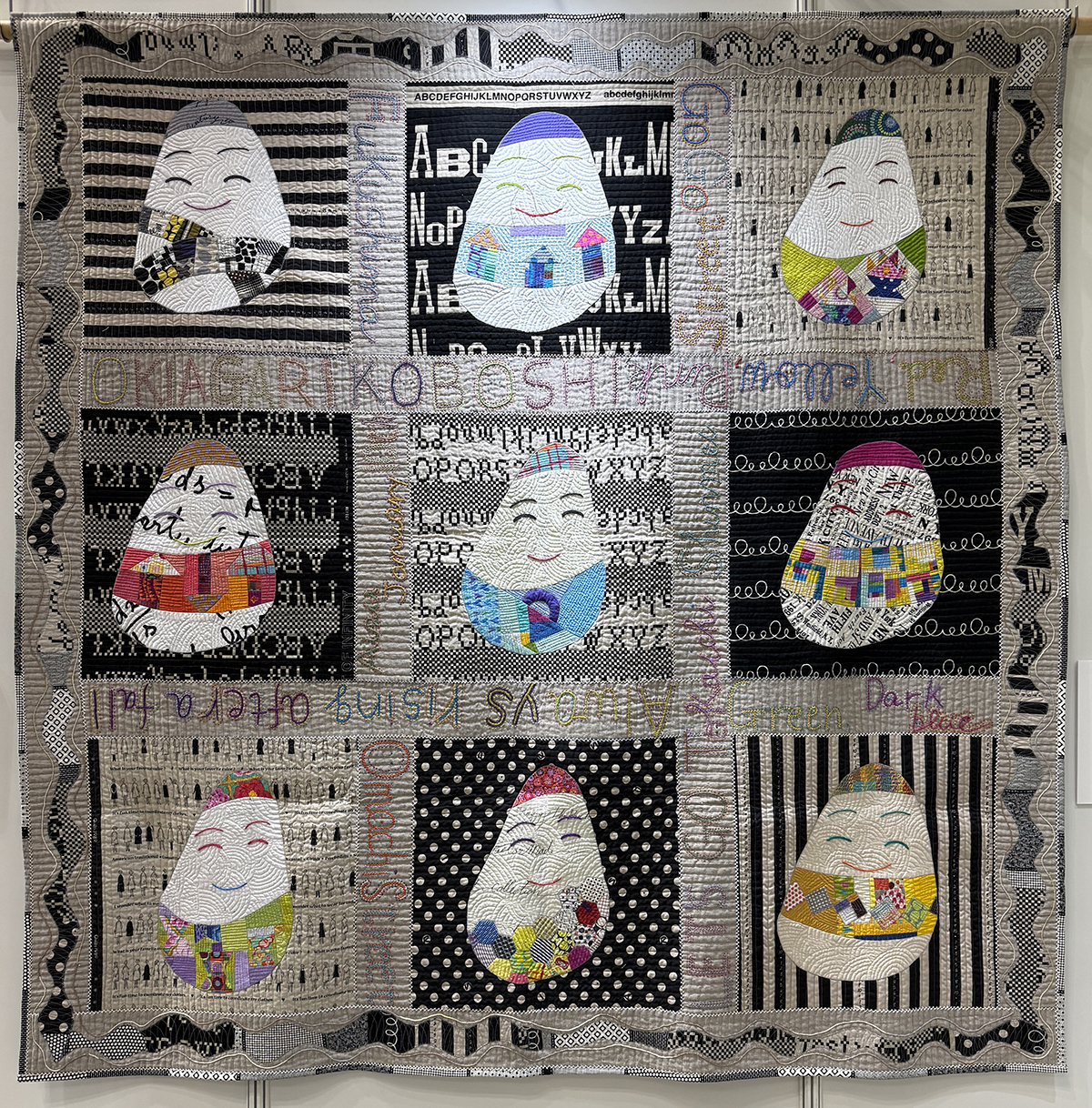
Japanese tradition informs many of the quilts in this show. But many artists reached deeper, like these adorable folk figures that demonstrate resilience by being weighted on the bottom and impossible to knock over…
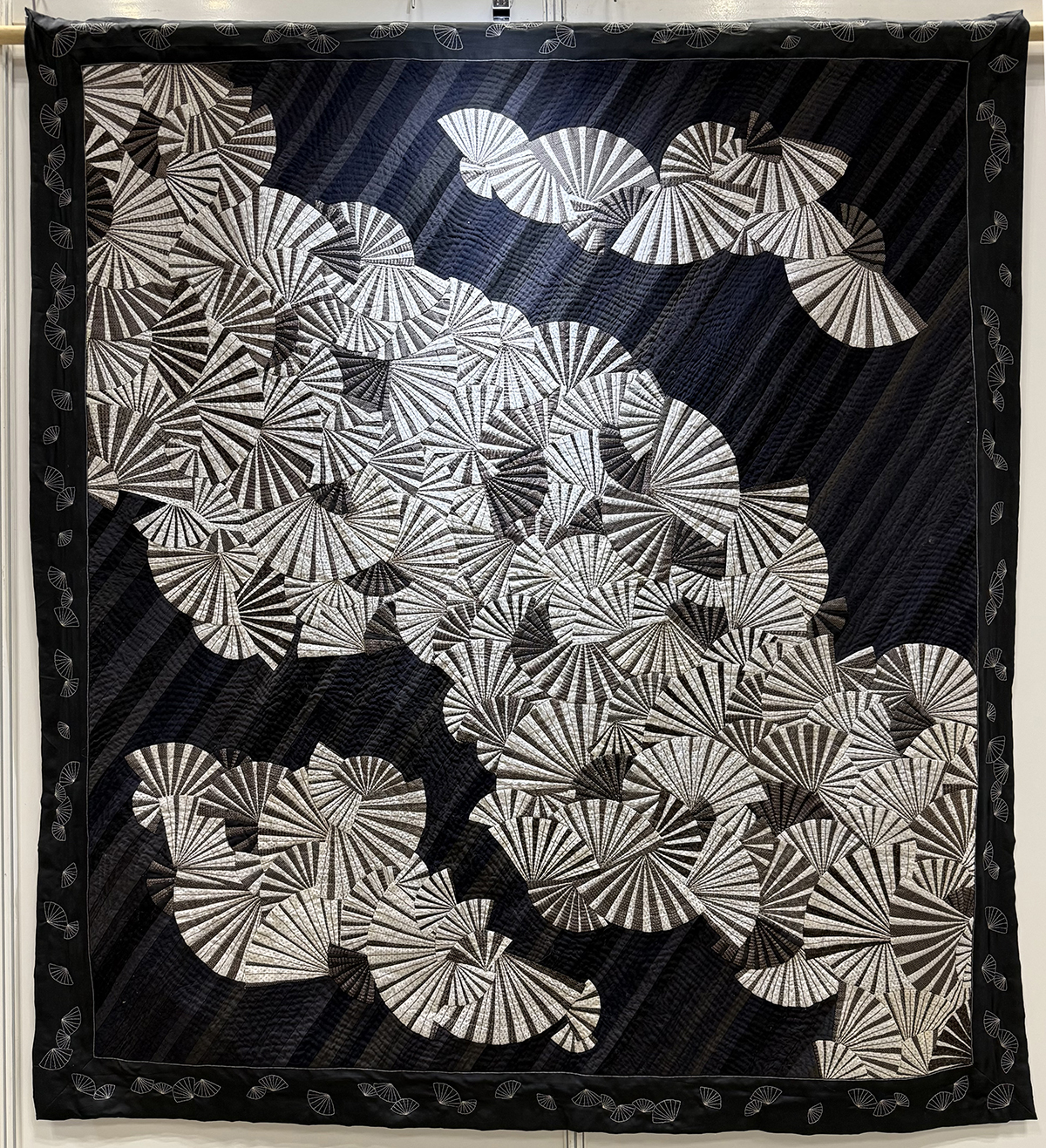
or taking a traditional fan pattern, rendering it in the teeny-tiny patterned fabrics known as Edo-komon and making it take flight in whole new ways.
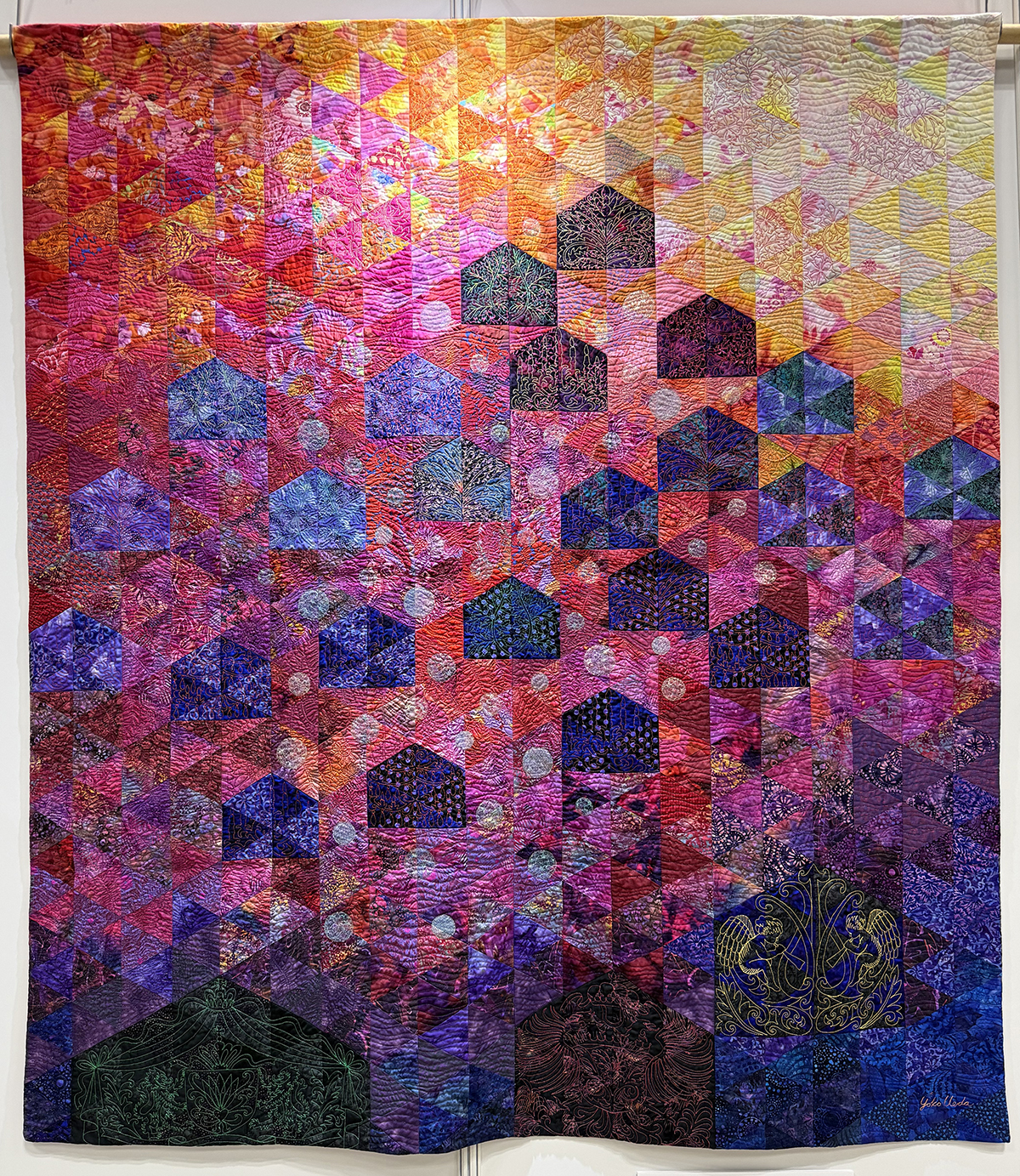
This one looks like a traditional piecing pattern rendered abstract by its sophisticated use of color—and not particularly Japanese—until you back up and see that all those “house-shaped” elements are actually the shape of the prayer plaques at Japanese shrines and temples.
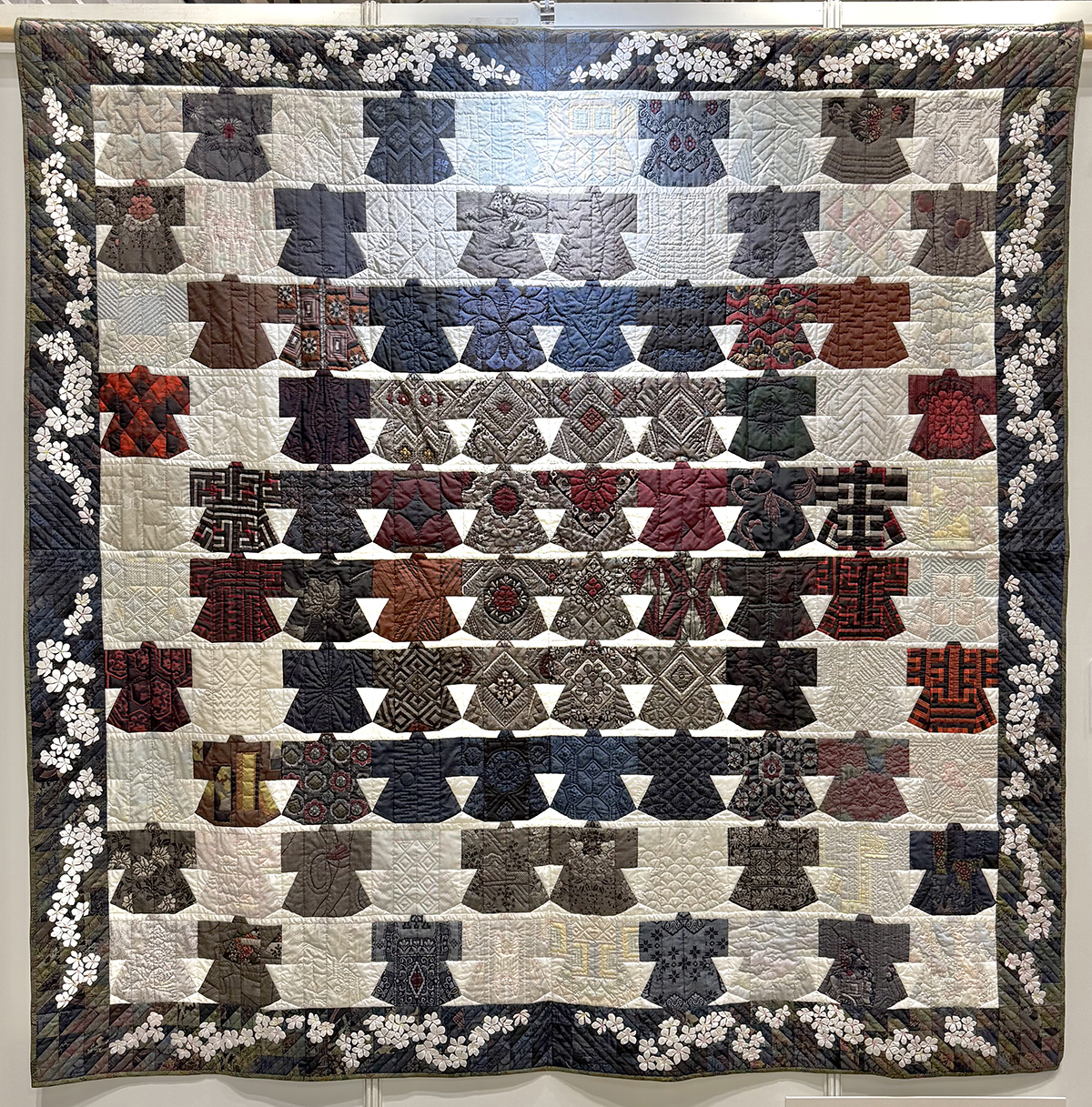
This one repeats a pattern that gives classic “sunbonnet baby” vibes of yore, except these are a hundred classic tsumugi silk kimonos…
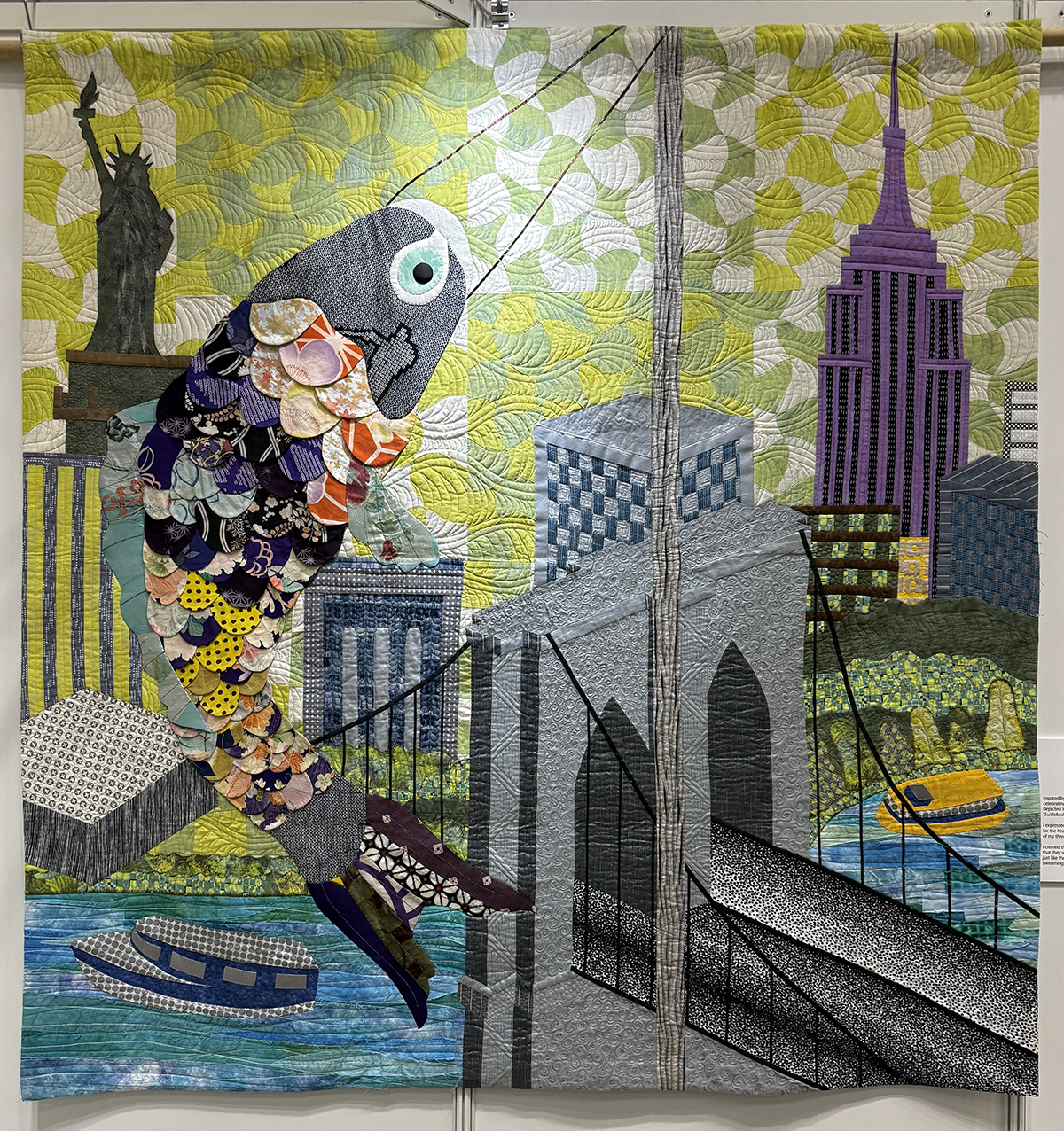
Hiroshige’s famous woodblock print from “One Hundred Scenic Views of Edo”…
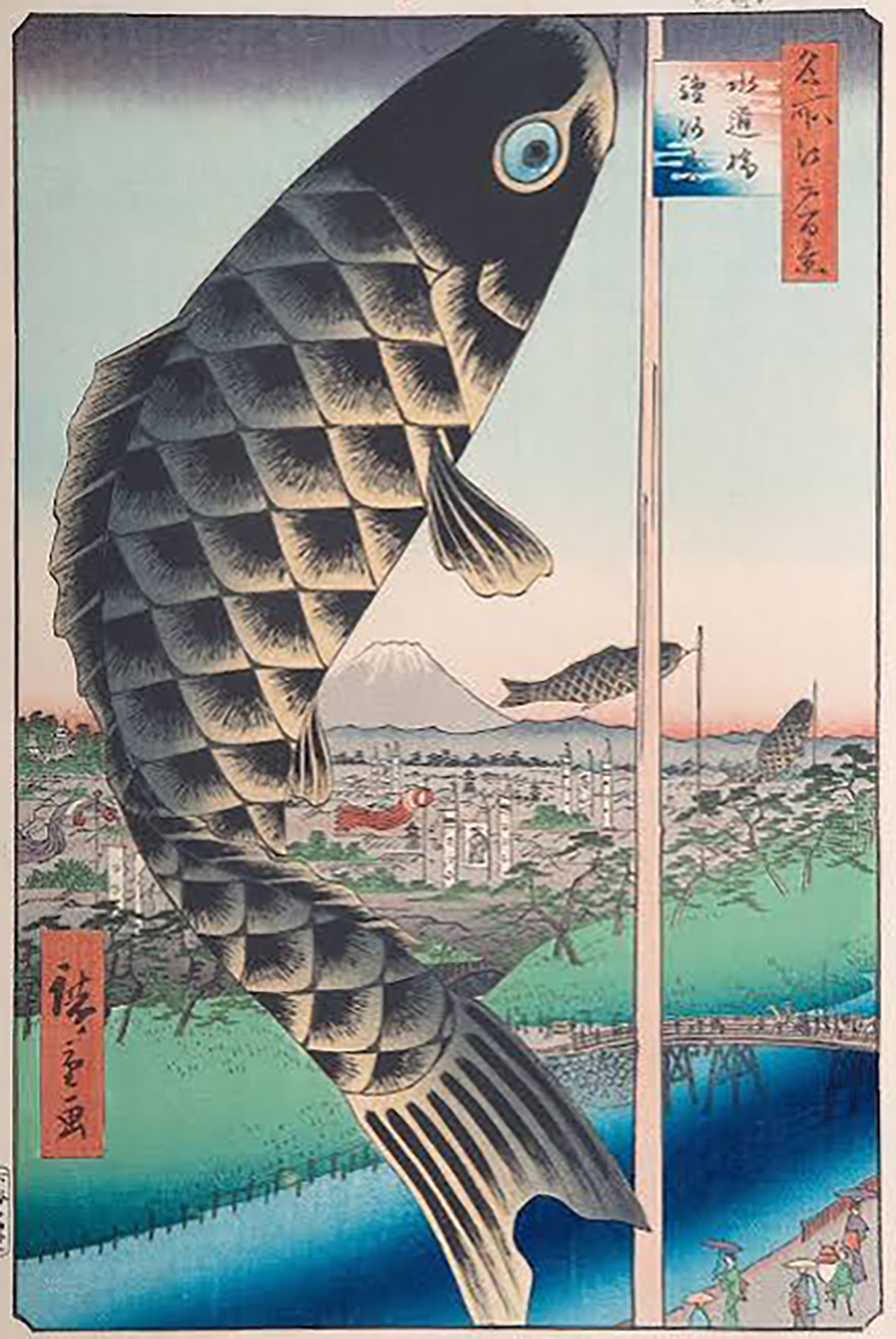
inspired this international update, with New York City in the background.
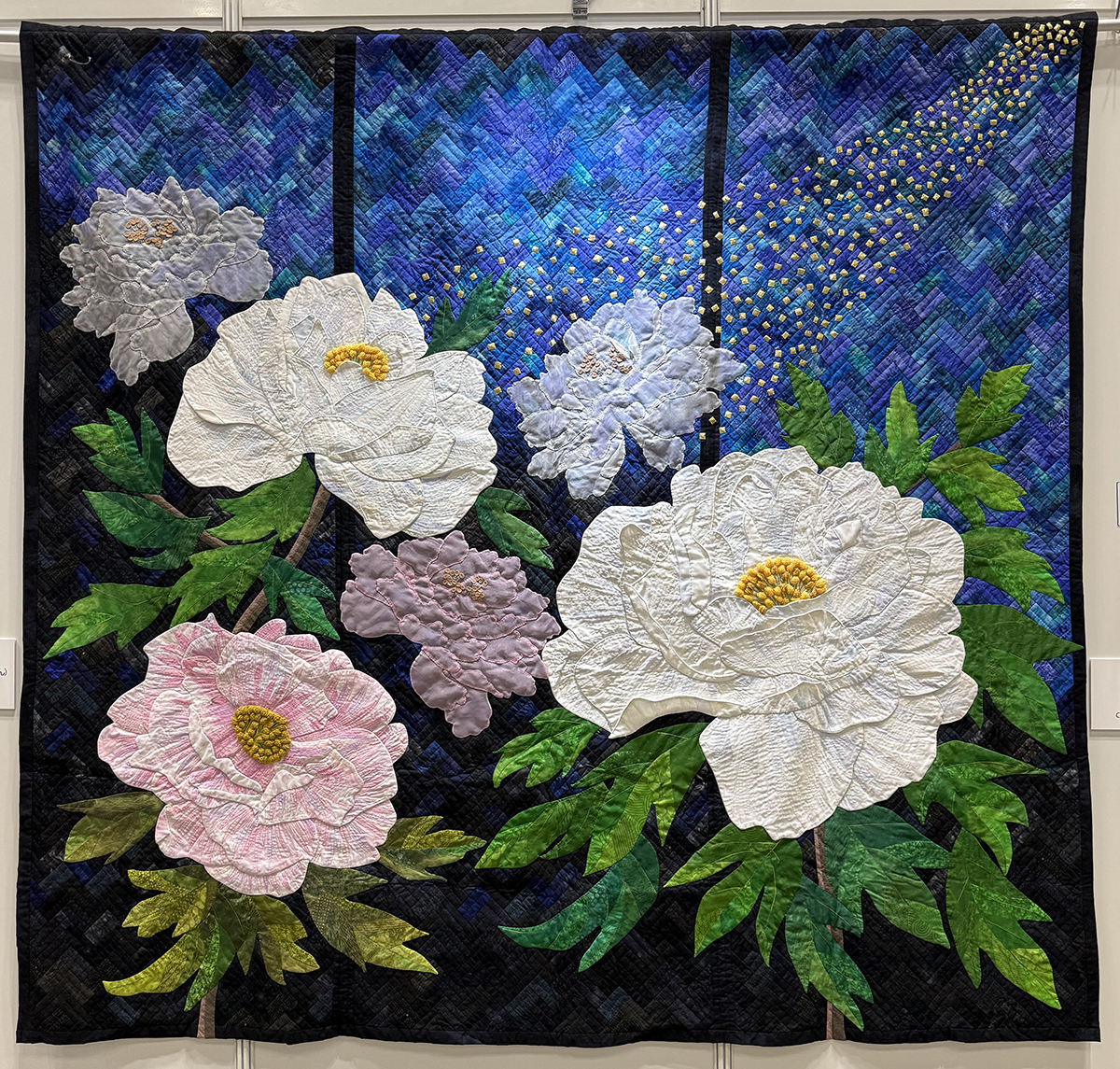
Japan’s traditional flower seasons always make an appearance, from these perennially classic peonies…
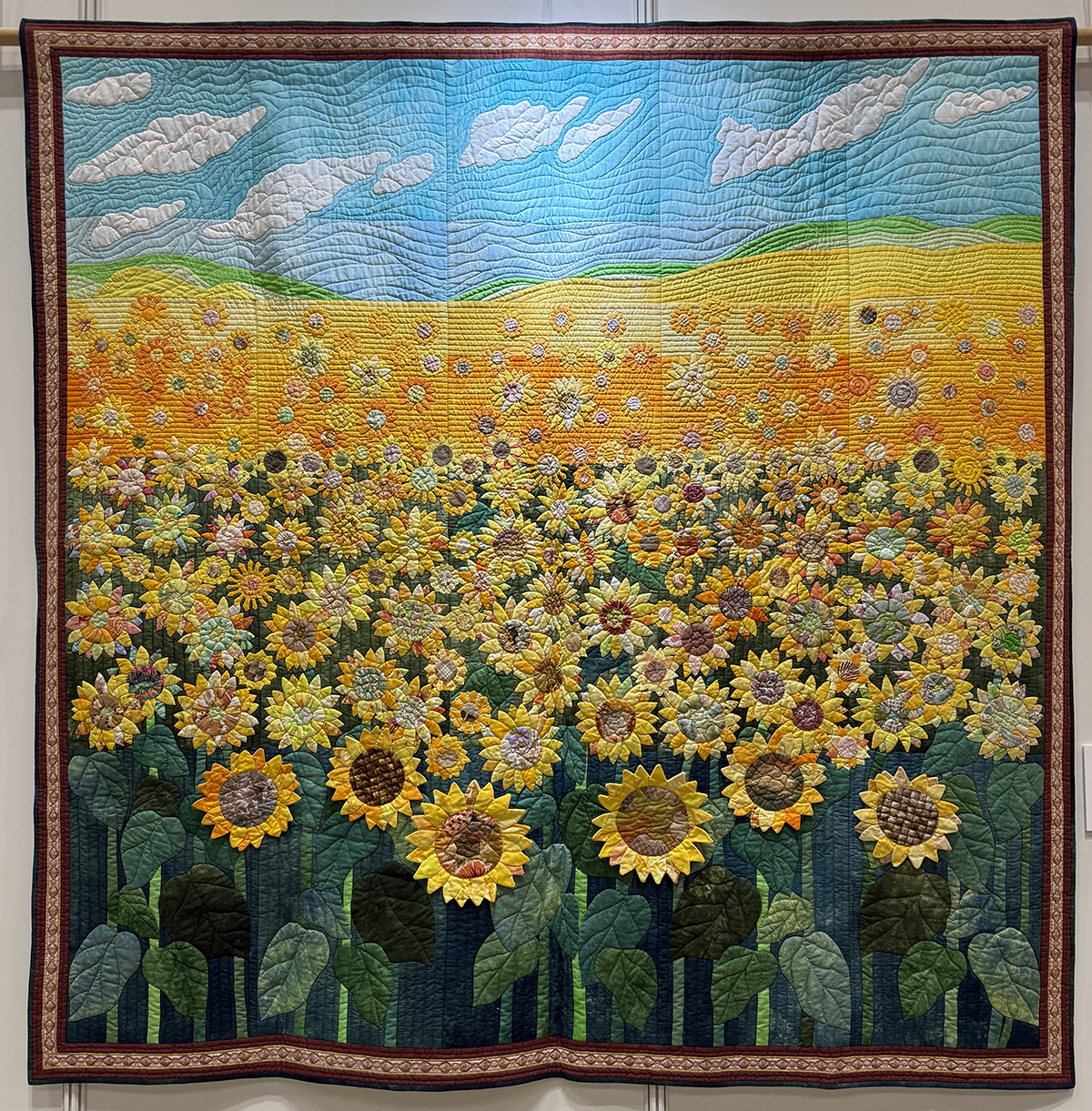
to fields of himawari sunflowers…
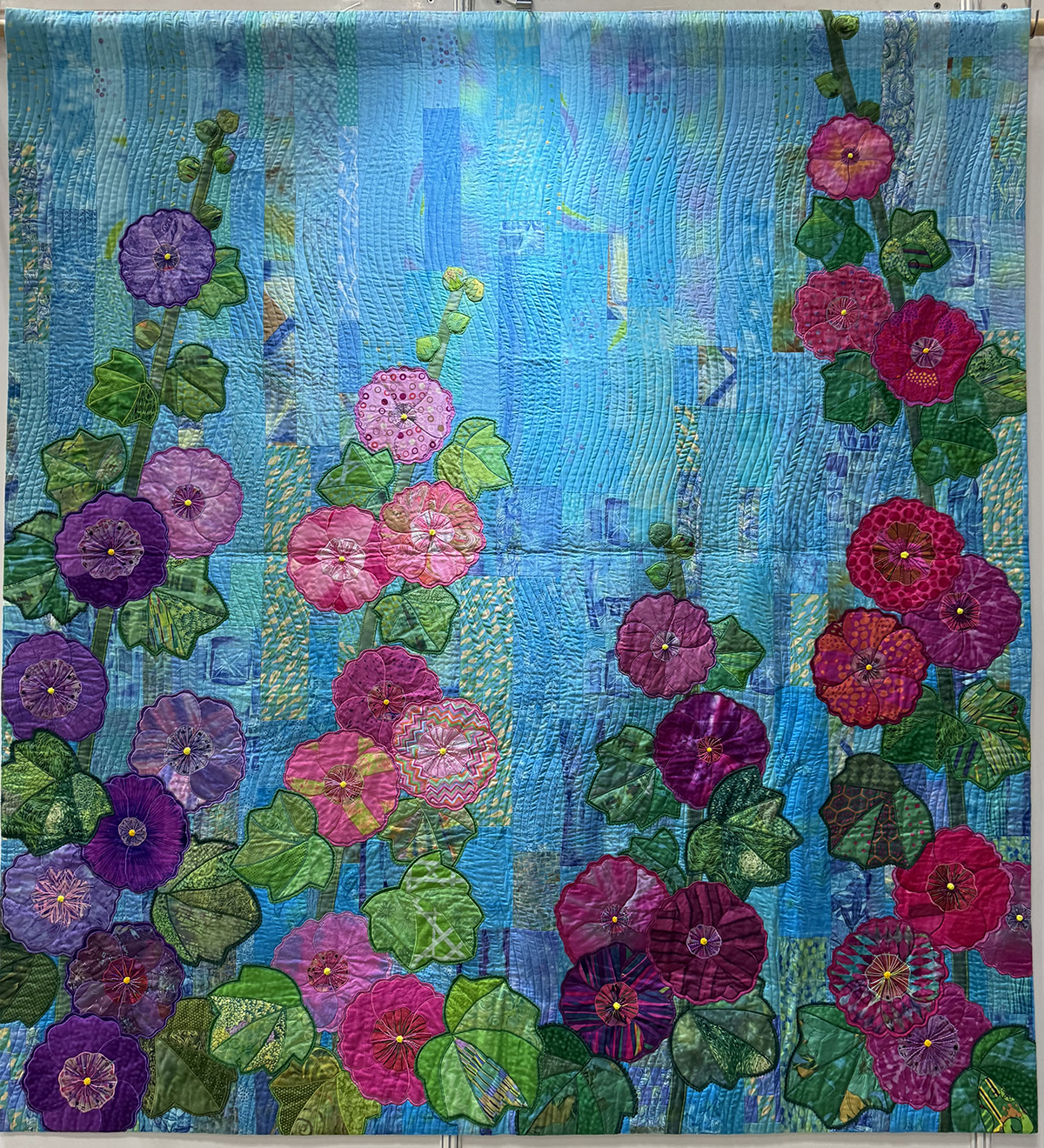
with spires of cheerful May hollyhocks…
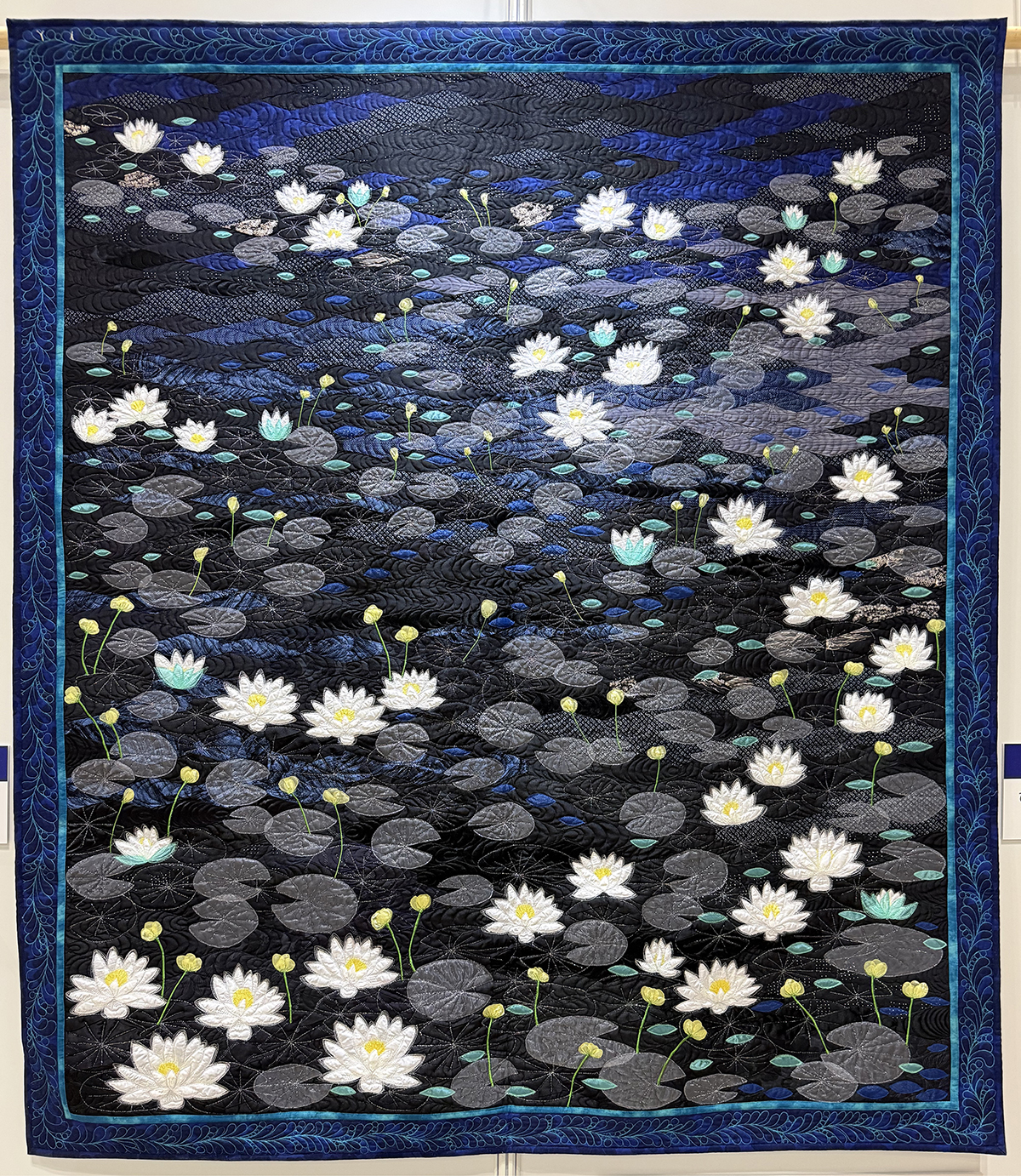
contrasting with a pond of moonlit suizen waterlilies.
Some artists represented Japan’s culture through shibori-dyed indigo elements…
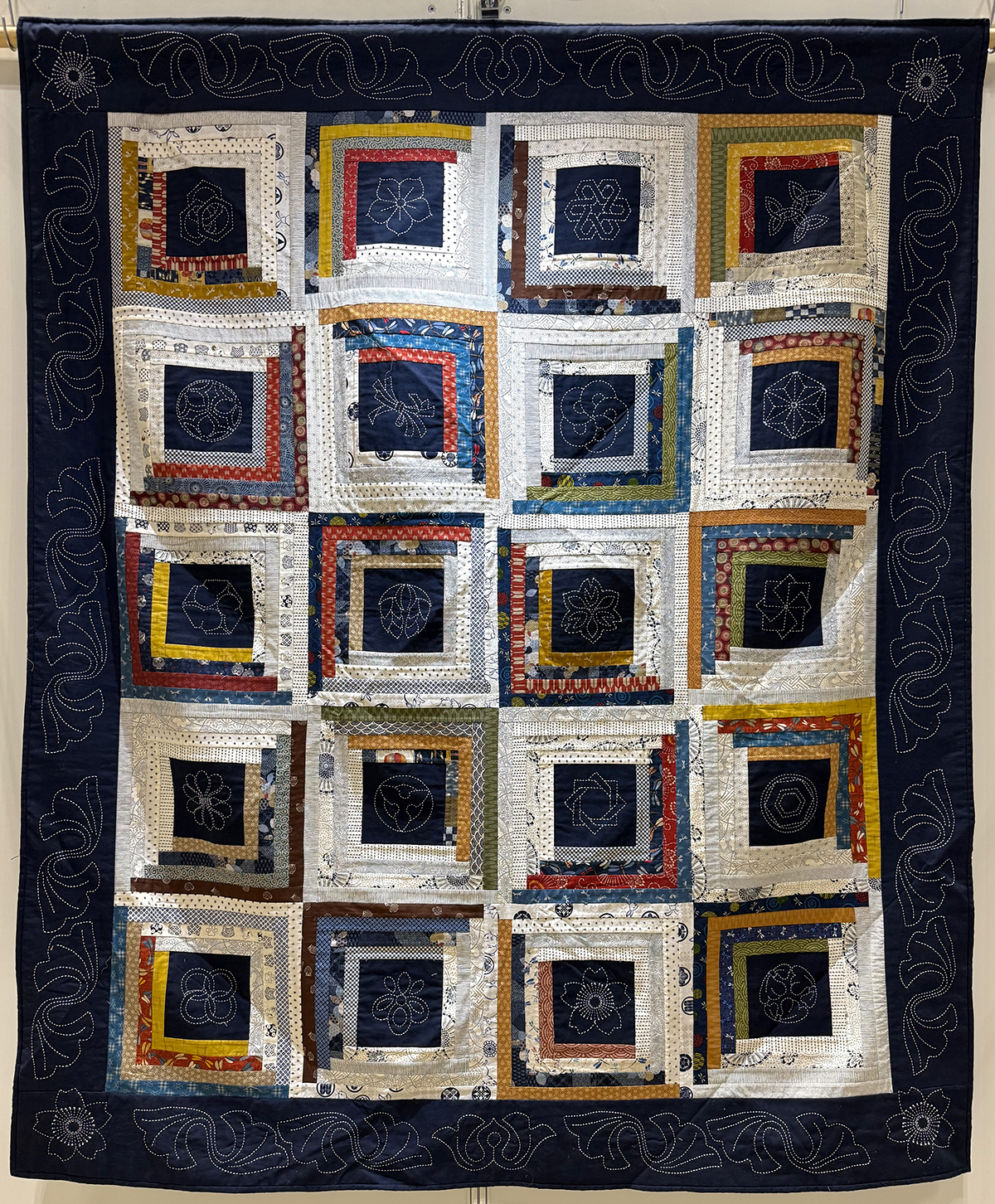
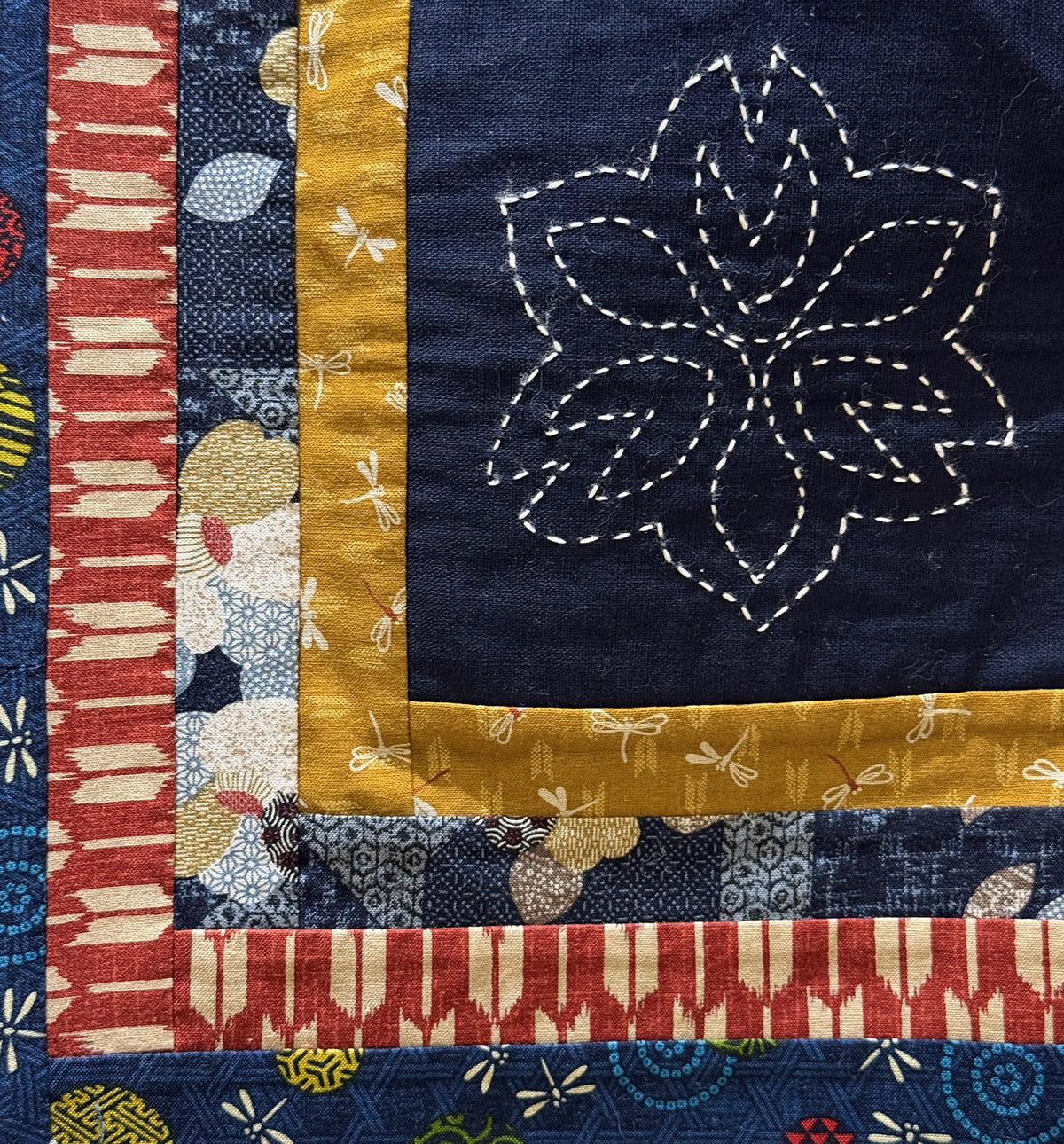
and others rendered classic Western piecing patterns in vintage Japanese fabrics framing the very Japanese art of sashiko white-on-indigo stitchery.
Here’s a close-up of one of the delightful combos
This quilt is framed with pieces of a summer obi gifted by a dear departed friend…
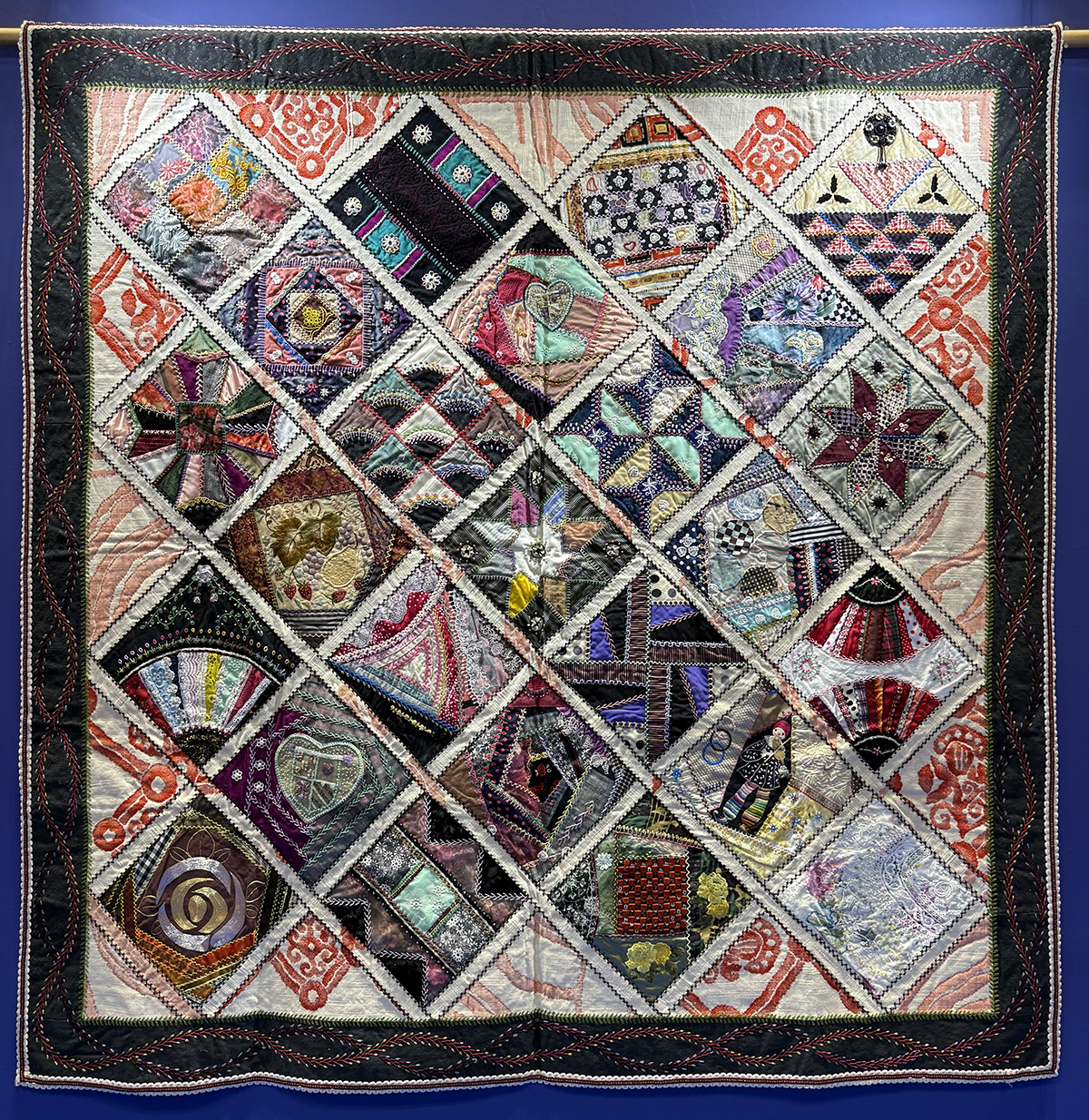
while this one employs a mix of textures and antique patterns…
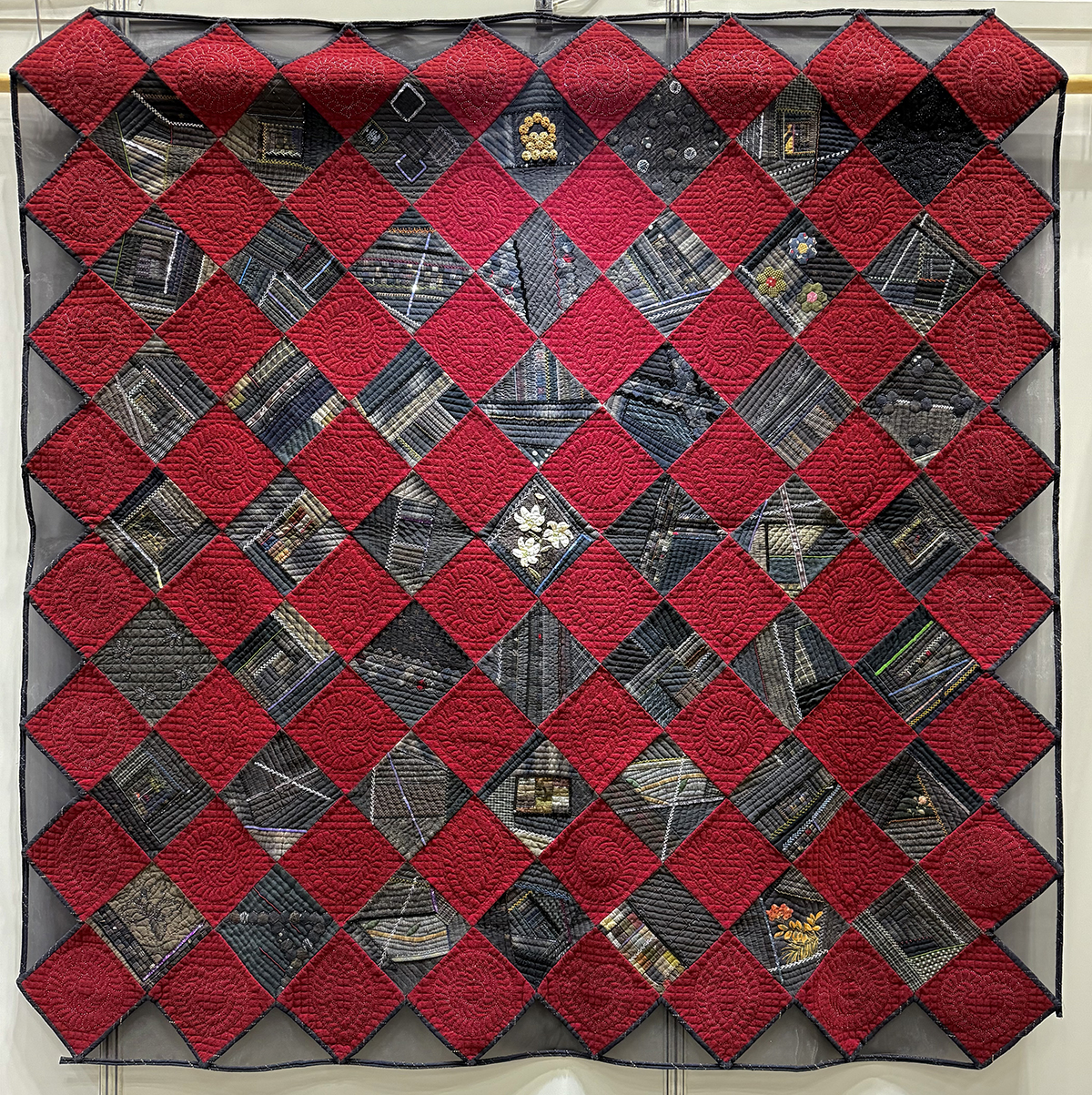
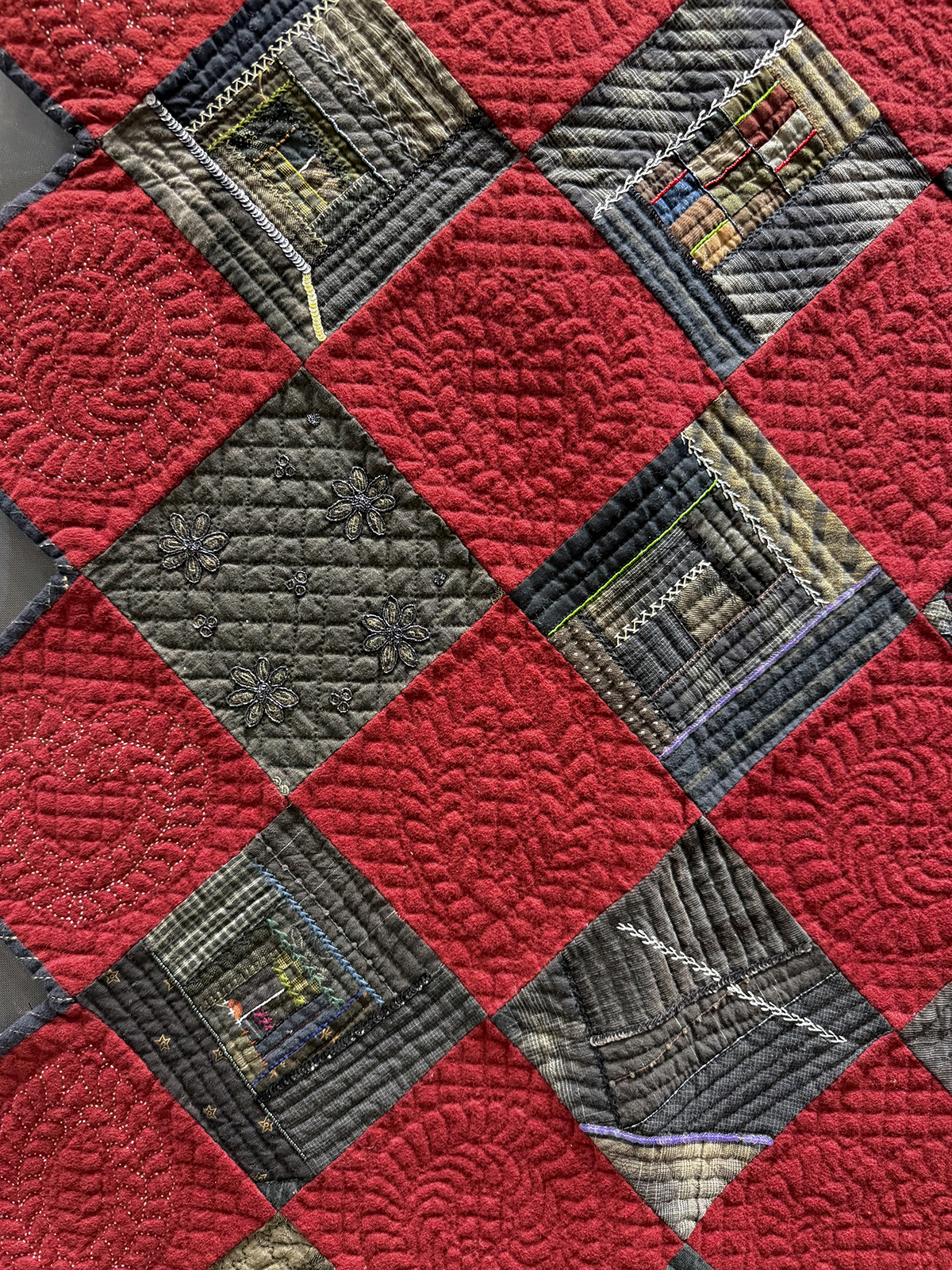
with piecing and all manner of embellishment that becomes more and more intricate, the closer you look.
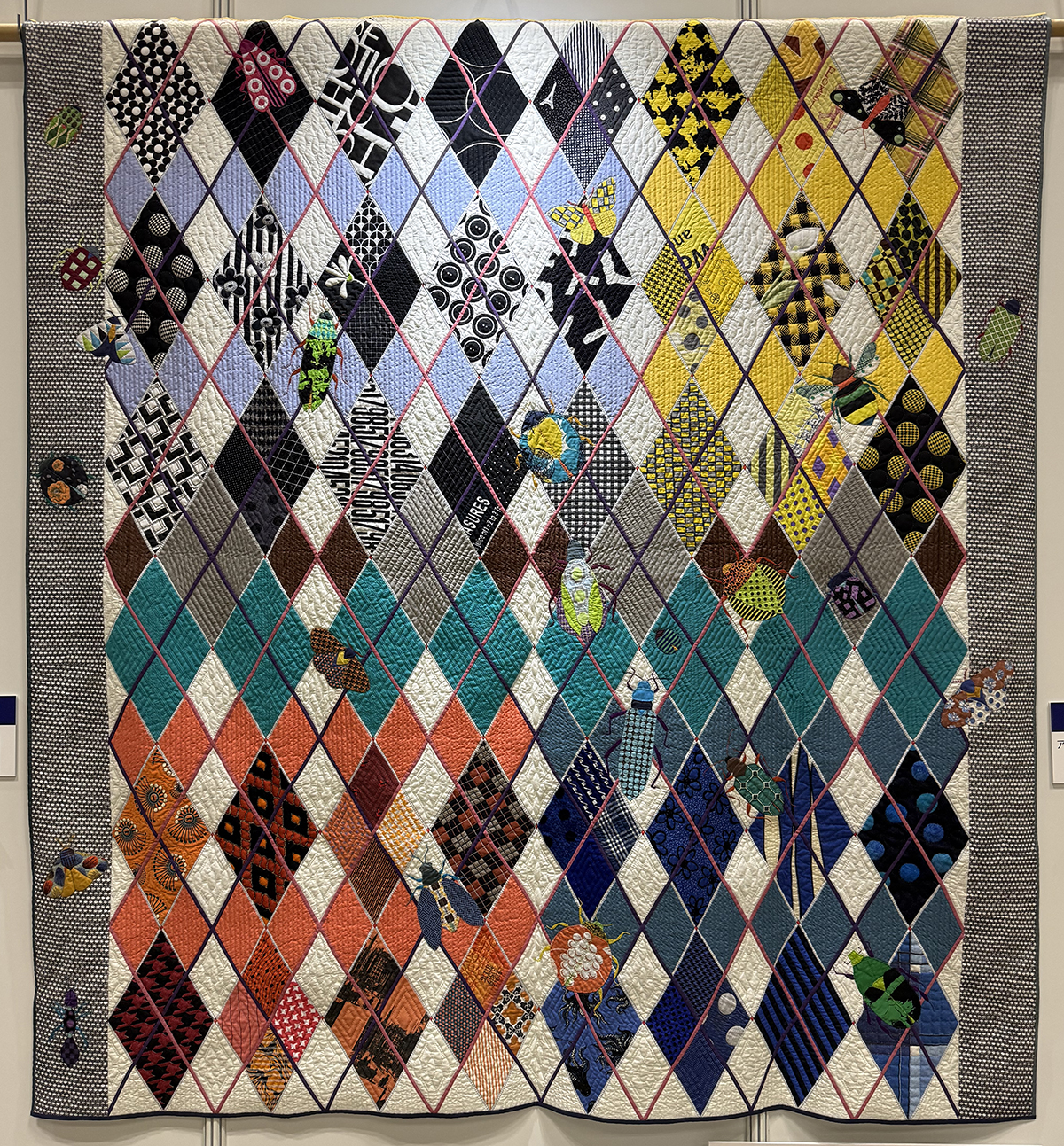
The whimsical Japanese bugs and beetles in this quilt almost disappear amid the lively argyle-style colors and patterns (and it has the best quilt name!)
and the abstract complexity of this masterwork manages to fade from pale patterns to deep ones while conveying the busy laying of modern life.
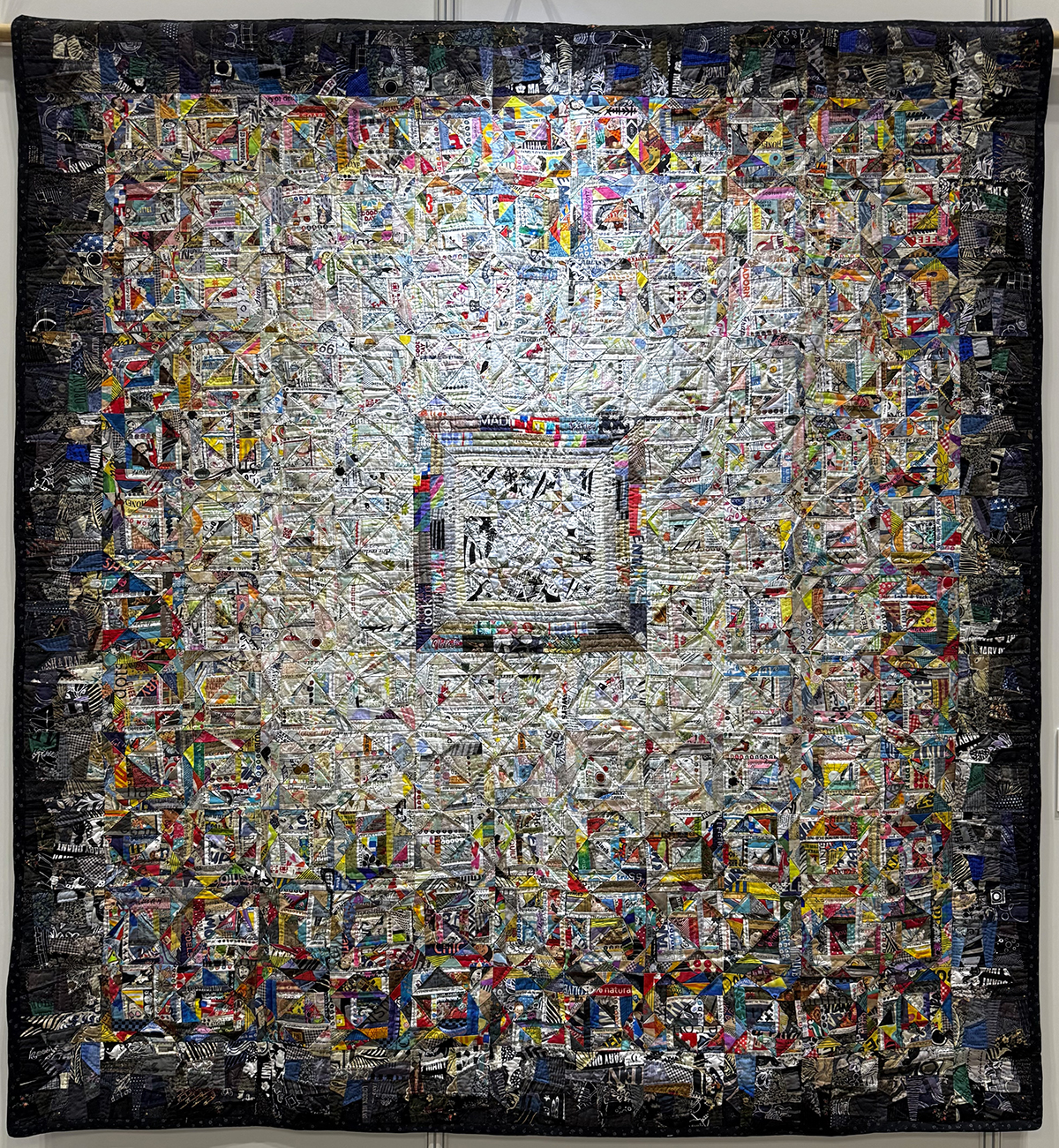
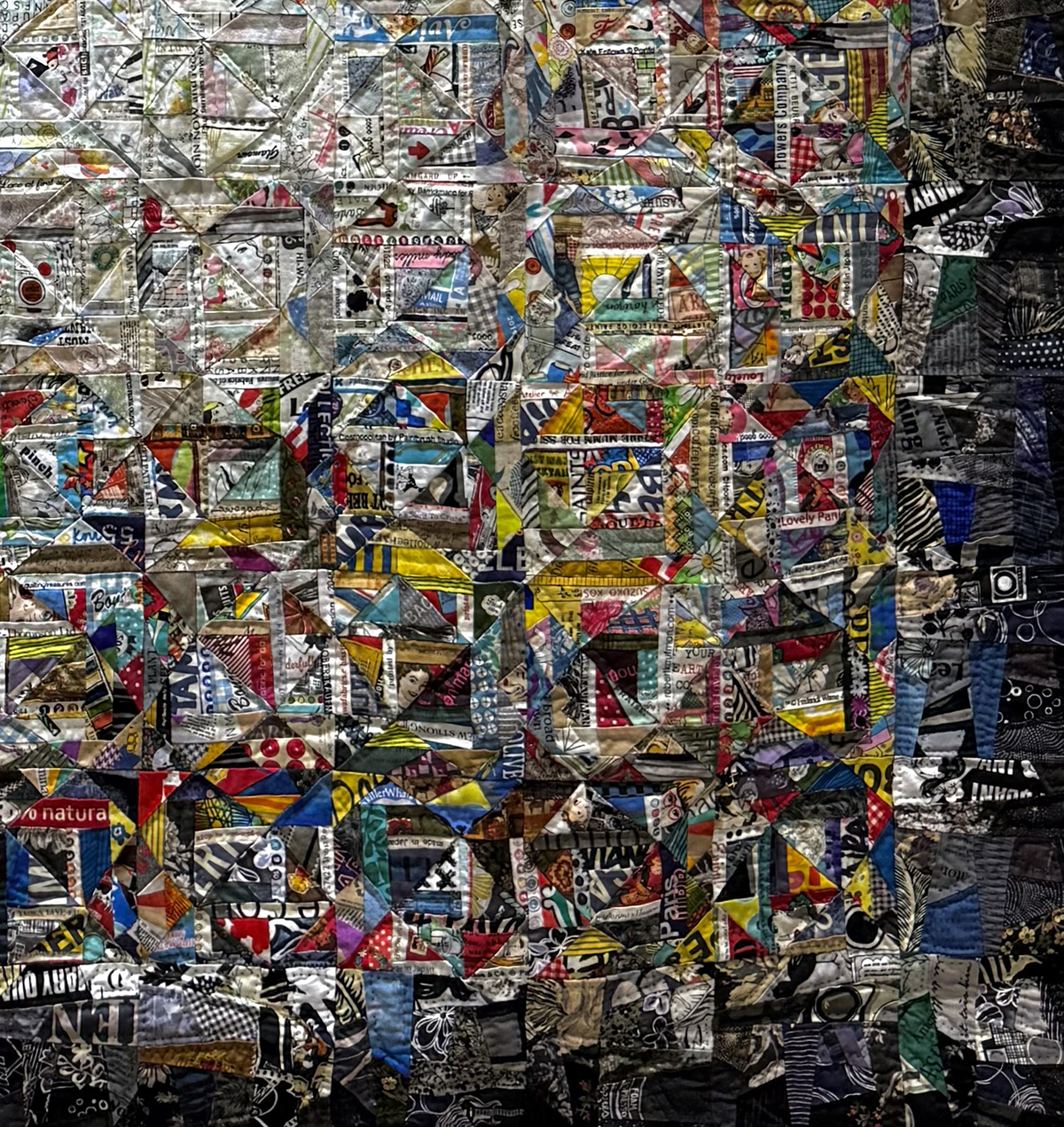
and it just gets better, the closer you look. From a distance, it looks like a simple diamond grid, but when you get closer, you can see that the squares are anything but, and it’s actually pieced like a disciplined crazy quilt. The sheer variety of scraps it’s made from also speak to the maker’s composition superpower.
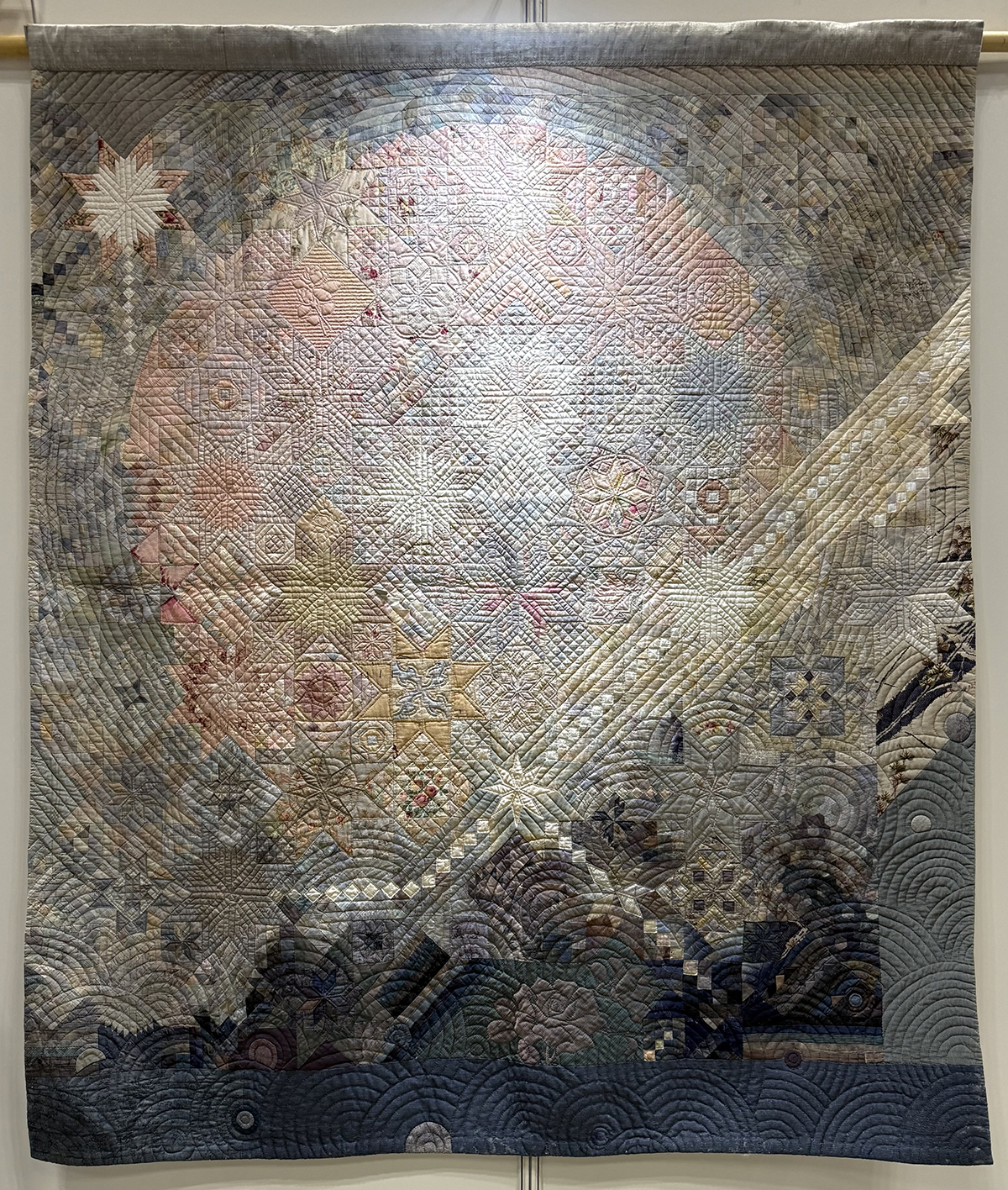
This beauty was inspired by the scent of a favorite perfume…
and this gorgeous classic pattern mixes it up with a color trend that recurred surprisingly often throughout this year’s show—a mix of warm reds, pinks and browns.
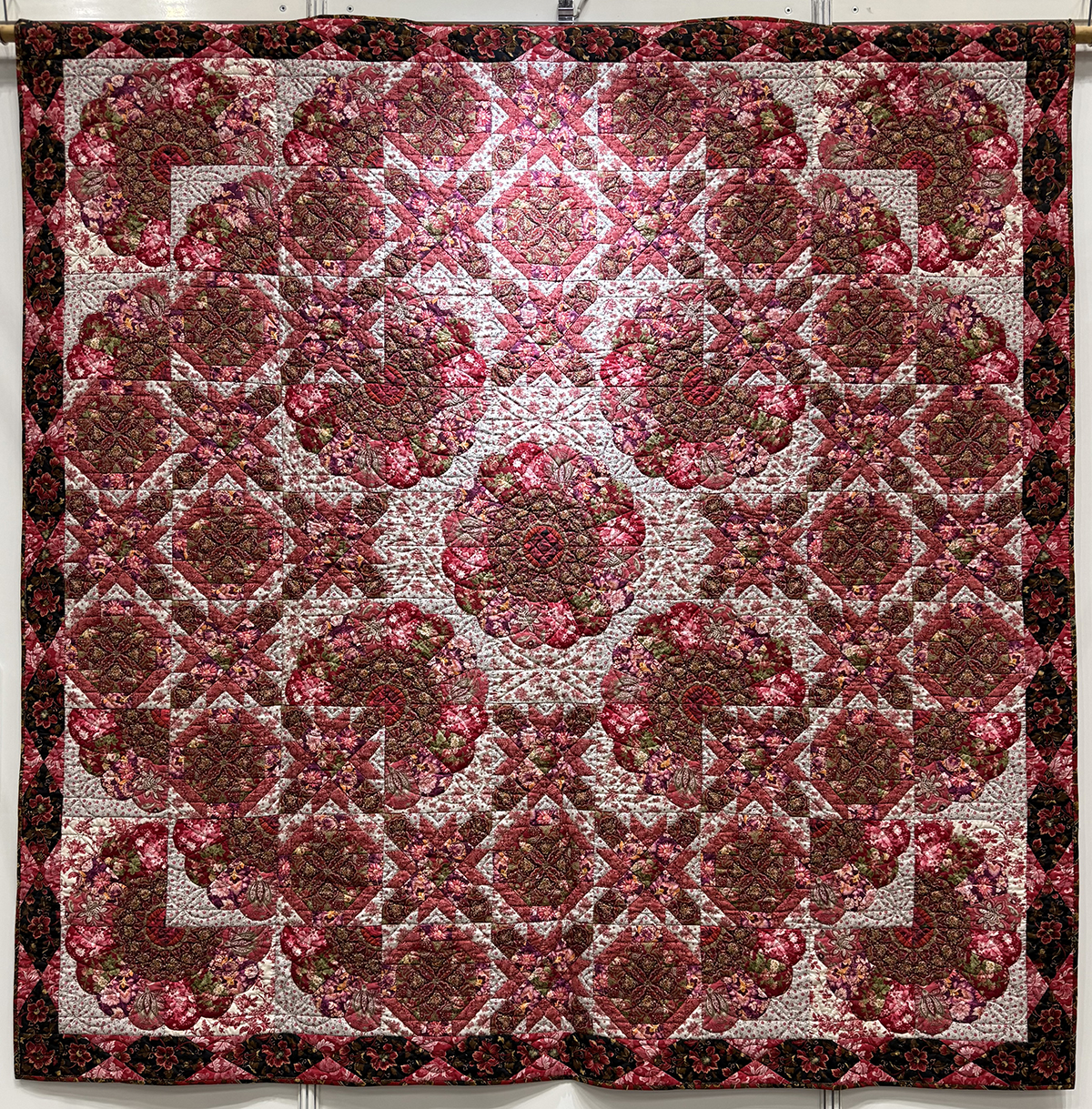
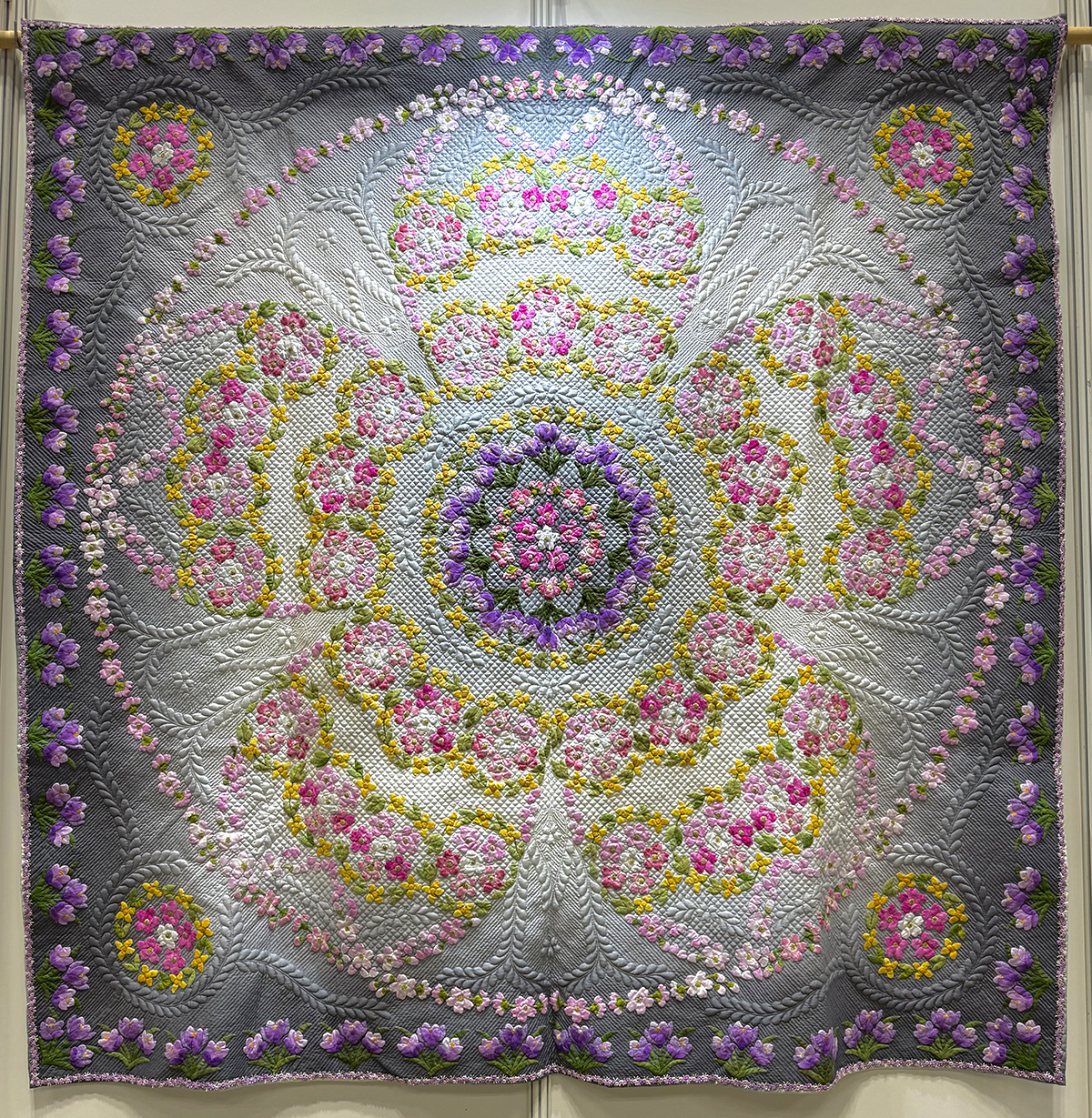
This oh-so-traditional floral beauty is nevertheless quite Japanese in its choice of blossoms, with the centerpiece cherry blooms rendered exquisitely in ombre fabrics that give them extra dimension.
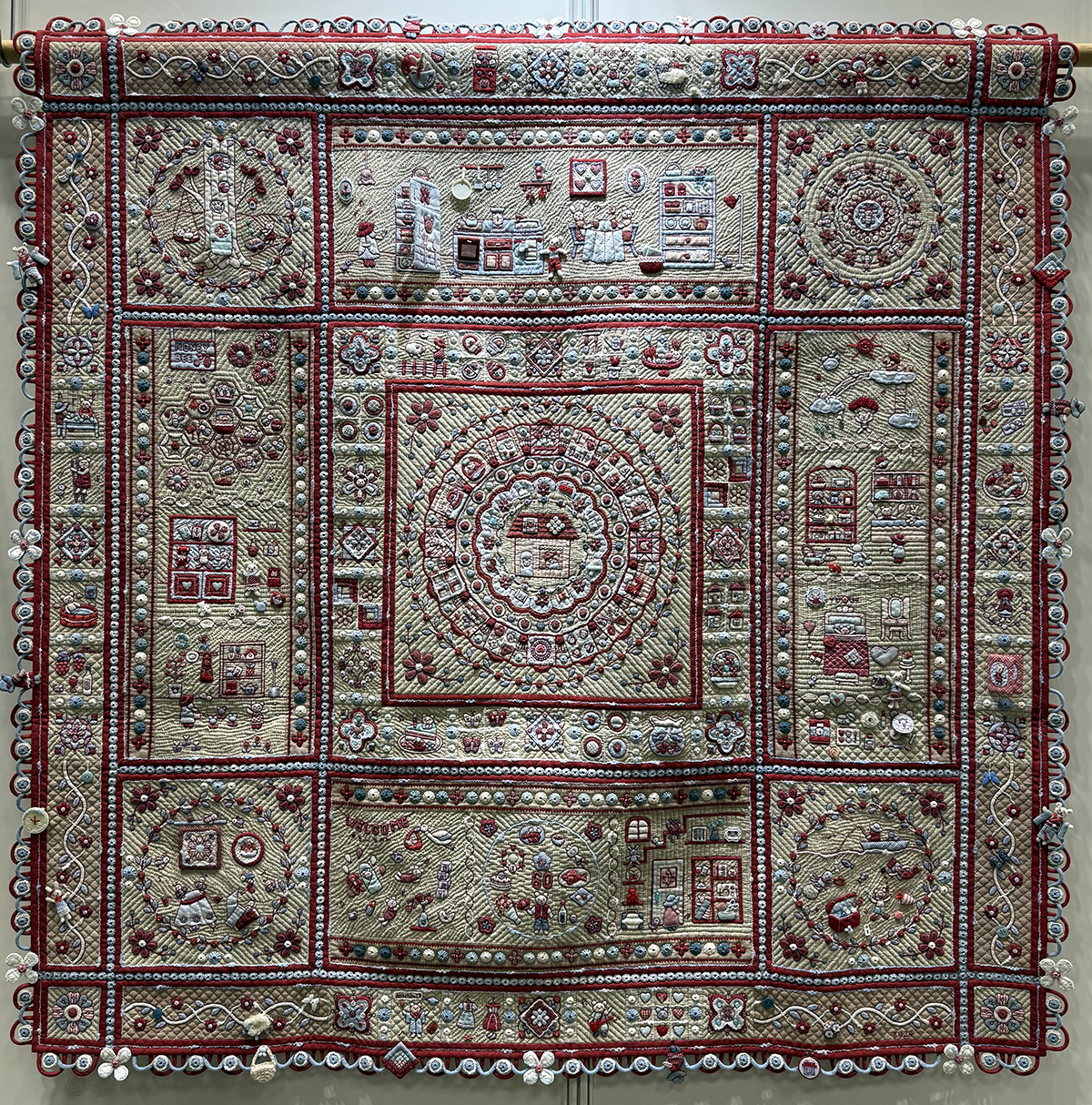
At first glance this one doesn’t look at all Japanese, but when you look closer…
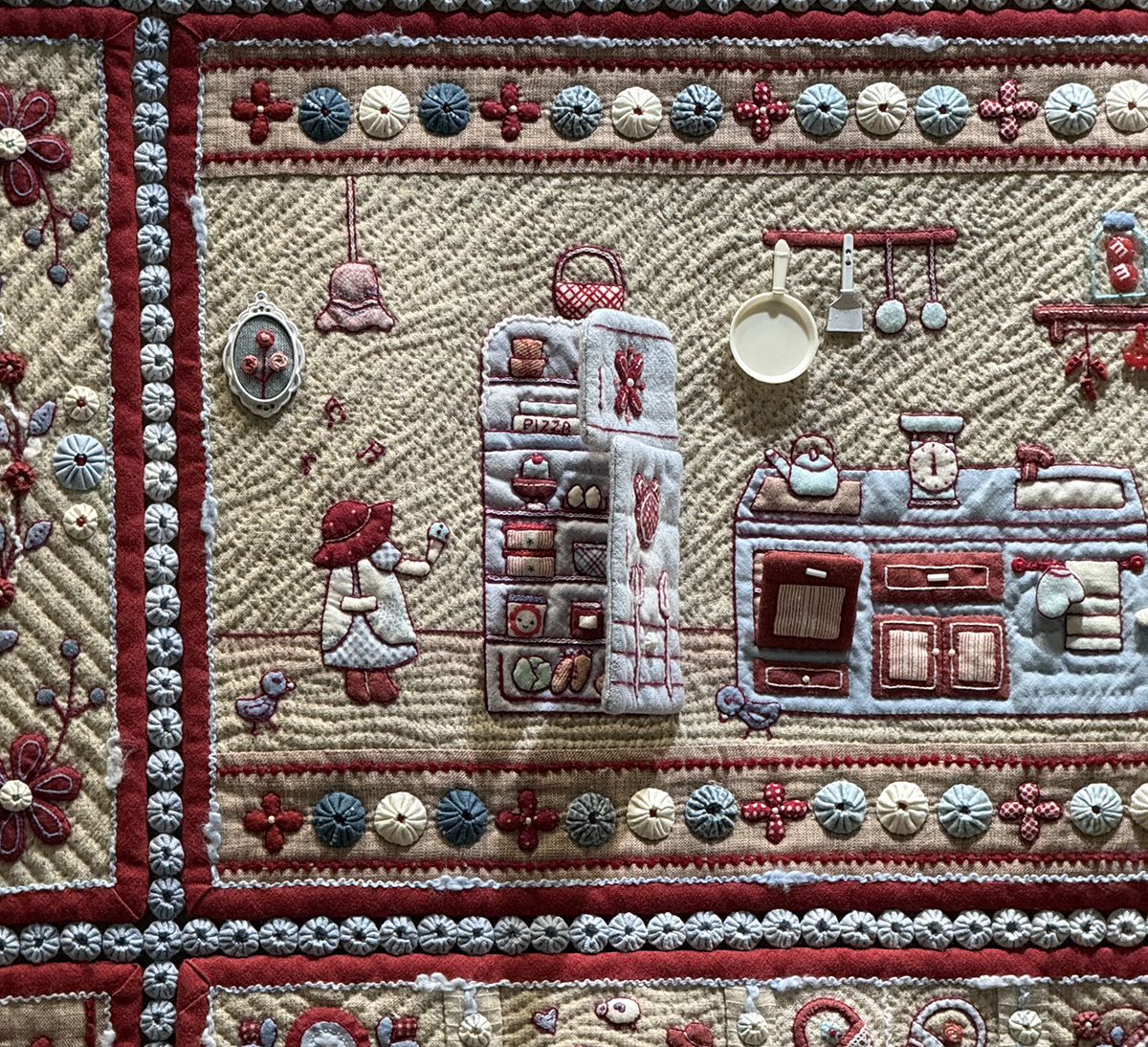
many of the homely household goods actually open up to reveal items stored inside! There’s food in the refrigerator and bread in the oven! This continues an old craft tradition in Japan, where even the bottoms of Buddhist altars are decorated with gold leaf designs, the artisans lavishing care on surfaces few people would ever see.
Some quilts exhibited an extreme Japanese aesthetic, their absence of color at first appearing undecorated and plain…
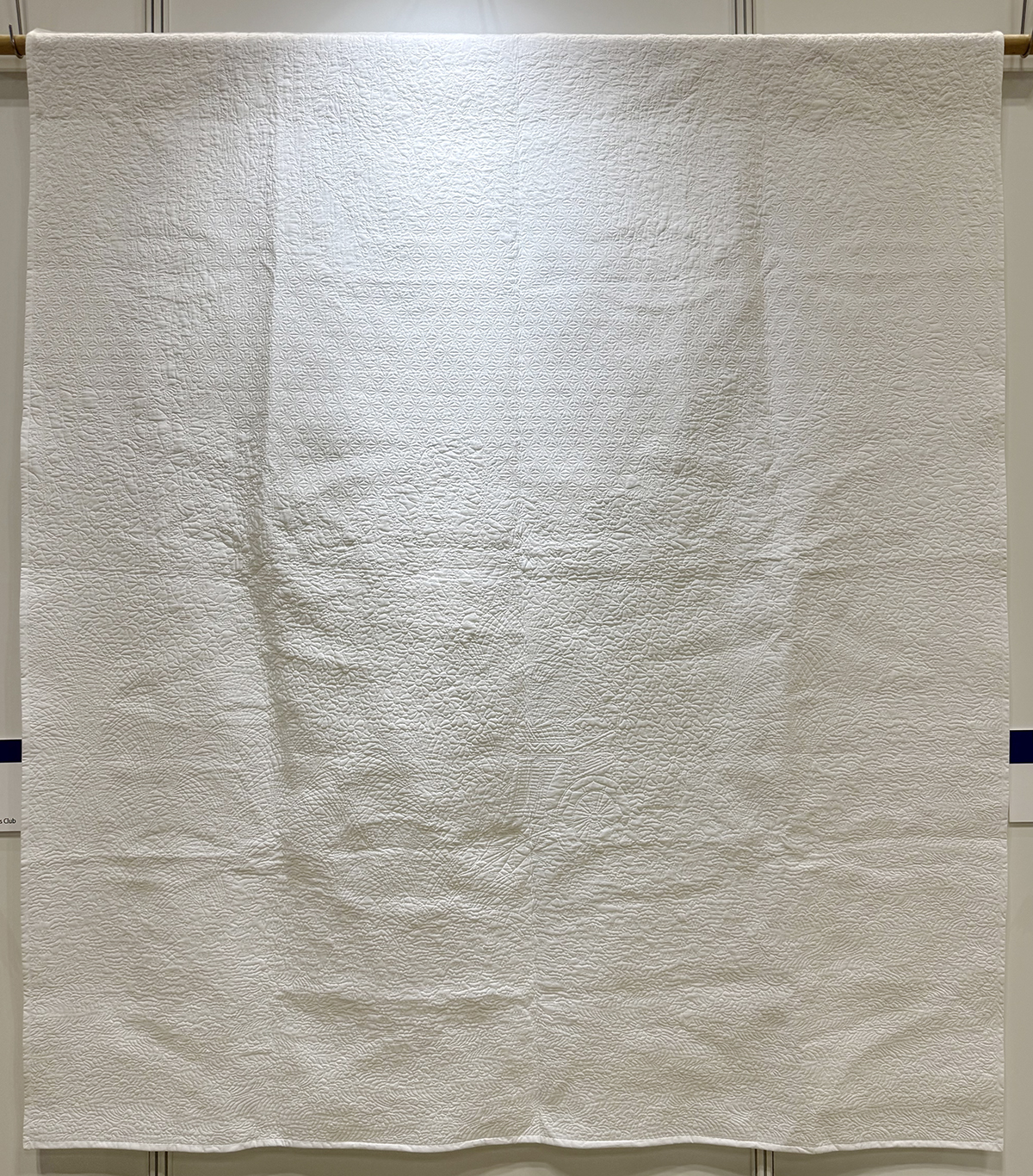
until you look closer and see the traditional Japanese patterns quilted white-on-white.
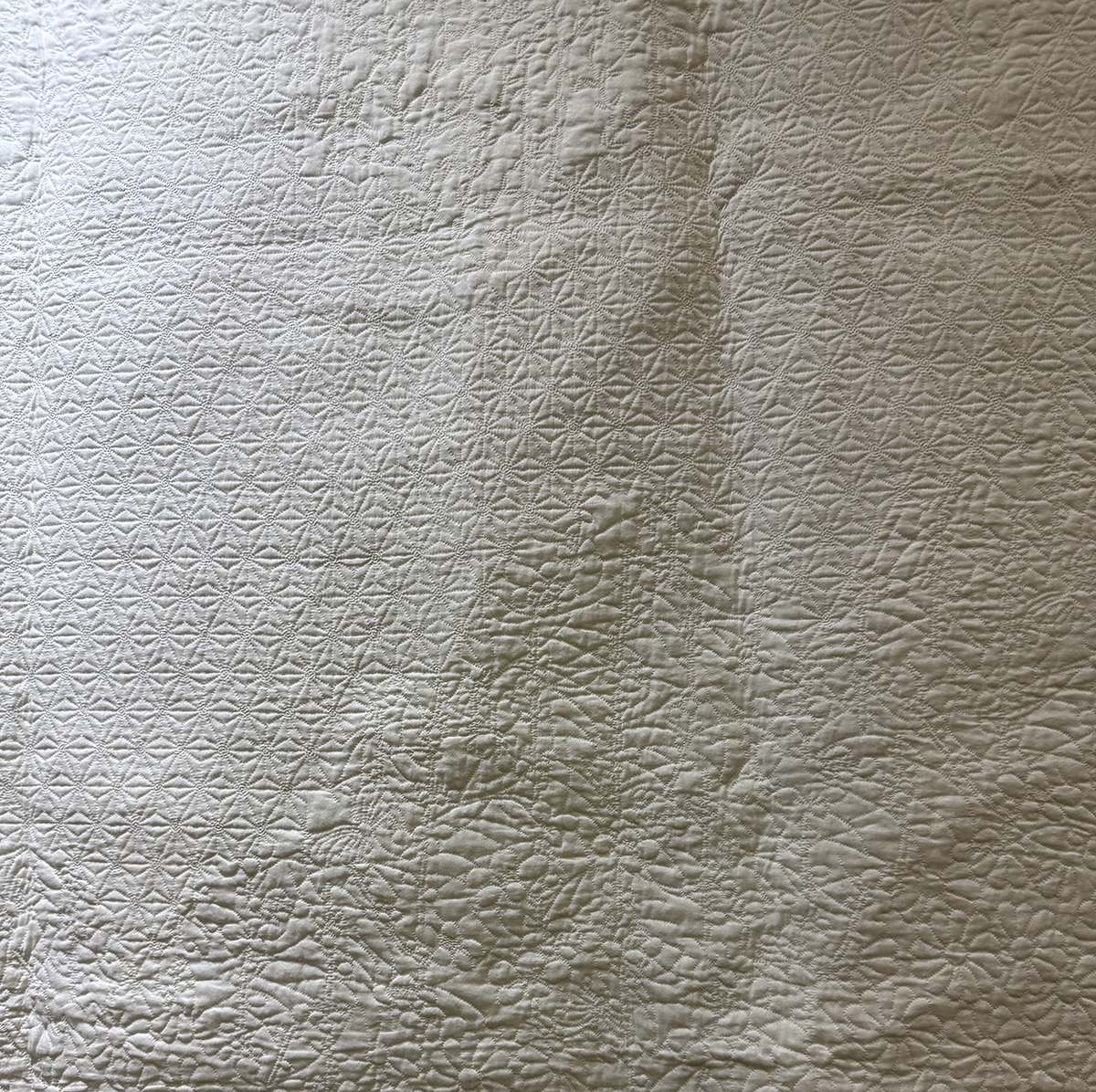
Note to the exhibit organizers: Next year, can someone PLEASE bring a steamer? A number of the quilts were not looking their best because shipping creases were interrupting the designs. The packing wrinkles are especially unfortunate on quilts like this, because it’s hard to see the overall design with random parts thrown into shadow.
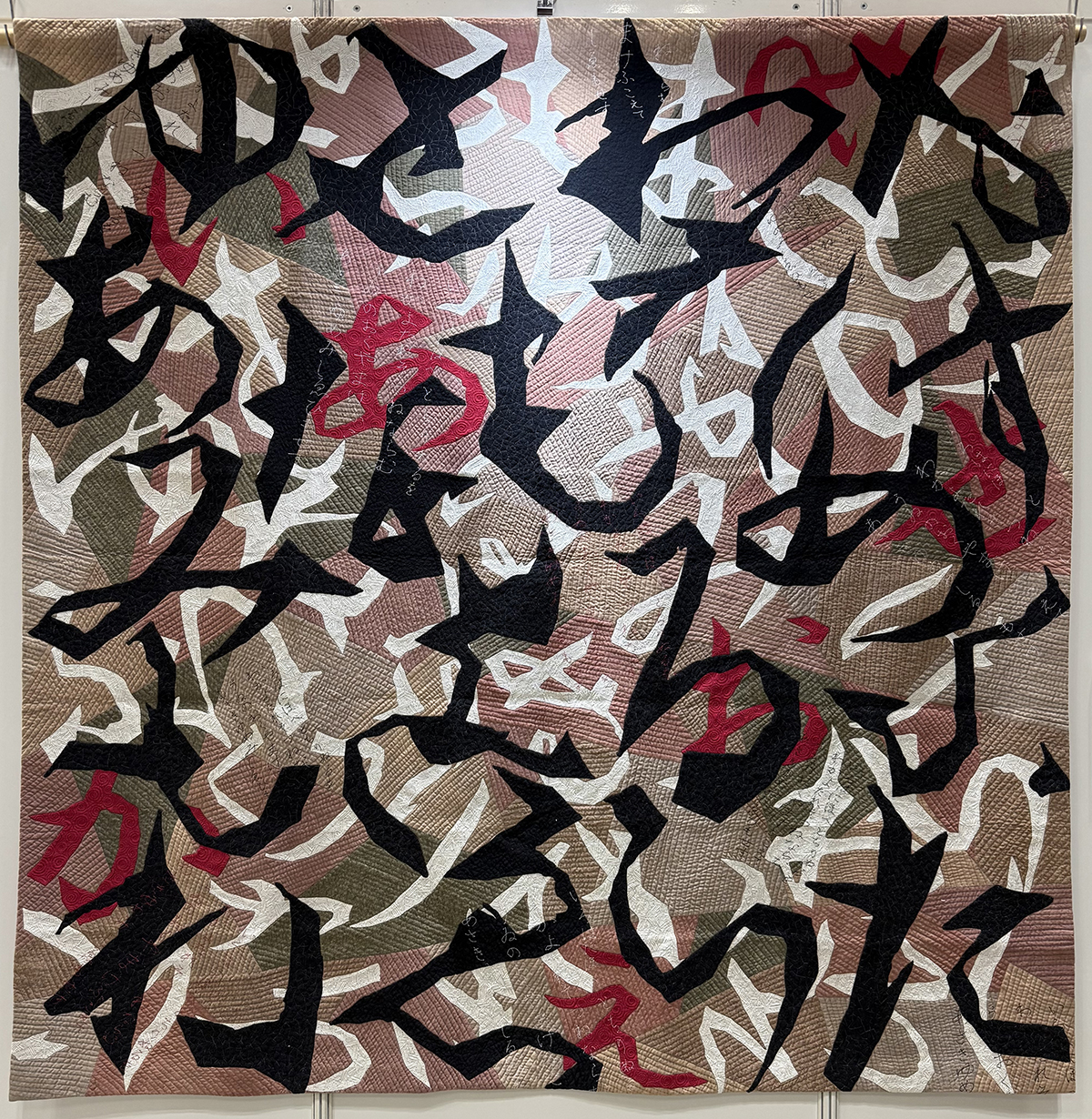
There were even abstract works based on the Japanese phonetic alphabet, this one riffing on a poem that uses each character exactly once.
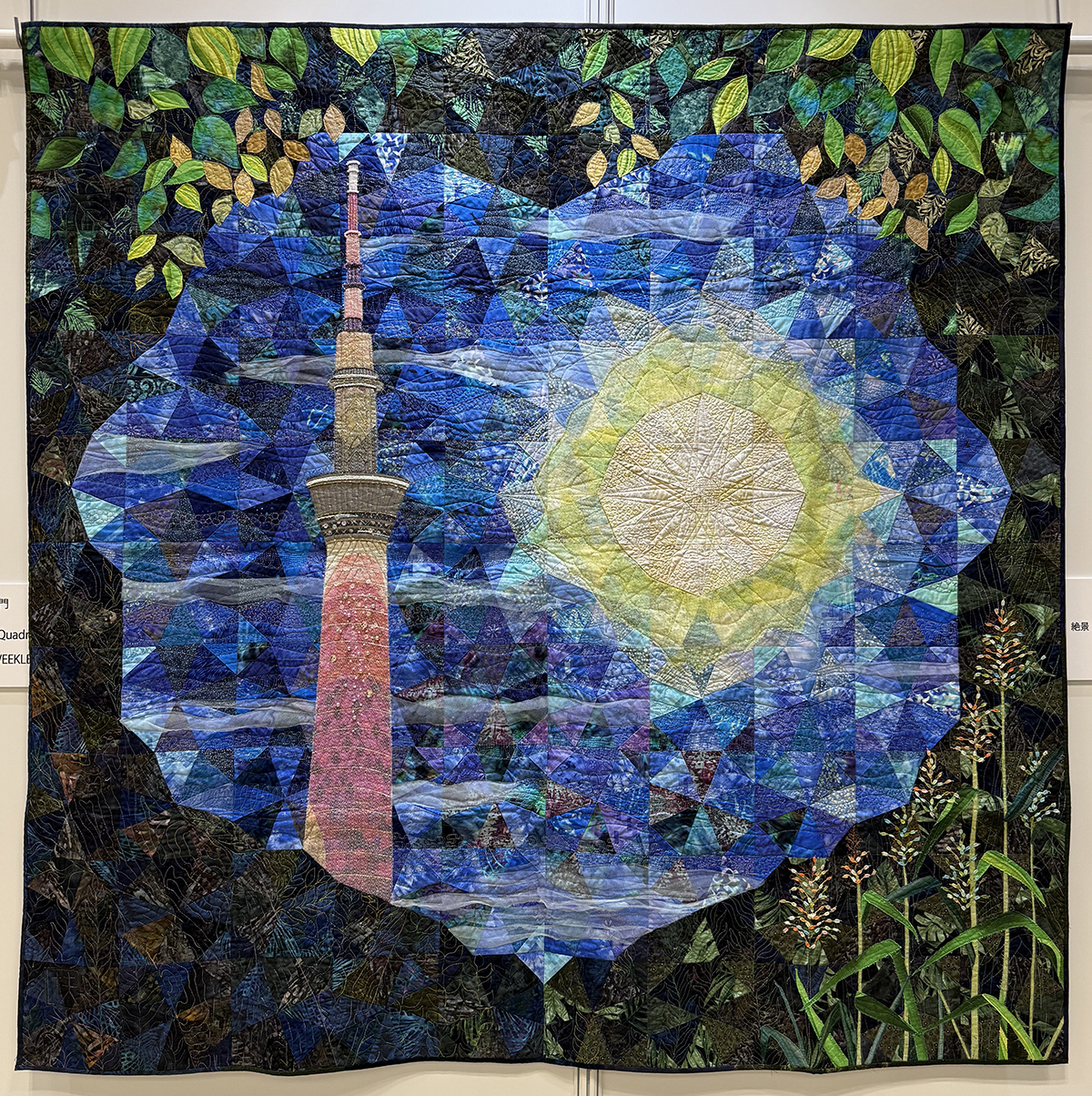
And finally, even at the quilt show, we can’t escape Skytree. Tokyo’s brashest monument makes an appearance along with the super moon.
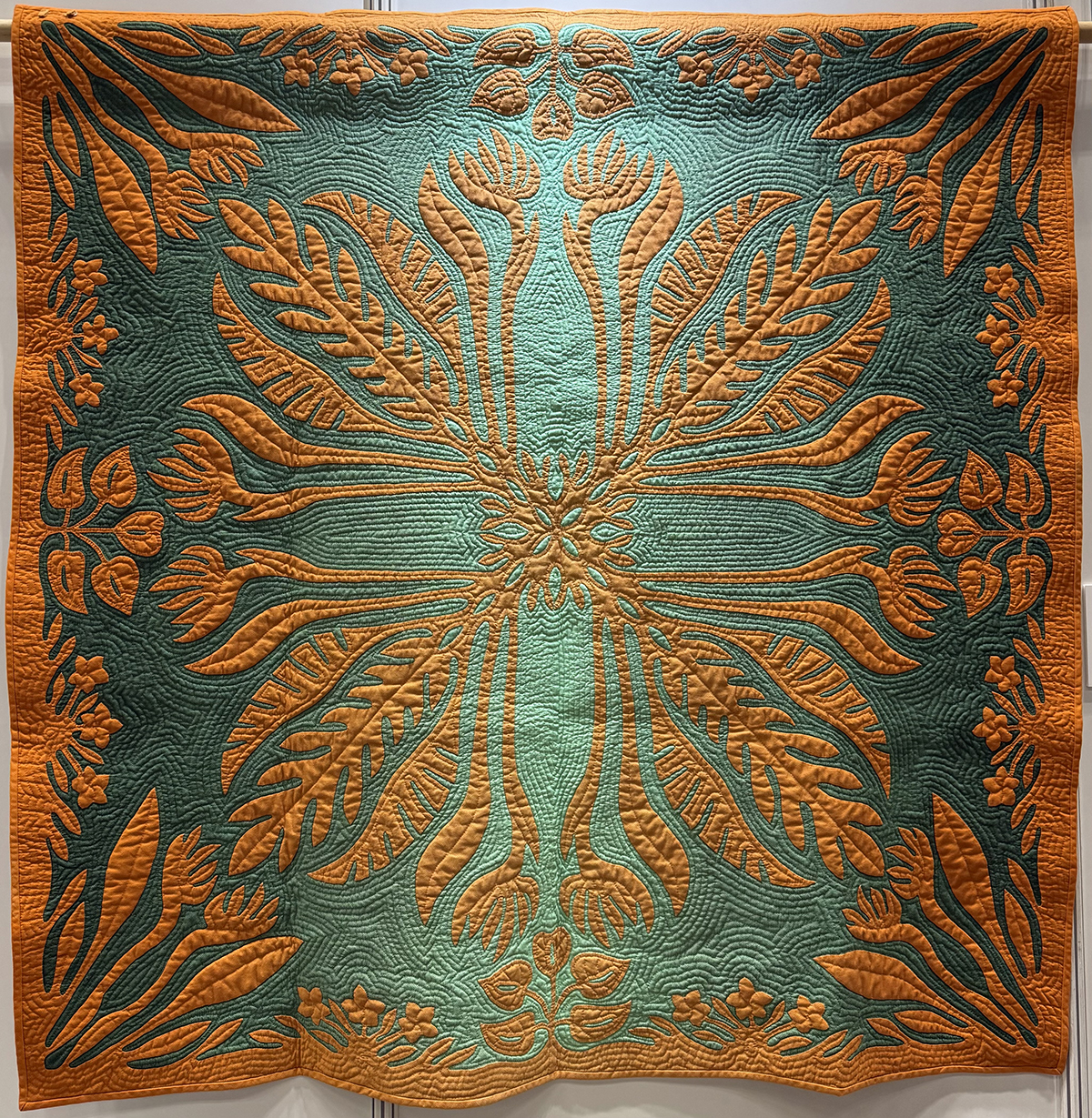
There’s always a spectacular array of Hawaiian-style quilts, and this year my favorite is this simple—yet surprisingly sophisticated—radial gradation in just two colors.
I can’t finish this round-up without mentioning the “junior” division work, featuring many delightful and astonishingly skillful works done by students of high school age and younger!
•
A few more eyepopping delights from the international quilt artists
This would be the world’s longest blog post if I showed you everything I thought picture-worthy, but here are a few that were pretty spectacular examples of the corners of quilt world artistry they occupy!
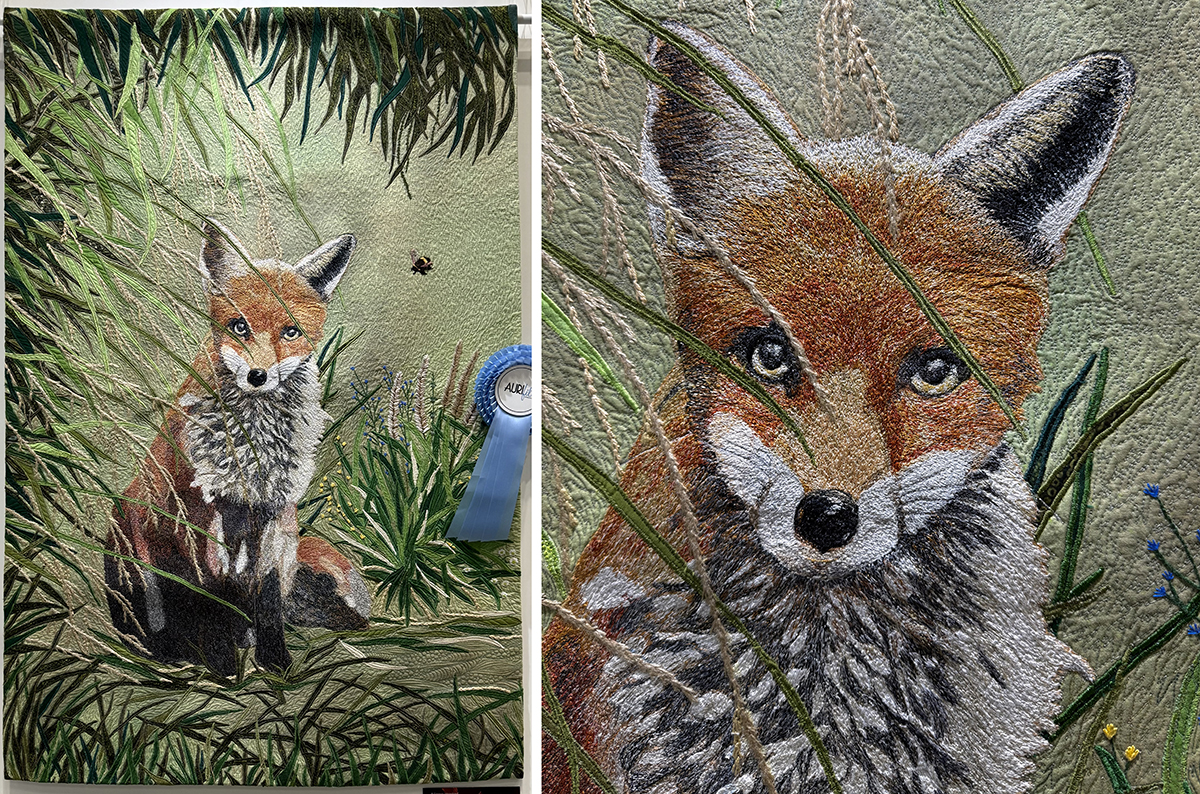
For example, thread painting can incorporate many different stitches…
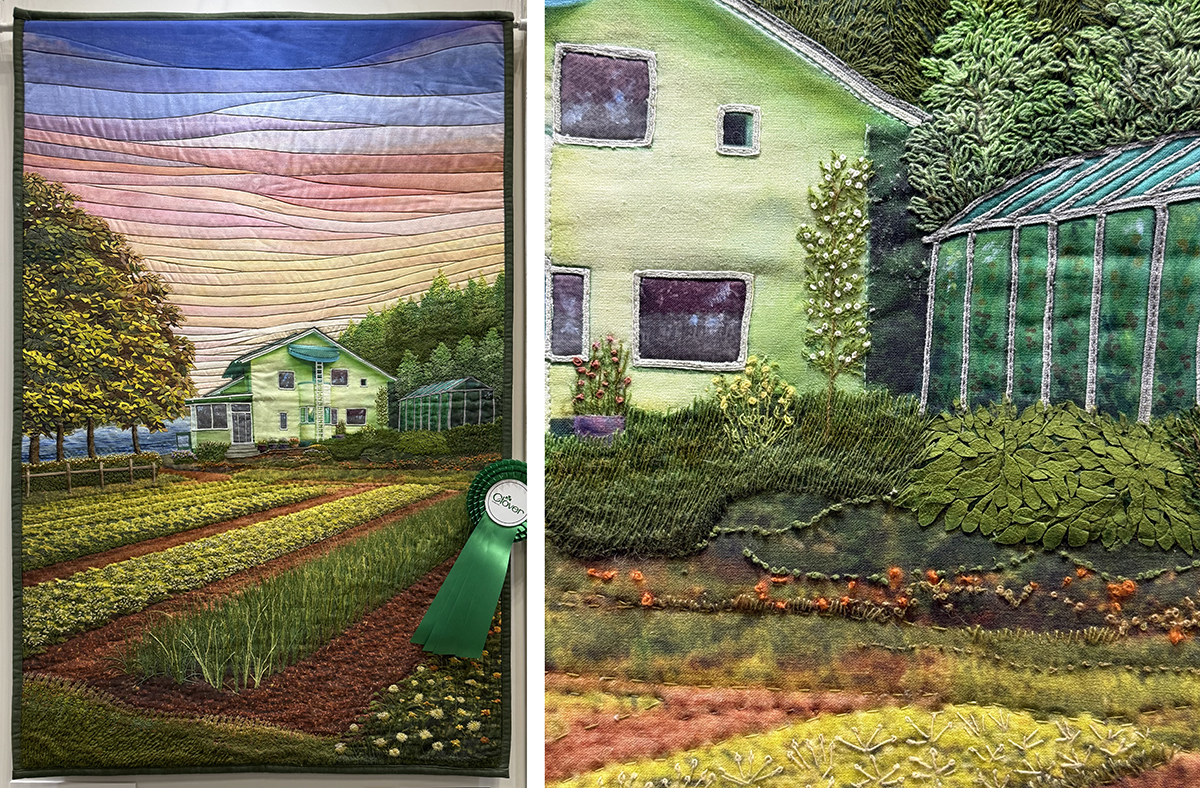
or concentrate on the classics.
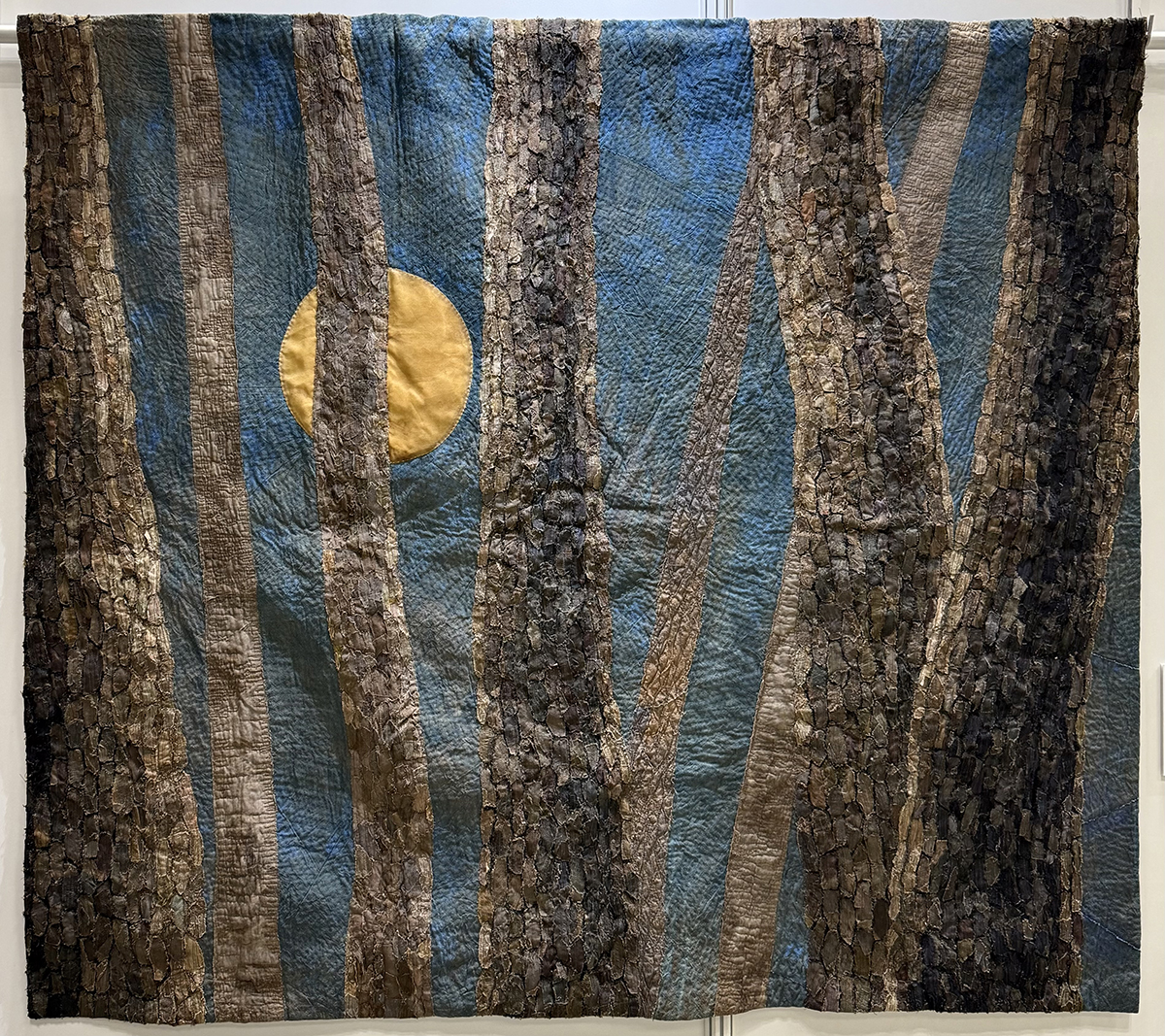
The technique of trapping bits of fabric with netting instead of using traditional applique is at its finest in this quilt…
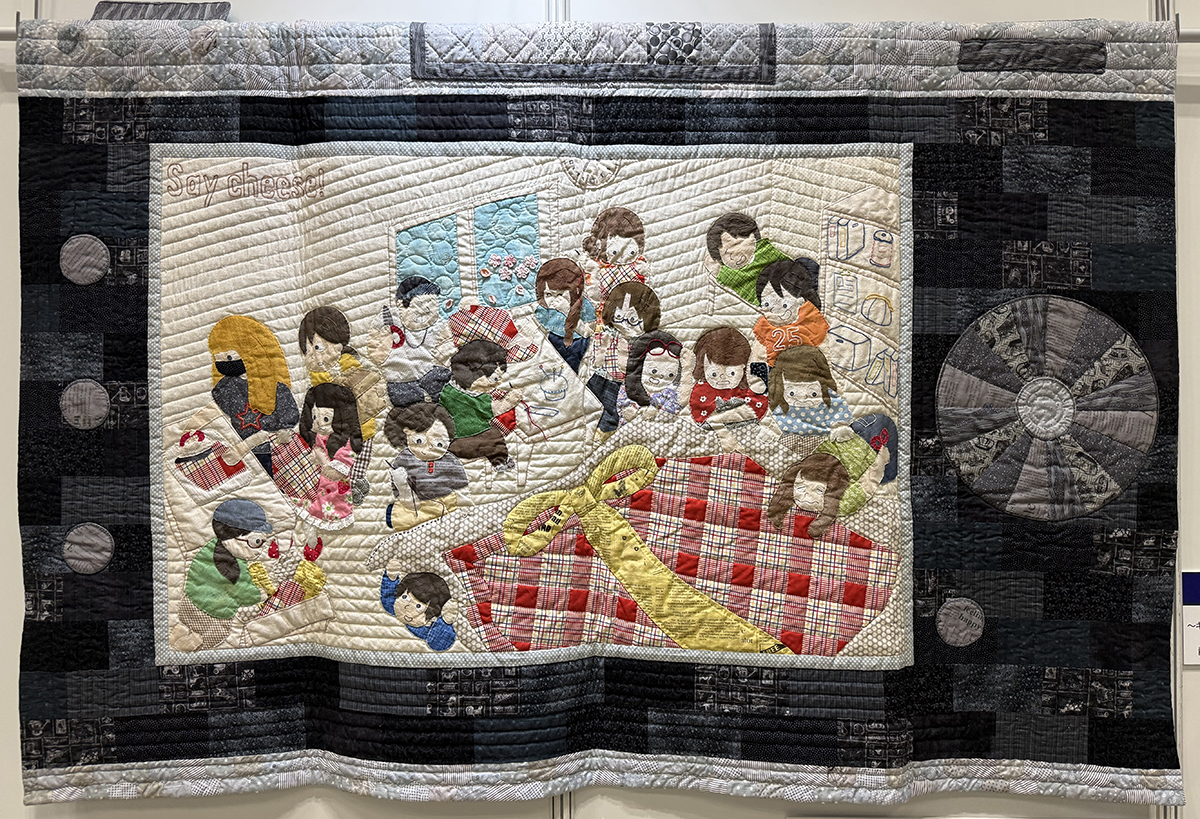
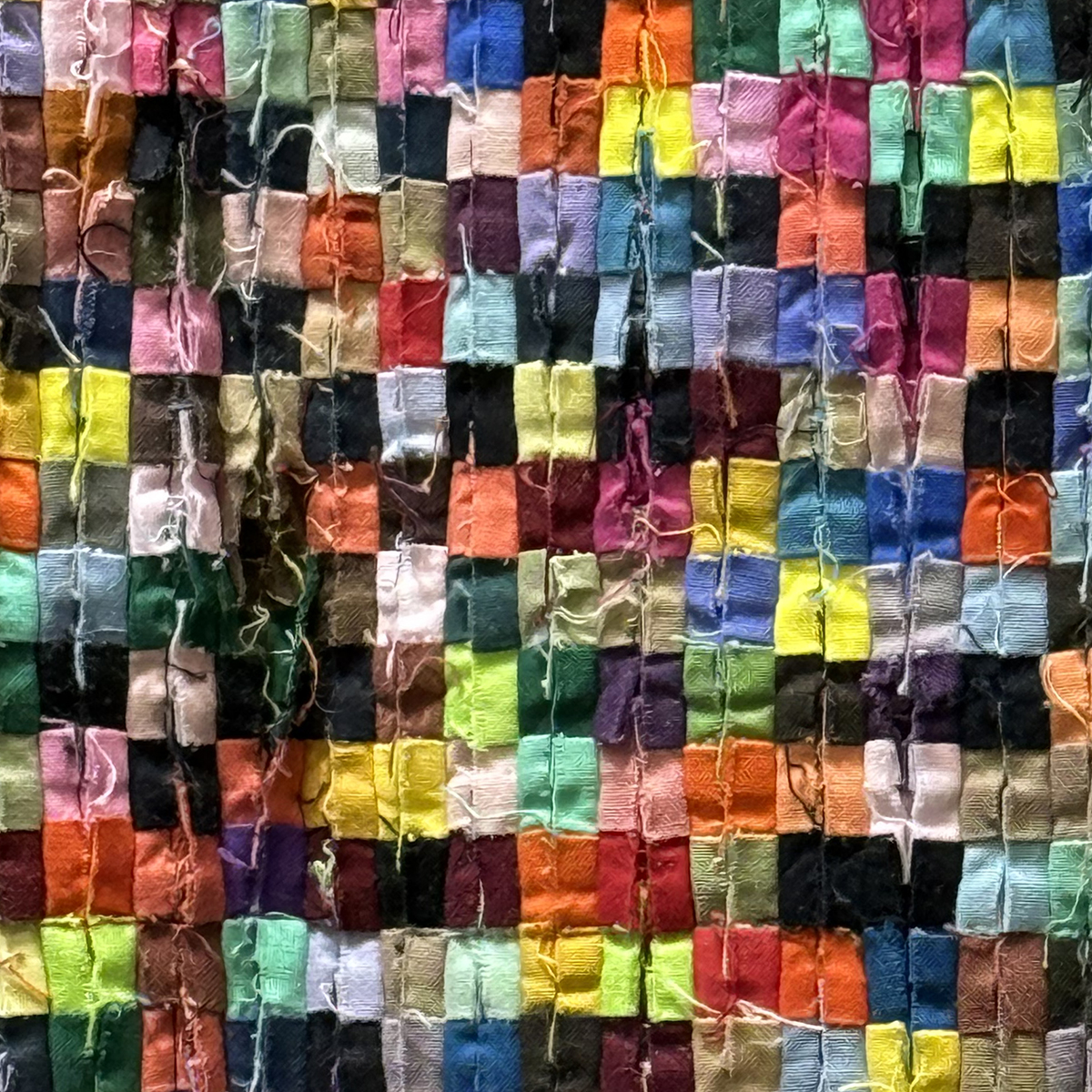
while this one celebrates the happy chaos on the underside of many sewing projects…
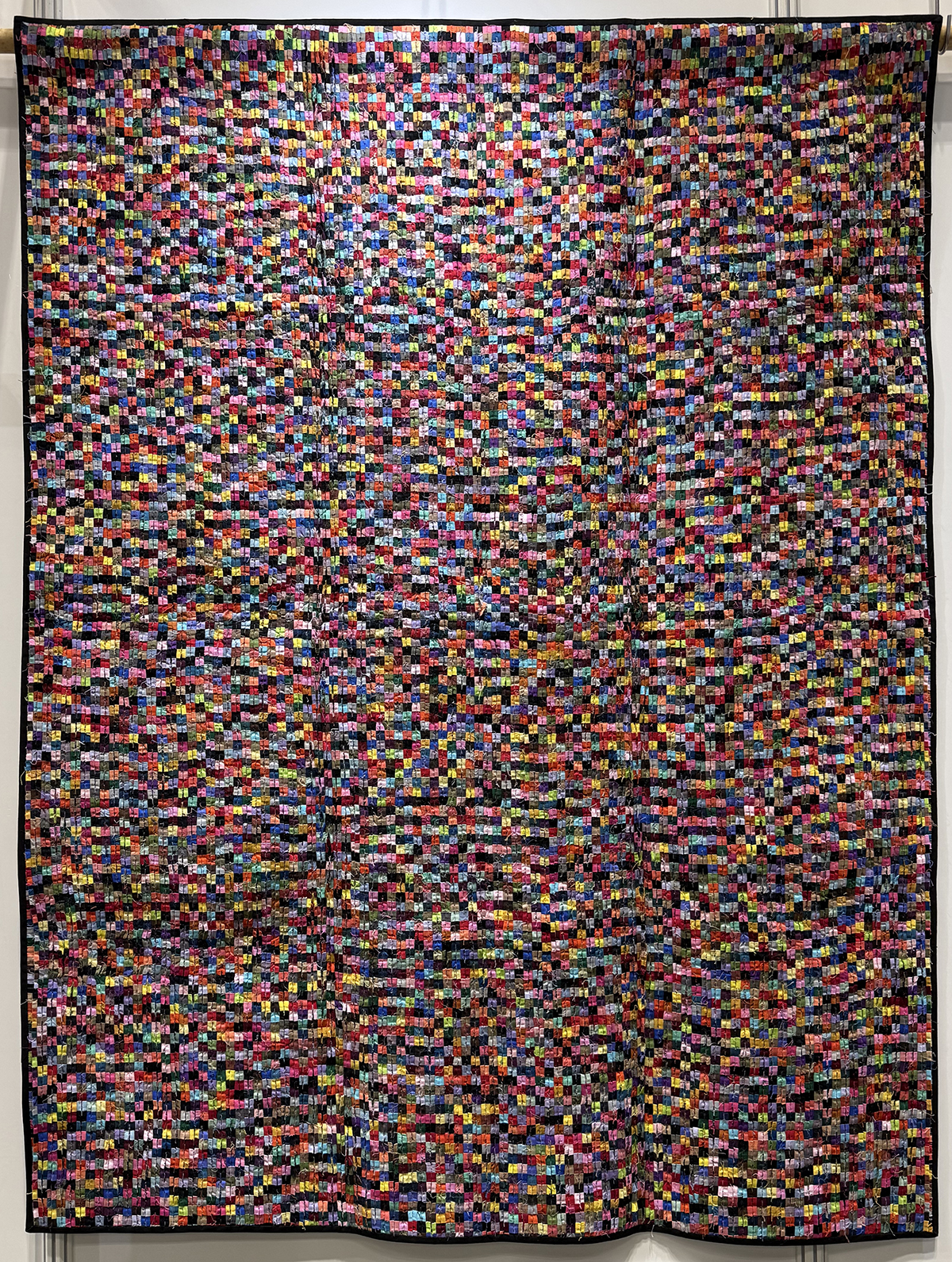
which inspires each and every visitor to get this close to understand how this delightful piece was made
My favorite in the Hawaiian quilt category is this simple—yet surprisingly sophisticated—juxtaposition of gradated versions of just two colors
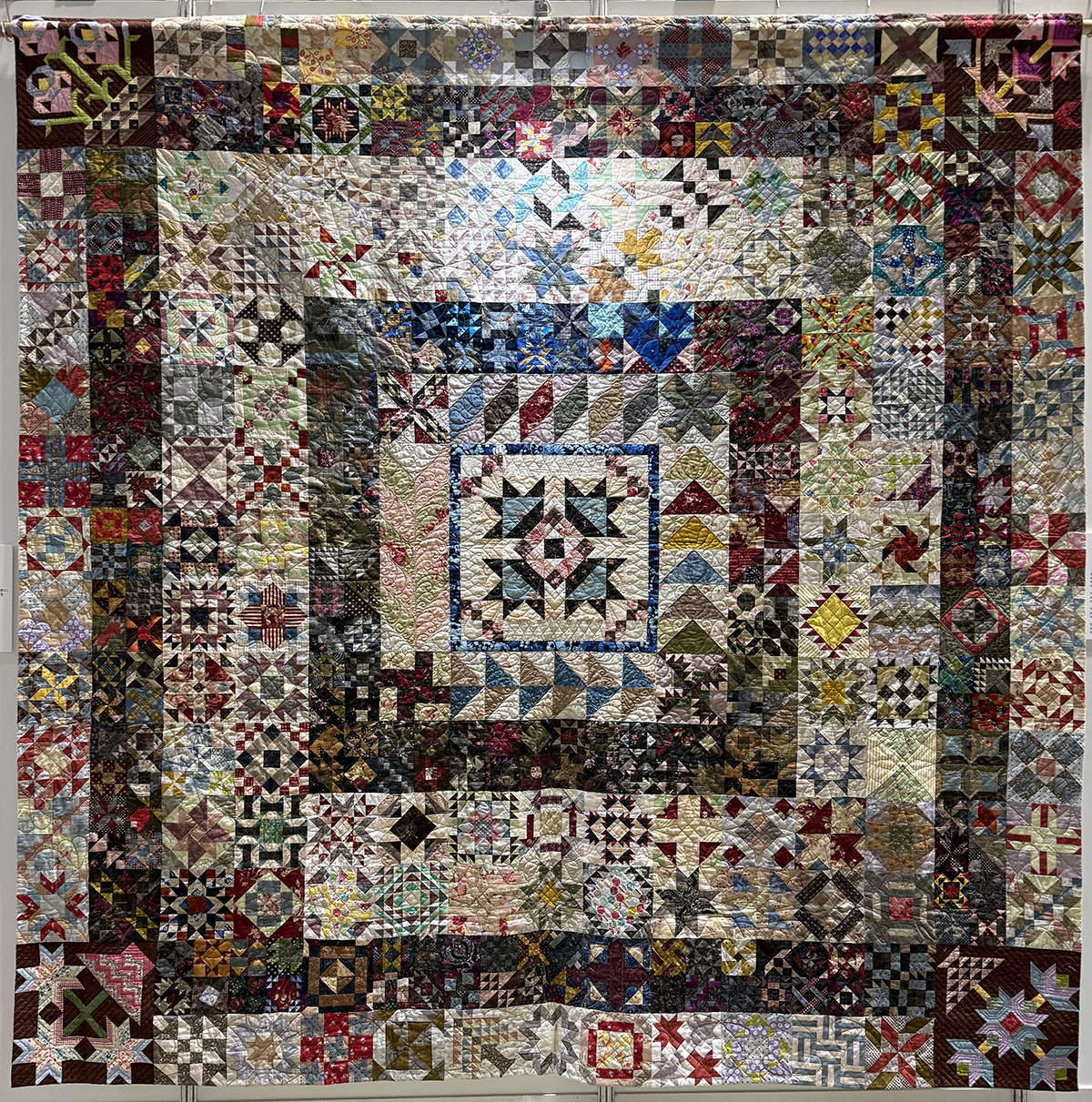
And I loved the idea behind this one, which was to create one new block every day for a year.
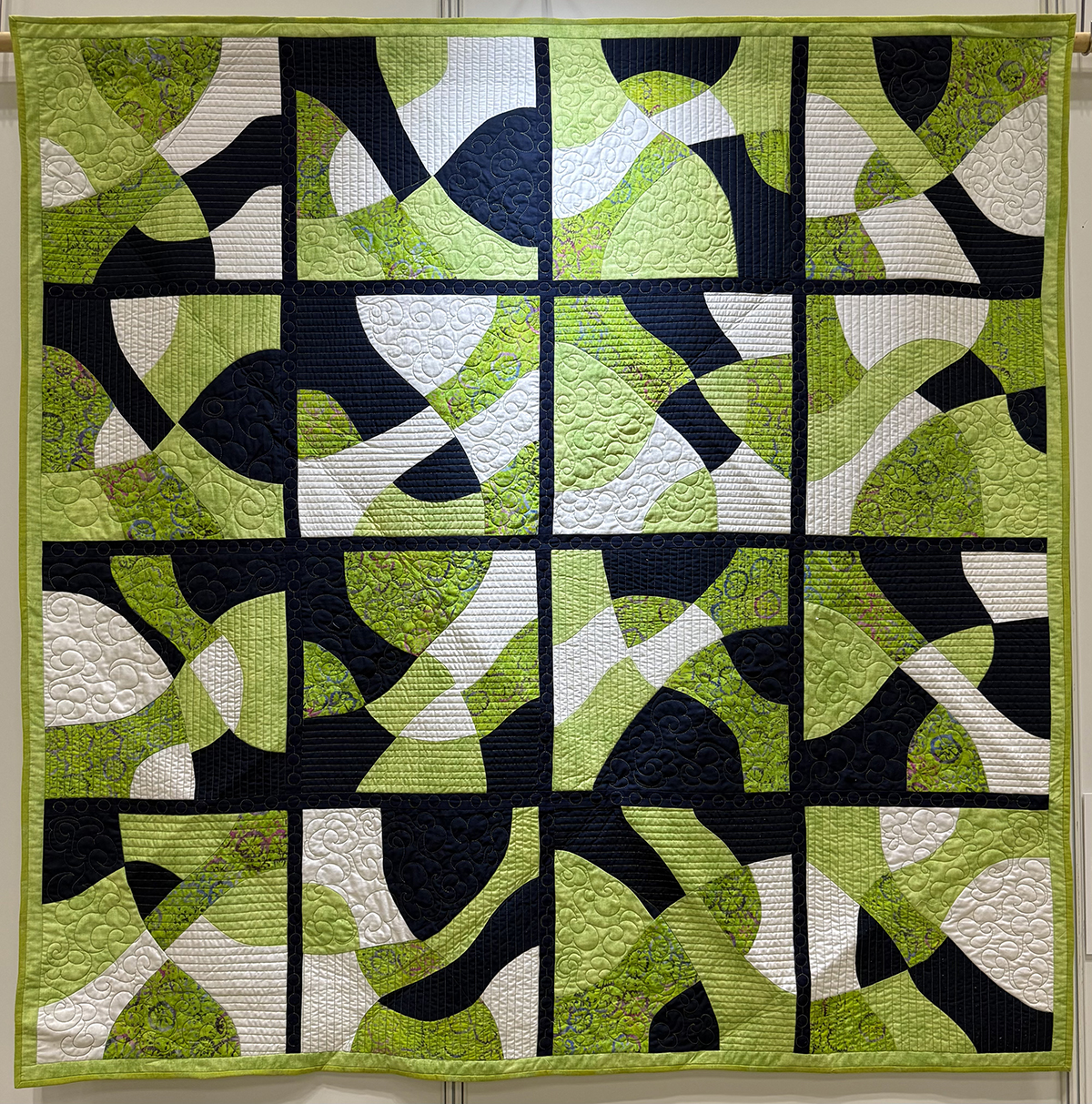
And finally, this bold but soothing 16-square work that was improvised by making ten random gentle cuts through stacks of fabric, then mixing and matching the pieces into this pleasing composition.
•
November 10-12, 2026
Where: Pacifico Yokohama, Exhibition Hall A (Minatomirai Station)
Hours: 10:00 – 17:00
Admission: Adults ¥2000
•
If you enjoyed this, subscribe! It’s free!
Would you like to be whisked away to Japan, wherever you are?
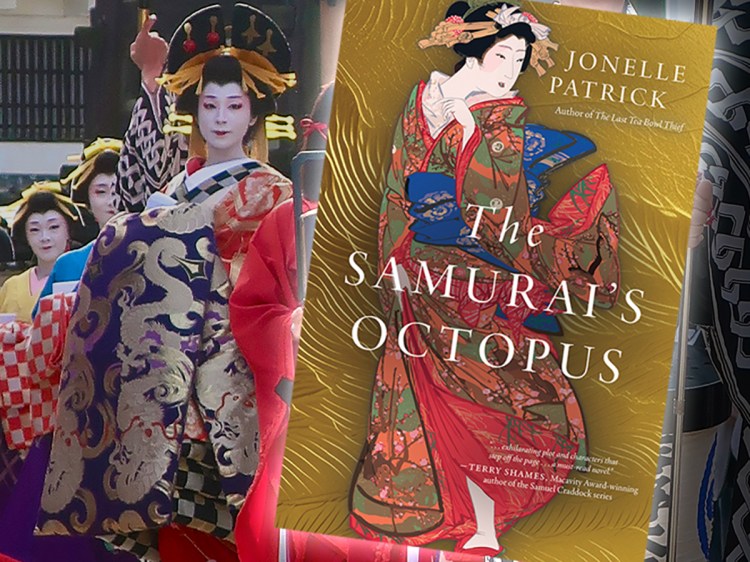

“The Samurai’s Octopus…is a truly remarkable book, one that surprised and charmed me at every turn of the page. It’s one of the most memorable books I’ve read in a long time. You’re in for a treat.”
—James Ziskin, Anthony, Barry, and Macavity Award-winning author of the Ellie Stone mysteries
•
If you enjoyed this, subscribe to Only In Japan! It’s freeヽ(*^ω^*)ノ
If you enjoyed this, subscribe! It’s free!
•

Jonelle Patrick writes novels set in Japan, produces the monthly e-magazine Japanagram, and blogs at Only In Japan and The Tokyo Guide I Wish I’d Had

