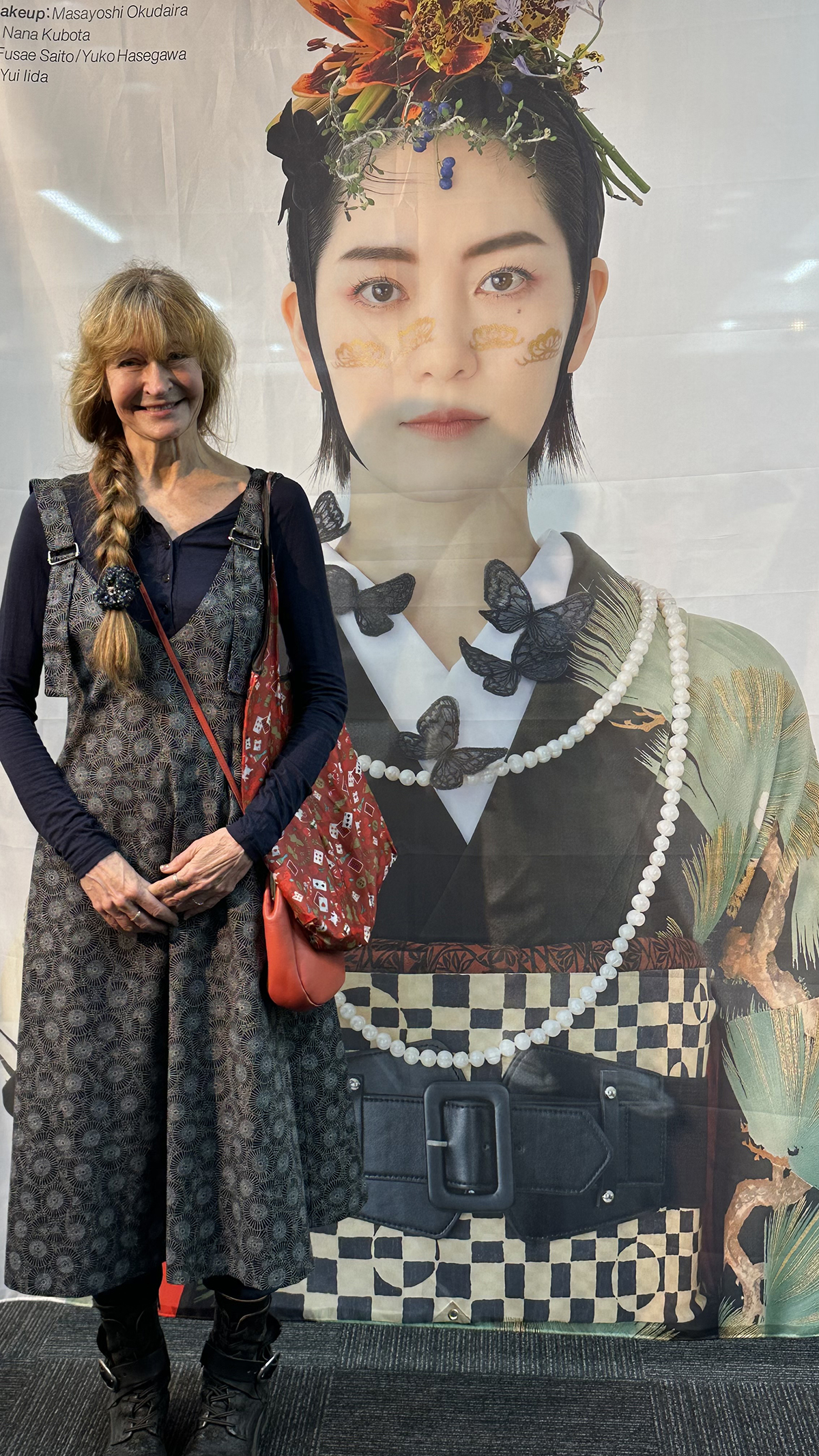
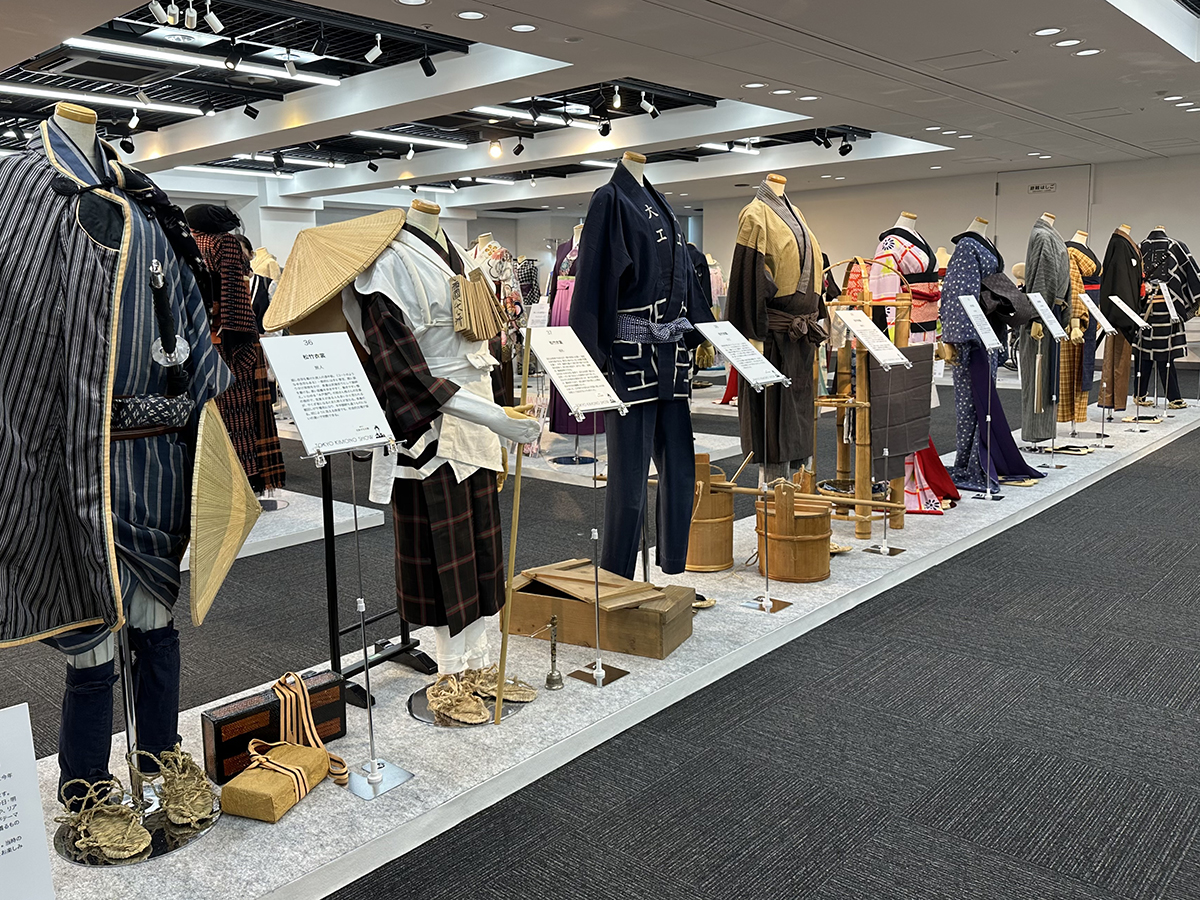
One again, the Tokyo Kimono Show does not disappoint! This year’s extravaganza of style started off with a contrast between past and future, with a parade of nicely curated Edo Period clothing on the left…
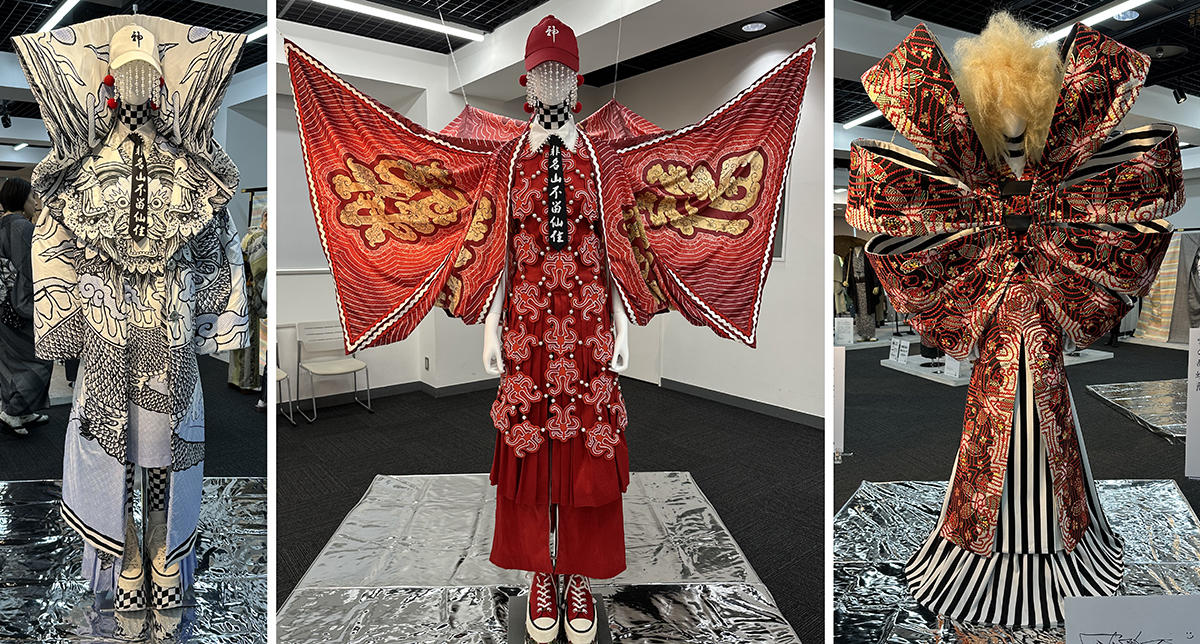
and futuristic manga-inspired costumes by a Taiwanese artist on the right.
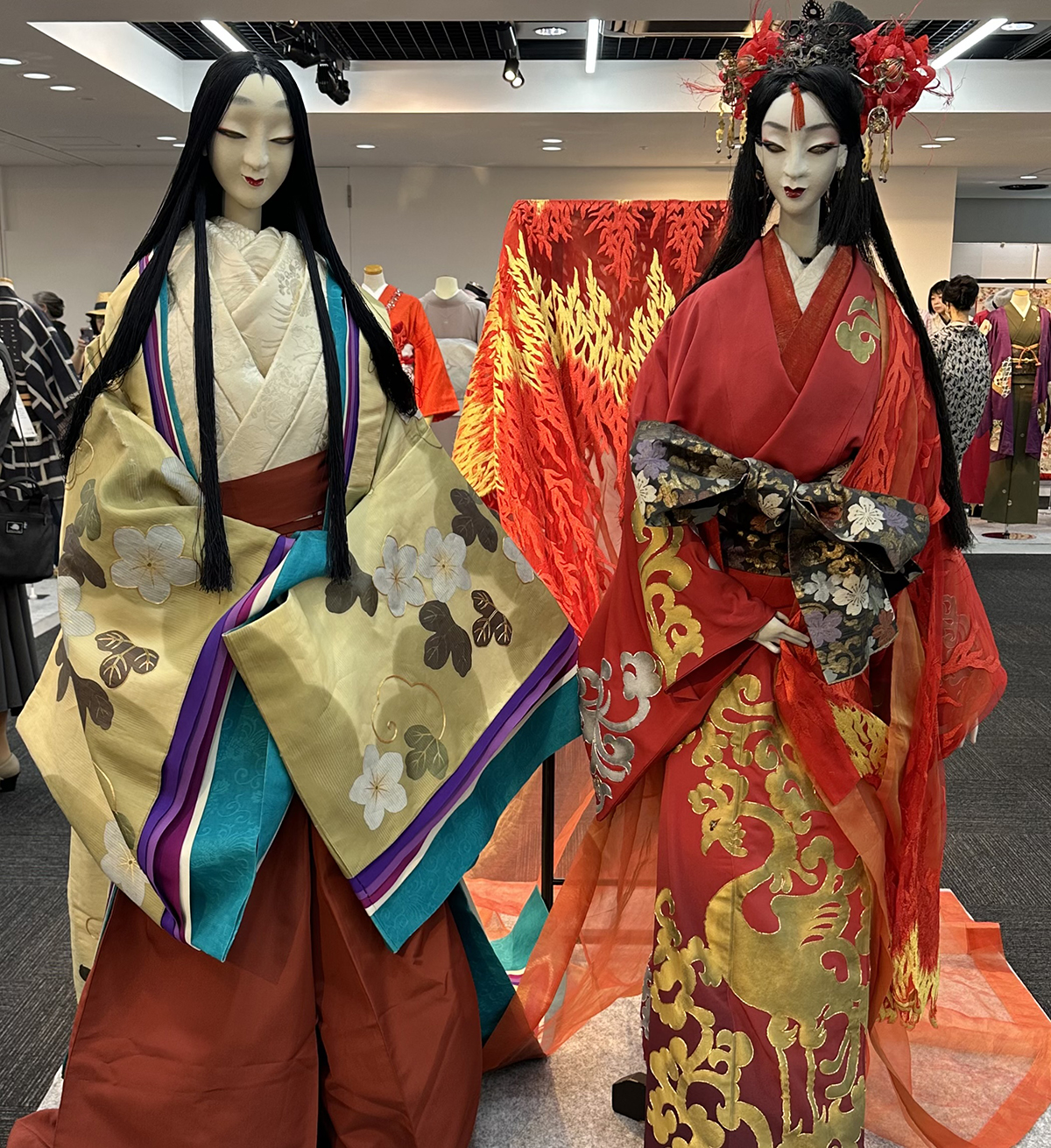
A photo spot featured two bunraku puppets made especially for this year’s show…
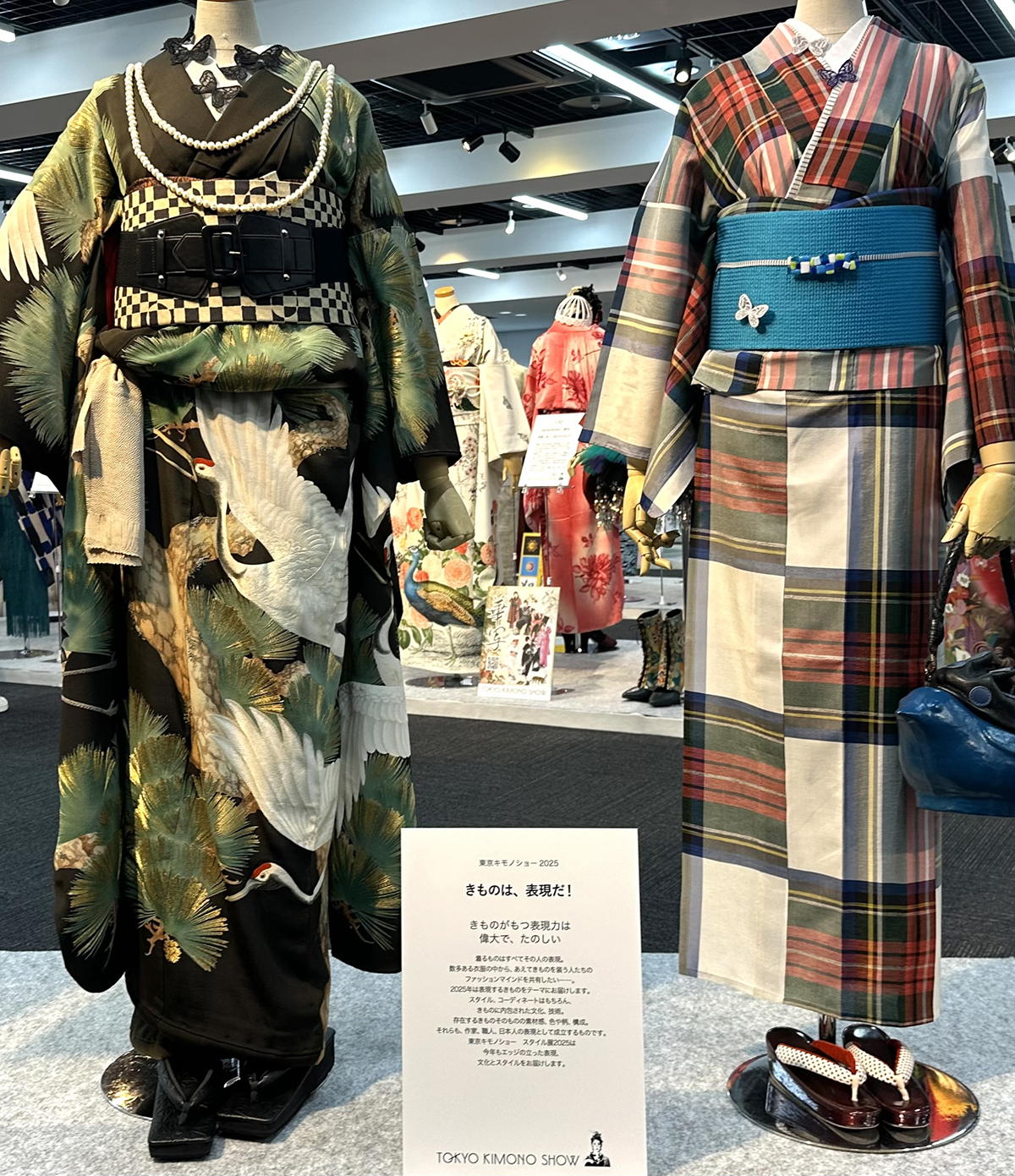
And this year’s signature ensembles set the stage for the innovative outfits beyond, mixing and matching accessories from around the world and styling traditional designs in all-new ways.
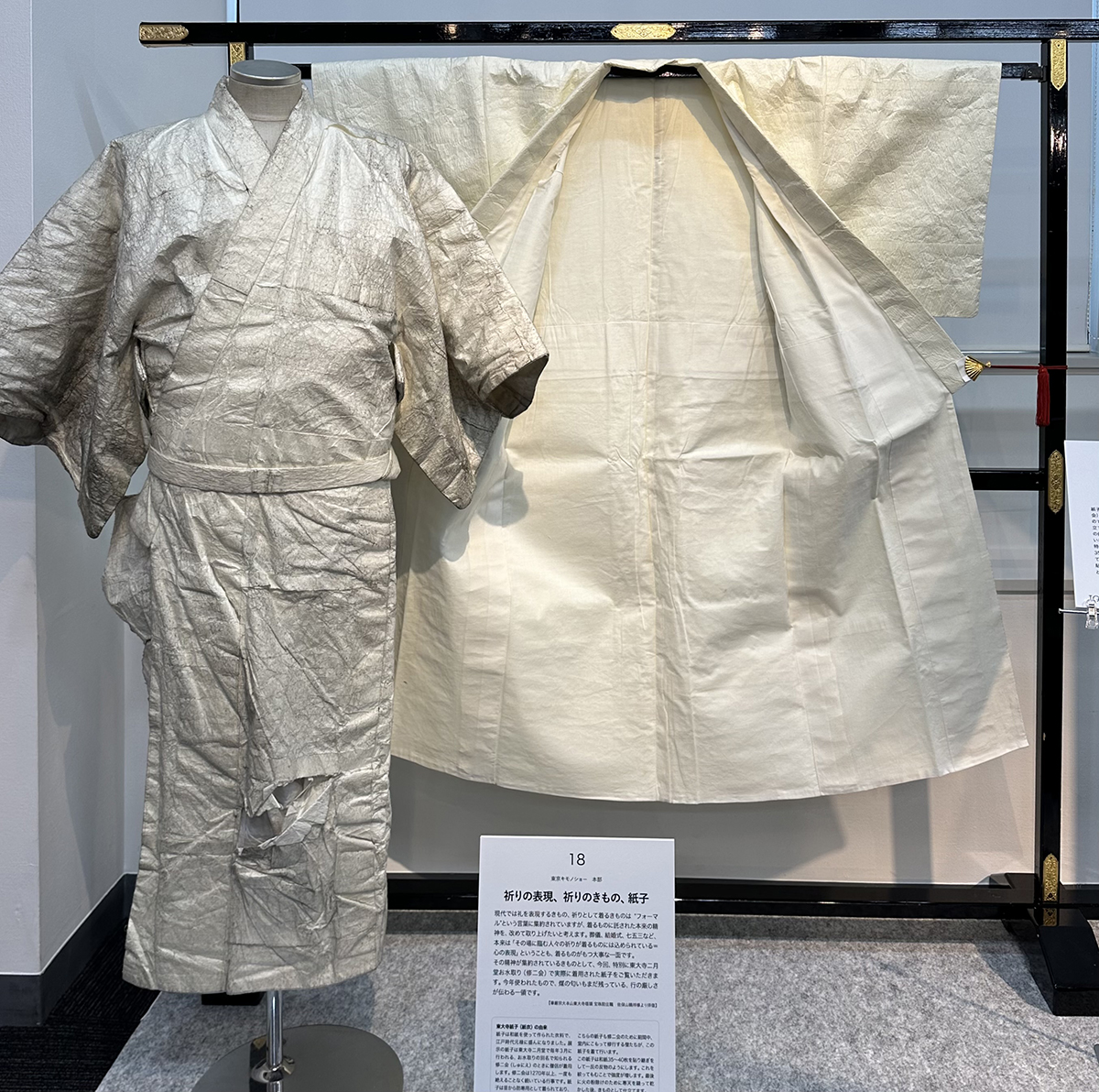
Even some of the antique kimonos in this show were made from unusual materials, like washi paper…
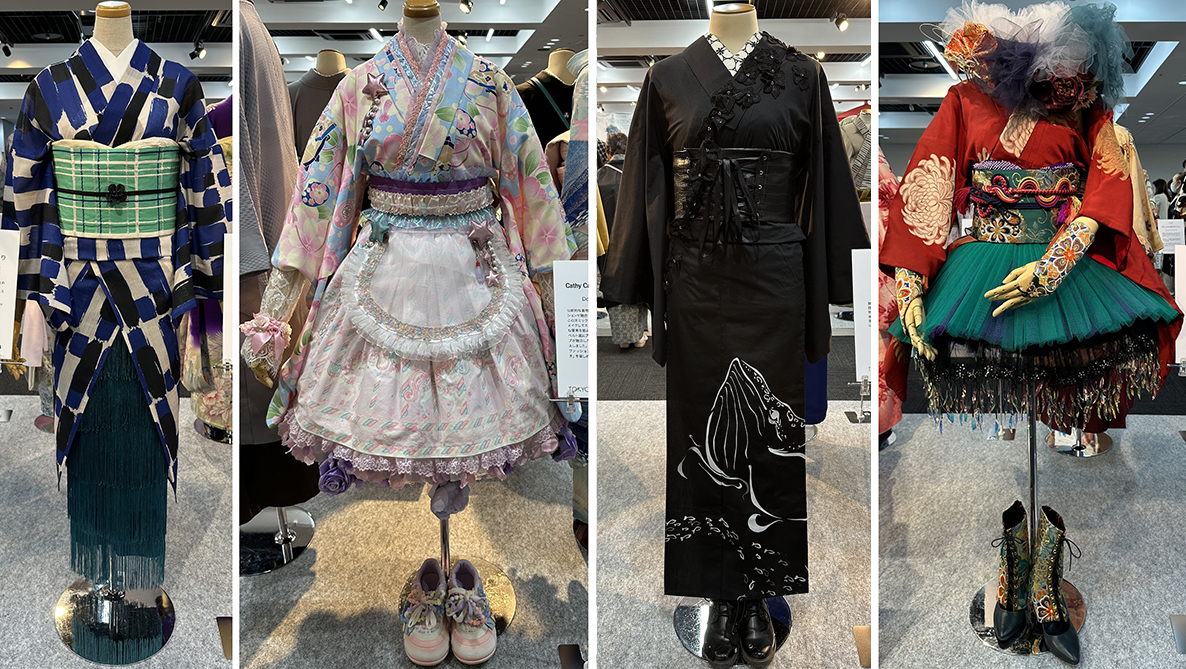
and the modern designs incorporated unexpected accessories, from fringe to tutus.
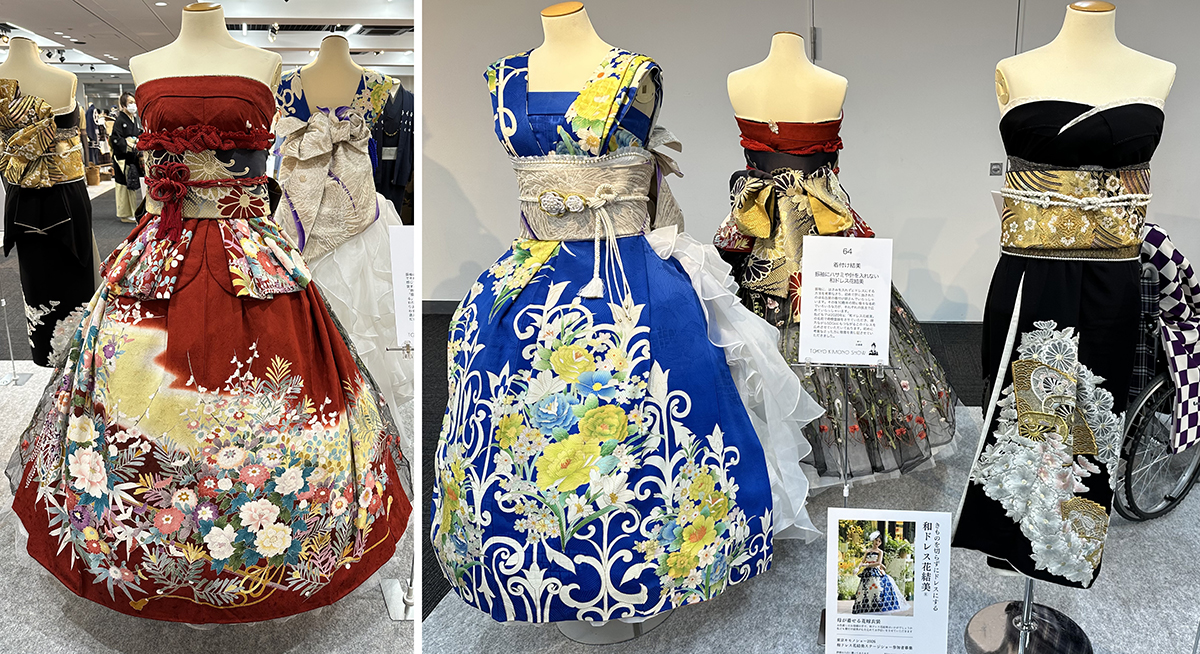
There was even an island of fashions that showed how to tuck and fold trailing-sleeved furisode into Western-style ballgowns, without cutting them or taking them apart.
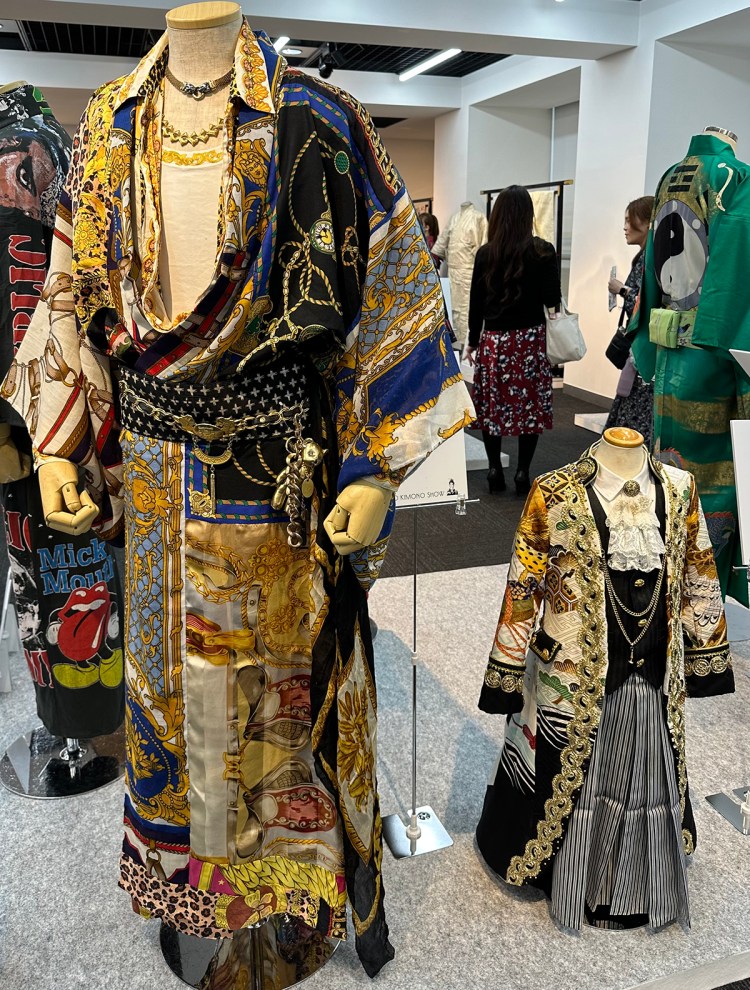
These father-son outfits would certainly stand out at the shrine when it’s time for five-year-old boys to come of age on shichi-go-san…
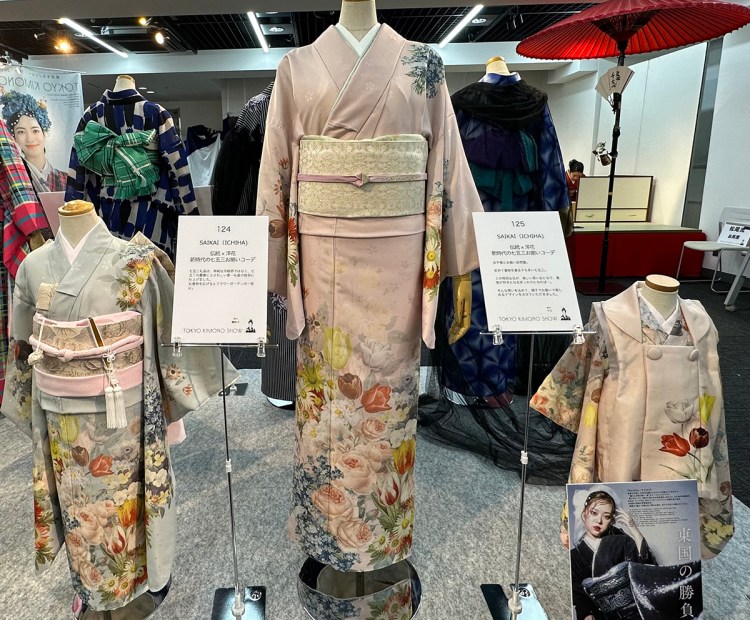
while these mother-daughter ensembles seem to hark back to the 1950s, when matching outfits were A Thing.
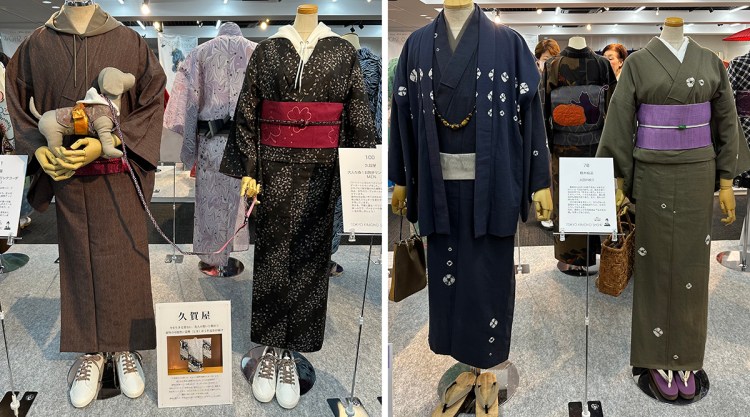
Those weren’t the only paired outfits, though—these days, many couples opt not to have Mini-Mes, so there were some couples’ ensembles that left matching Hawaiian shirts and muu-muus in the dust.
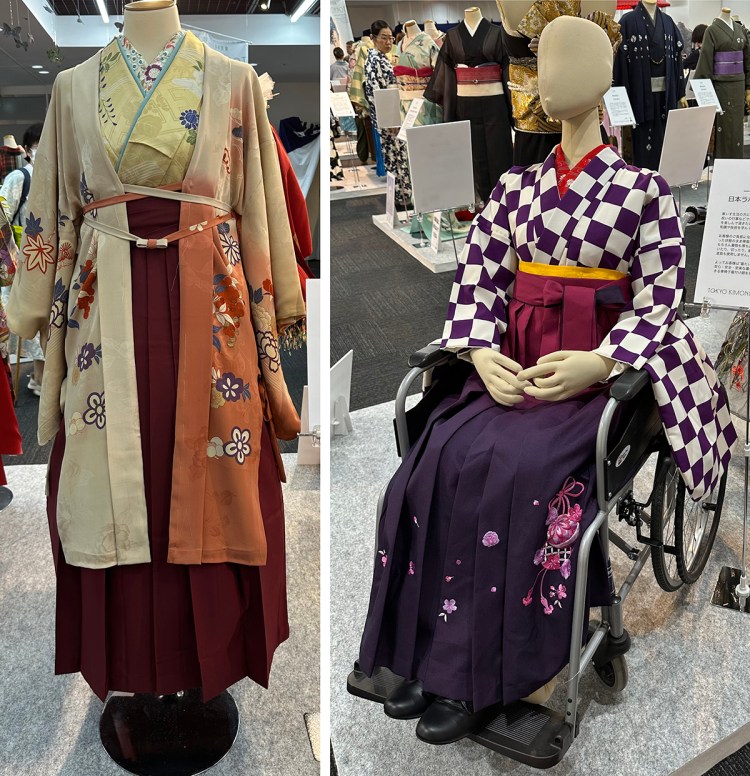
And I was pleased to see that graduation outfits (in which mens’ hakama trouser skirts are worn over furisode kimonos) got a little styling uplift with innovative cord work, and that graduates in wheelchairs weren’t left out of the fashion parade.
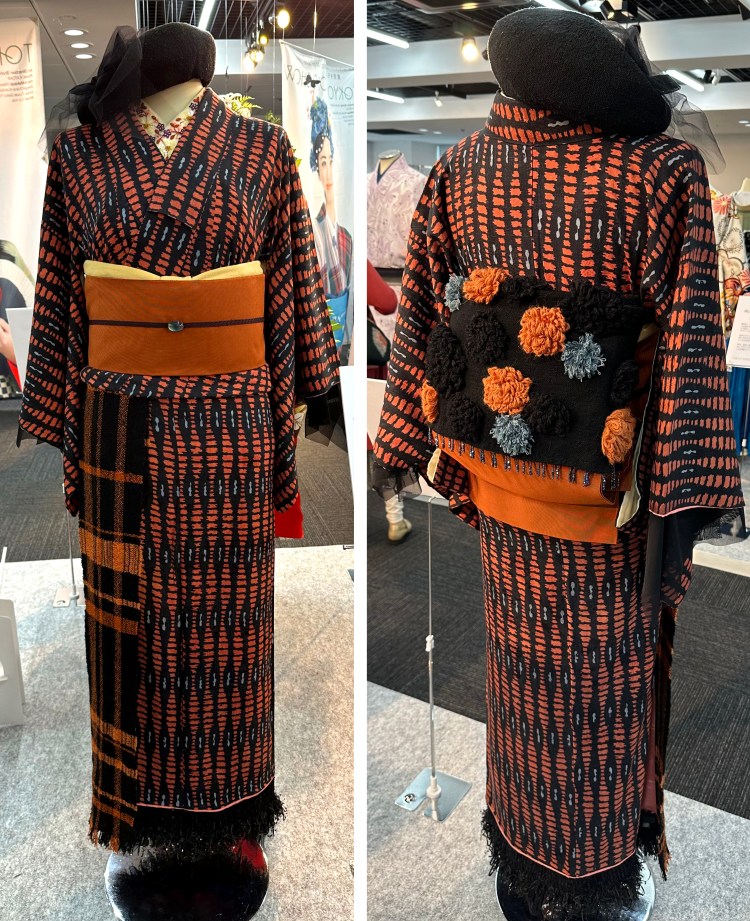
My personal favorites this year were this oh-so-<chef’s kiss> woolen ensemble featuring an obi garnished with pompoms and bead fringe…
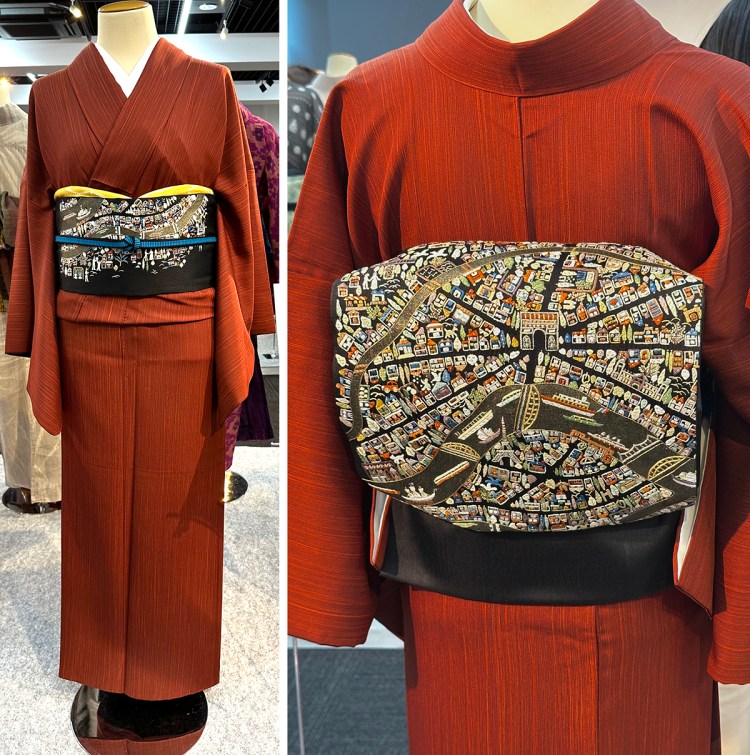
and this simple kitsuke with an aerial view of Paris meandering around the obi.
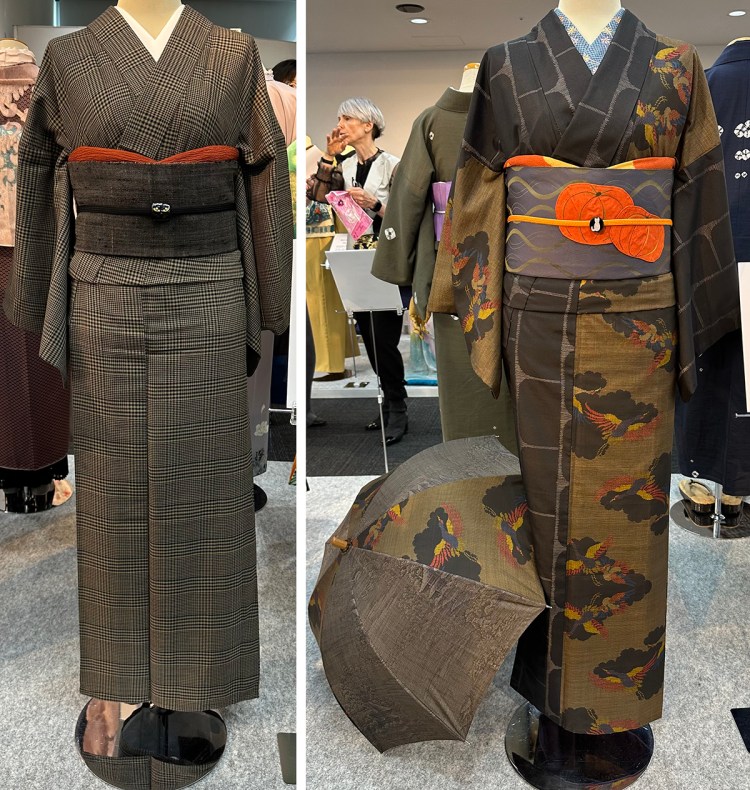
One of these two charming autumn outfits recalls tweedy British suits of the 1940s and the other mix-and-matches two patterns of Meissen silk with a coordinating parasol.
There were cheeky Goth-adjascent numbers…
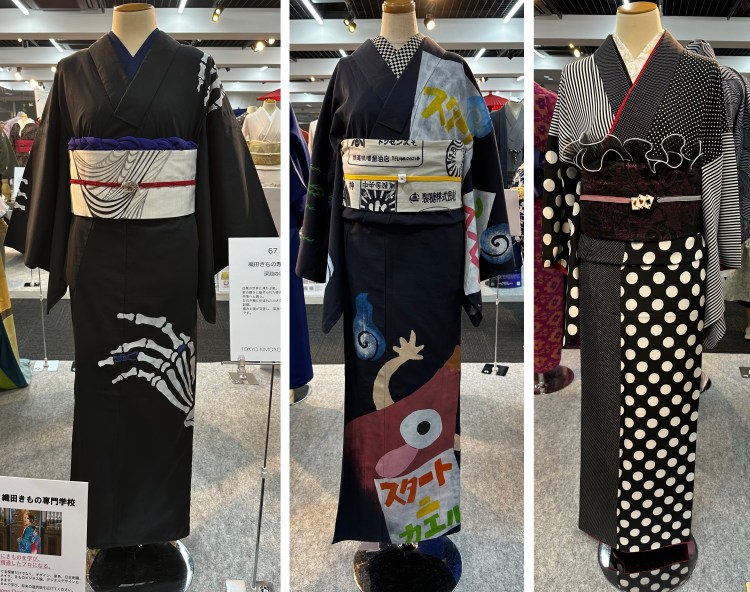
and sophisticated casual looks for lunching with the ladies.
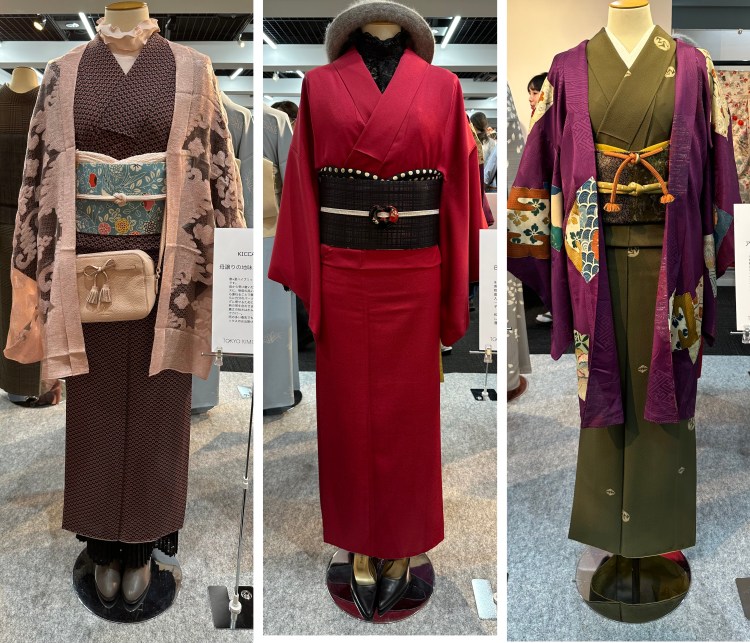
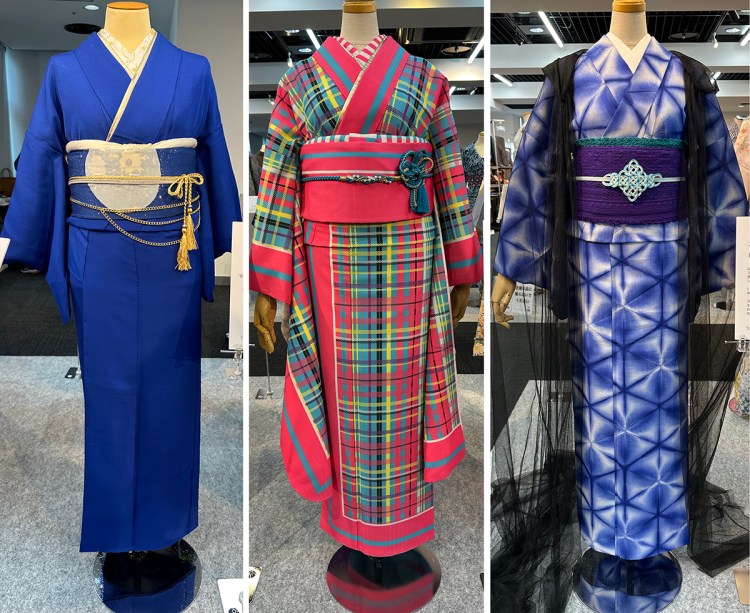
Stand-out colors and unusual obi adornments made an command appearaance…
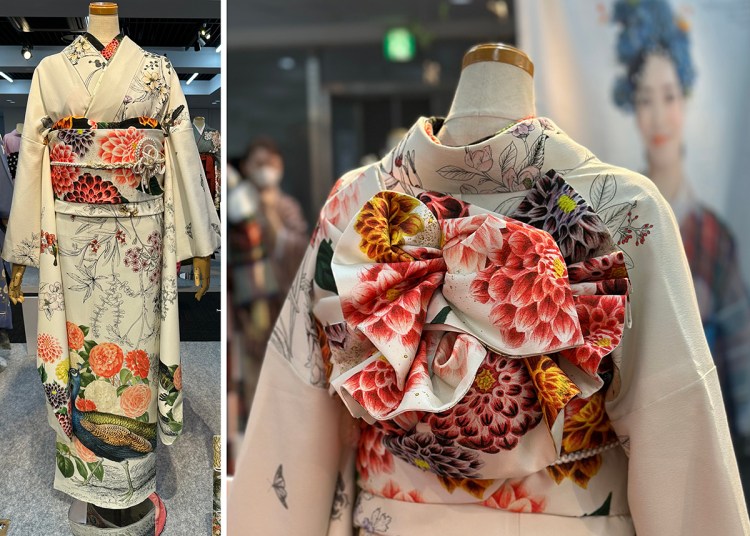
and a few were just plain beautiful. The obi knot on this ensemble so perfectly echoed the floral pattern!
And some designers are addressing the issue that putting on a kimono is too labor-intensive and time-consuming for many women. This pre-stiffened wrap-and-go obi, for example, makes wearing a kimono as quick and easy as western wear.
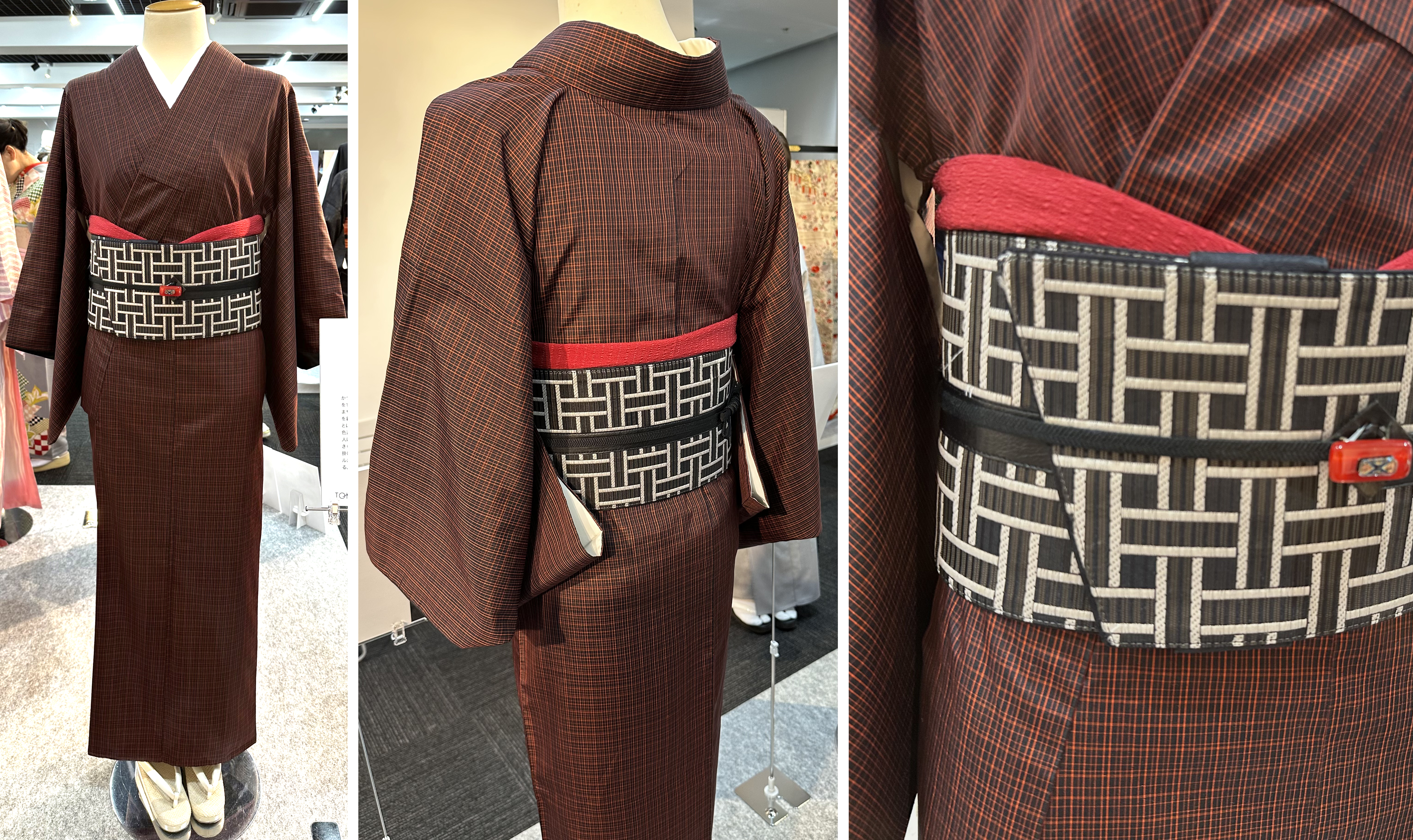
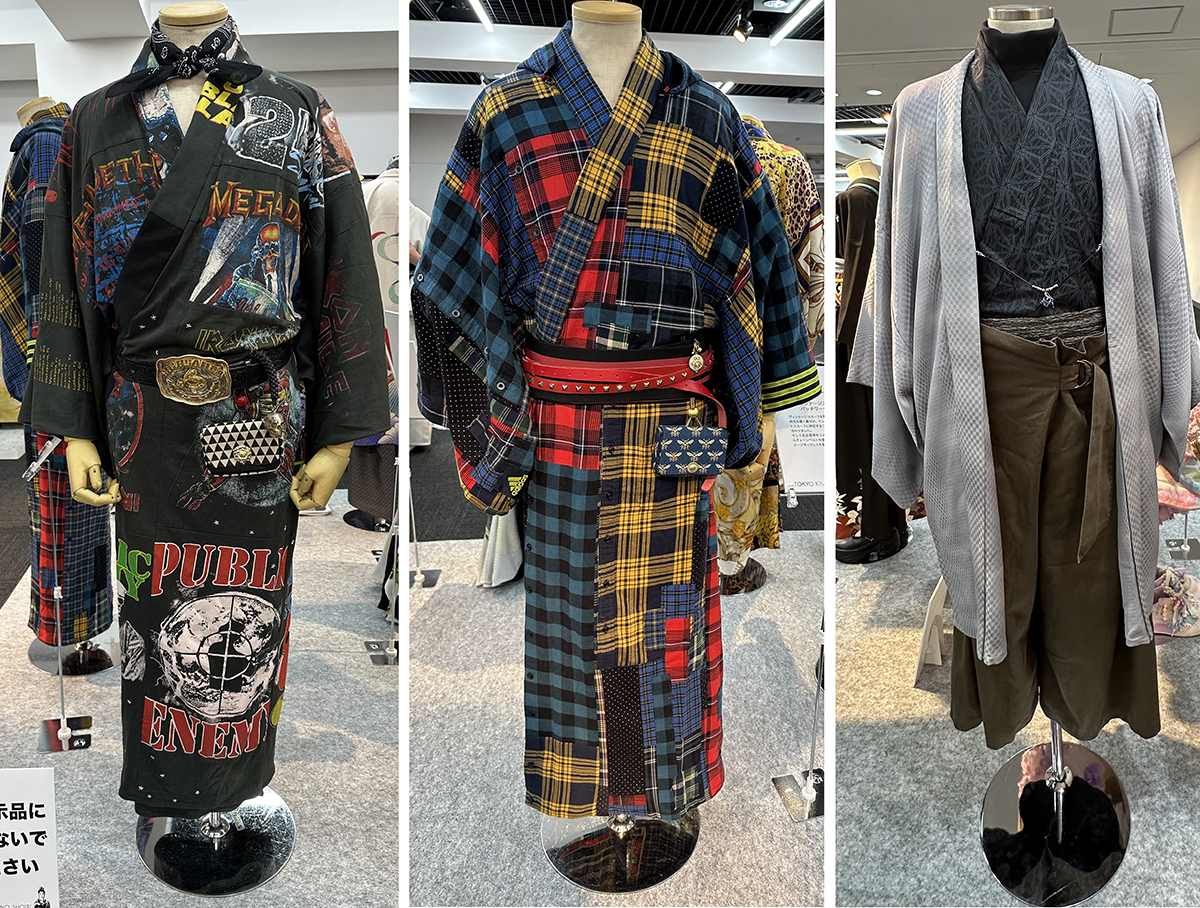
Men, of course, had their own corner—these designs build a little edge into traditional menswear, while also suggesting ways of wearing kimono that don’t involved mastering an obi knot.
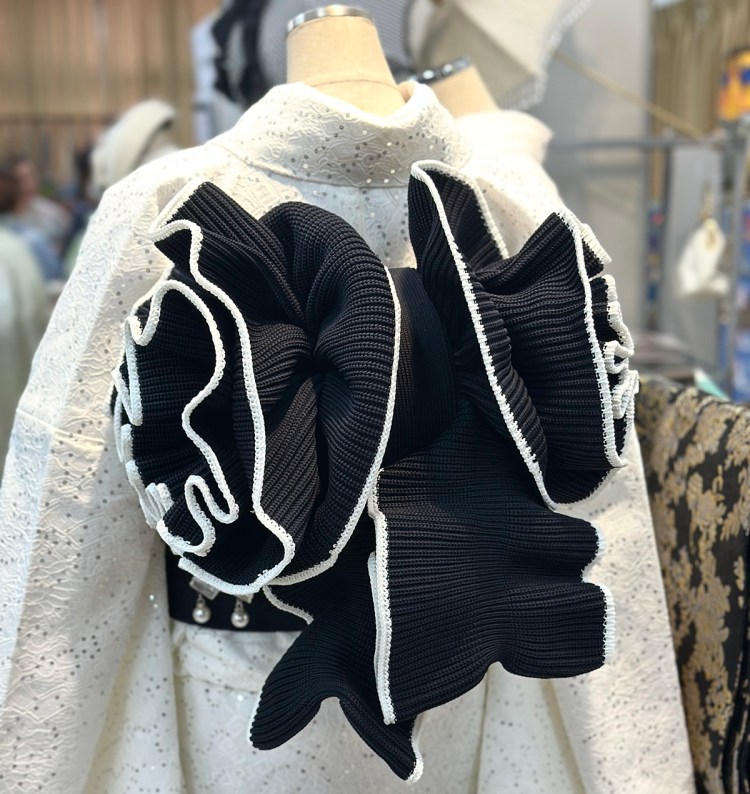
The other main venue is a marketplace for vendors who sell All Things Kimono, from tabi socks to custom parasols. There are four floors of booths that are well worth a browse. Most of the vendors return year after year, but two notable newcomers were Sasaki Chiharu, whose knit obi can be bought as an already-tied tsuki obi or a traditional DIY version
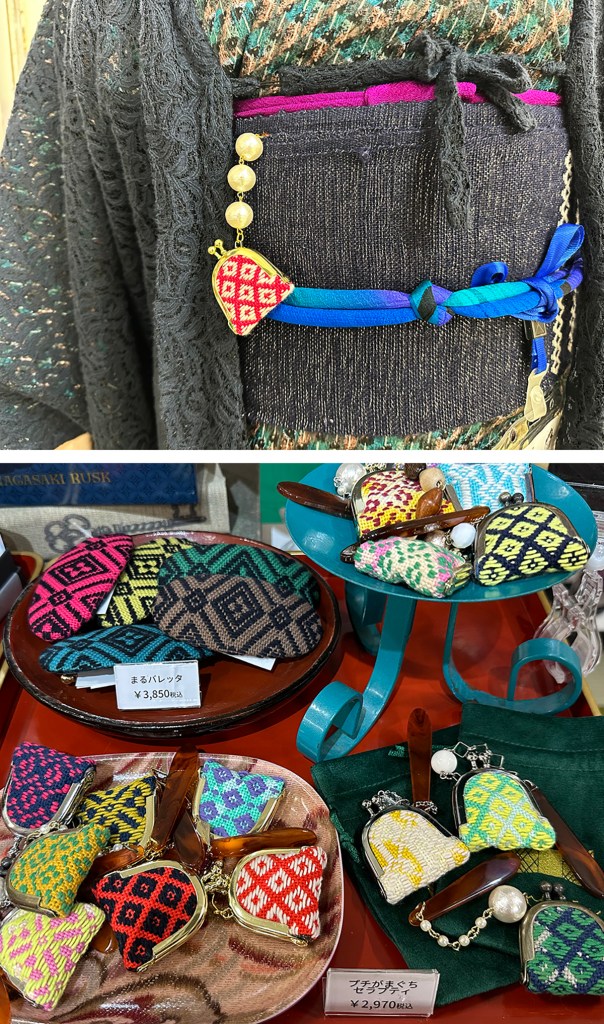
and annKogin, an Aomori kogin-zashi sashiko artist whose adorable little kimono coin purses, hair clips and pins use the old art in new ways.
If you’re in Tokyo and you’d like to see these for yourself, the show runs through Sunday, April 20, 2025. And if you miss it, there’s always next year! It’s usually held in March or April, so do a search several months before for “Tokyo Kimono Show” plus the year, and you ought to find info for the next one. Note: Google Translate is your friend—the Tokyo Kimono Show materials are relentlessly in Japanese.
Where:
The Tokyo Kimono Show is spread over four main venues near Ningyōcho (there’s a map on the website and in the exhibition booklet) but I recommend starting at the one with the main exhibition hall (the one featured in this post).
It’s on the second floor of the Sunrize Building,
11-12 Nihonbashitomizawacho, Chuo City, Tokyo 103-0006
Hours: 10:00 – 18:00 (17:00 on Sunday April 20)
(If you have trouble finding the Sunrize Building, just follow the women dressed in kimonos making a beeline from Ningyocho Station!)
Admission: ¥1500 (good for all venues, all three days)
You can pay at the entrance to any of the venues, then just show the postcard-like ticket at the door oif the other venues and they’ll let you in.
•
If you’re delighted by all kinds of Japanese art and fashion, traditional or modern… subscribe!
Get more Japanese goodness straight from the source!
Subscribe to my monthly Japanagram e-magazine・° ♪・☆ It’s free!

Japanese Home Cooking recipes • Beyond Tokyo travel destinations • Seasonal Secret shopping & events • The Thing I Learned Today • Why, Japan, Why? • Monthly book or J-swag giveaway
 Only In Japan
Really loved all the photos but was drawn to the simp